Secrets of Strength
How strongmen built their power
Description
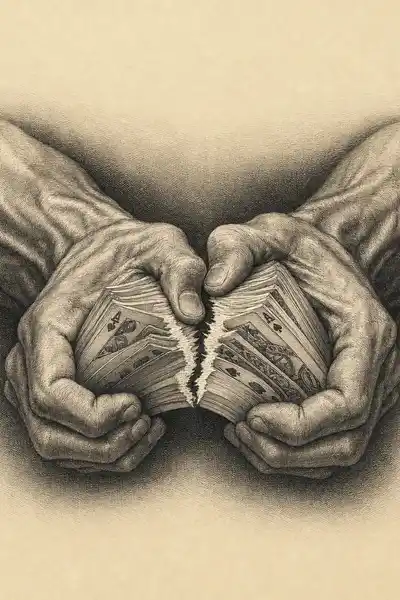
In the years before television, before the word "fitness" carried its modern gym-membership meaning, crowds paid to watch a man tear a deck of cards, bend an iron bar across his forearm, or hoist a horse off the ground. These were the strongmen — vaudeville performers, circus acts, gymnasium proprietors — and a few of them became household names. Earle Liederman knew that world from the inside. A mail-order physical-culture teacher who trained tens of thousands of American men through the 1920s, he had met, measured, and in some cases coached the era's most celebrated lifters. When he sat down to write Secrets of Strength, he wrote not as a spectator but as someone who had shaken the hands that bent the horseshoes.
The book that resulted is part memoir, part manual, part argument. Liederman wanted to settle a question that fascinated and frustrated his readers in equal measure: where did these feats actually come from? Was extraordinary strength a gift of birth, a trick of leverage, a matter of secret exercises hoarded by professionals — or something a determined ordinary man could build in his own body over years? He had commercial reasons to answer optimistically, and he did. But he also had decades of firsthand observation, and the observations complicate the sales pitch in ways that make the book worth reading a century later.
What survives from Secrets of Strength is not a workout to copy. It is a portrait of a lost profession and a stubborn conviction about what human bodies can do when someone commits to them without shortcuts. Liederman is writing in an age of tonics and miracle claims, and part of his project is to strip the mystery away — to say plainly what strength is and is not.
The question we’re asking : Where did the legendary strongmen's power really come from — inheritance, trickery, secret methods, or patient work anyone could copy?What we’ll see : A tour through the famous lifters Liederman knew, the physiology as he understood it, the daily habits behind the feats, and the broader idea of the body they all embodied.
Table of contents
01 Chapter 1 — The men who lifted the impossible
Liederman fills his opening chapters with the giants of his trade, and he writes about them the way a man talks about colleagues he admired and occasionally envied. There is Eugen Sandow, the Prussian showman who turned muscular display into a respectable spectacle and became, around the turn of the century, the most photographed strongman alive. There is Louis Cyr, the enormous French-Canadian who reportedly backlifted a platform loaded with men and once resisted the pull of four draft horses. There is Arthur Saxon, famous for the bent press, a lift in which the body twists and folds under a single loaded arm until an implausible weight ends up overhead.
What Liederman does with these figures is refuse to flatten them into one type. Some were huge and heavy, built like the animals they wrestled. Others were compact and unremarkable in a suit, men you would not glance at twice on a streetcar until they gripped something. He is careful to note that the crowd-pleasing feats were not always the hardest ones. A performer learned which stunts photographed well and which genuinely tested him, and the two lists rarely matched. Tearing a phone book, he explains, depends more on technique than on raw power.

02 Chapter 2 — What the muscle actually is
Before he will describe methods, Liederman insists on describing the thing being trained. His physiology is that of the 1920s, and some of it reads quaint now, but the core claims hold up better than one might expect. Muscle, he explains, grows in response to demand. Ask it to move a load slightly beyond what it is comfortable with, give it food and rest, and it rebuilds itself a little larger and a little stronger. Ask nothing of it and it dwindles. There is no tonic, no electric belt, no breathing trick that shortcuts this exchange, and he spends real energy debunking the quack devices his readers were being sold.
He is equally firm that size and strength are not the same measurement. A bulky man is not automatically a strong one, and some of the strongest performers he knew carried less visible muscle than gymnasium bodybuilders who could not match their lifts. Strength, in his account, lives partly in the nervous system's ability to command the muscle fully — to recruit everything at once in a single coordinated effort. This is why the compact strongman could out-lift the larger one, and why practice at heavy lifts made a man stronger even when his measurements barely changed.
03 Chapter 3 — The habits behind the feats
When Liederman finally turns to method, the disappointment is deliberate. There is no secret. There is a set of habits so ordinary that his readers, primed for a revelation, must have felt cheated — which is exactly the point he is making. The strongmen he knew trained consistently rather than heroically. They handled heavy weights regularly, added load gradually, and above all they did not stop. The men who lasted were the men who treated training as a permanent condition of life, not a program with an end date.
Progression is his central principle, and he states it plainly. Add a little weight, master it, add a little more. The body adapts to what it is asked to do repeatedly, so the strong man simply keeps asking for slightly more, year after year, until the accumulated small increases become a feat that looks impossible to someone who skipped the middle. Louis Cyr did not wake up able to resist four horses; he arrived there by increments no single one of which was remarkable.
04 Chapter 4 — The strongman as a way of seeing the body
Stepping back, Secrets of Strength is arguing something larger than any training scheme. Liederman treats strength as a disposition rather than an achievement — a way of relating to one's own body over a lifetime, not a trophy won and then displayed. The strongmen he admired did not build their power and retire it. Many trained into old age, and he clearly regards this continuity as the point. Strength that is maintained is a kind of ongoing conversation with the physical self, and the man who stops the conversation loses the strength, no matter what he once could do.
This reframes the feats he opened with. A backlifted platform or a bent bar is not the meaning of strength; it is a byproduct, a visible receipt for years of invisible work. Liederman wants his reader to stop admiring the receipt and start valuing the work, because the work is available to ordinary people and the feat mostly is not. In this sense the book is quietly democratic. It takes power away from the freak of nature and hands it to the patient, and it insists that most men underestimate what their own bodies could become if they simply kept at it.
05 Conclusion
The strongmen Liederman wrote about have long since left the stage, and the vaudeville circuit that made them famous vanished with them. What he preserved was not their acts but his account of how the acts were possible — the years of graduated loading, the plain food and sleep, the crushing grip that could not be faked, the refusal to mistake the spectacle for the substance. Read today, the book reads less like a manual than like testimony from a man who watched extraordinary bodies being built and wanted to record honestly how it was done.
Related books