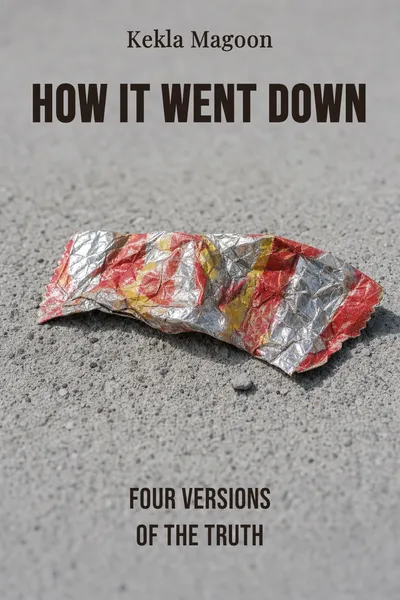
How It Went Down
Four versions of the truth
Description
A sixteen-year-old named Tariq Johnson steps out of a corner store in an unnamed American city, and within a minute he is bleeding out on the sidewalk. That much everyone agrees on. Whether he was holding a gun or a candy bar, whether he lunged or stumbled, whether the man who shot him acted in fear or in cold contempt — on all of this the witnesses split immediately and never come back together. Tariq was Black. Jack Franklin, the shooter, is white. By the time the police tape goes up, the street already knows this is not going to be a story about one boy.
Kekla Magoon builds her 2014 novel out of the fracture itself. Instead of a narrator who tells us what happened, she hands the microphone to more than a dozen people in turn — Tariq's little sister, his best friend, the gang leader who wanted to recruit him, the shopkeeper, the neighbors, a visiting reverend, a girl who loved him. Each one gets a few pages. Each one is sure of what they saw. And the accounts do not merely differ in tone; they contradict each other on the plainest facts, so that the reader, holding all of them at once, is left with the one thing no single witness has: the knowledge that the truth has already slipped away.
What makes the book more than a courtroom puzzle is that it refuses to solve itself. Magoon is not withholding a verdict she will reveal on the last page. She is showing how a death like this stops belonging to the dead almost at once — how grief, loyalty, fear, and politics reach in and shape the memory before the body is even cold.
The question we’re asking : If everyone who was there tells the truth as they saw it, why does no version of Tariq's death agree with any other?What we’ll see : How a novel told in a dozen voices turns a single shooting into a study of the stories a community tells to survive it.
Table of contents
01 Chapter 1 — A boy dies on a street corner
The event at the center of the book takes almost no time. Tariq Johnson leaves a store, something happens, and Jack Franklin fires. By the standards of the harm it causes, the moment is absurdly small — a few seconds, a single street, a scattering of people who happened to be near. Magoon opens on the immediate aftermath rather than the shot itself, and that choice matters: we come in the way the neighborhood comes in, sideways, already too late, catching the confusion instead of the cause.
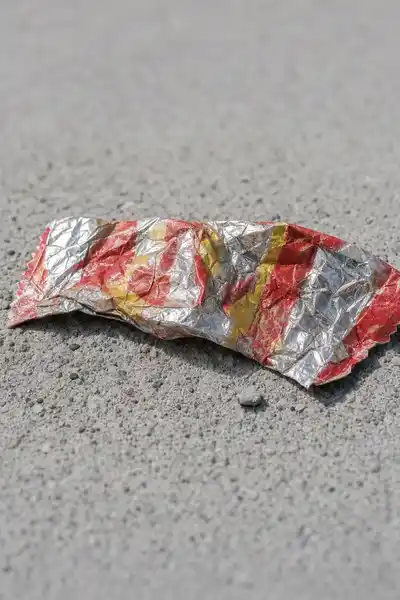
The first accounts arrive fast and clash at once. One witness insists Tariq had a gun. Another swears he was holding nothing but the candy he'd just bought. Someone saw him move toward Franklin; someone else saw him fall away. The gun, if there was one, is never cleanly accounted for — it appears in some tellings, vanishes in others, and its uncertainty becomes the hinge on which everything else turns. Was this a threatened man defending himself, or a frightened white man who decided a Black teenager was dangerous and acted on it?

02 Chapter 2 — Everyone was there, nobody saw the same thing
The structure of the novel is its argument. Magoon rotates through voice after voice, each chapter headed with a name, and no narrator ever steps in to referee. Tariq's best friend Tyrell carries guilt and rage. His younger sister Tina speaks in the flat, stunned register of a child who cannot make the fact hold still. Jennica, a girl on the edge of the local crew, saw the moment and is terrified of what saying so might cost her. Each account is internally coherent. Each is also, on the details that matter most, incompatible with the next.
This is not the familiar unreliable-narrator trick, where one liar hides the truth we eventually pry loose. Everyone here is telling it straight as far as they know. The contradictions come from something more ordinary and more unsettling: memory is built out of what a person already fears, wants, and expects to see. A witness who has learned to expect a gun in a Black teenager's hand will remember a gun. A witness who loved Tariq will remember his hands empty. Neither is lying. Both are constructing.
03 Chapter 3 — The people who need the story to mean something
Into this fog steps Reverend Alabaster Sloane, a civil-rights figure who arrives from outside to make Tariq's death into a cause. He is not a villain in Magoon's hands, and he is not a hero either. He genuinely believes in the fight against exactly the kind of killing Tariq's may have been, and he is also a man building a platform, weighing cameras and crowds, aware that a symbol moves people in a way that a confused local shooting never will. He needs Tariq to be clearly innocent, cleanly wronged — needs the ambiguity to resolve in the direction the movement requires.
The neighborhood crew has its own claim. To Brick and the others, Tariq was almost one of theirs, and his death is a recruiting fact, a proof of the world they already describe to the boys they want to pull in. Franklin's release confirms their argument that the system was never built to protect them. Meanwhile the media descends, flattening the mess of accounts into a headline that has to choose a side because a headline cannot hold a contradiction. Each of these actors reaches into the story and pulls it toward a shape it can use.
04 Chapter 4 — A death becomes a symbol, a boy stays gone
Step back from the corner store and the pattern the book traces is bigger than any single killing. A death like Tariq's does not stay the property of the dead for long. Within hours it is claimed — by the family who loved him, by the movement that needs him, by the media that must sell him, by the neighbors who use him to confirm what they already believed about the street. Magoon's real subject is this claiming: the way a person, at the moment they can no longer speak for themselves, becomes raw material for everyone else's story.
The novel arrived in 2014, and it landed in a country that was learning to say names — the deaths of unarmed young Black people had become a recurring national event, each one followed by the same fracture of accounts, the same fight over whether a hand held a weapon or a wallet, the same gap between what happened and what could be proved. Magoon does not name a specific case, and the refusal is the point. By keeping Tariq unmoored from any headline, she makes the machinery visible: not one incident but the process by which any such incident gets metabolized.
05 Conclusion
By the last page, we still do not know for certain what was in Tariq Johnson's hand when Jack Franklin fired. Magoon never tells us, because the point was never the verdict. The boy is gone, the accounts do not reconcile, and the community has already begun to build out of the wreckage the various stories it needs to keep living. What the book delivers instead of an answer is the full weight of the not-knowing, and the sense that this not-knowing is not a flaw in the case but the ordinary condition of a death like this one.
Related books