
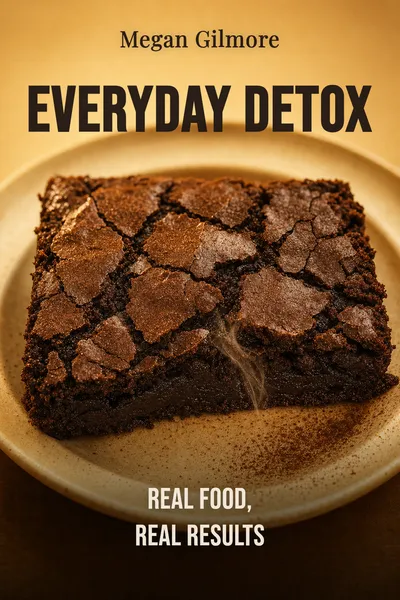
Everyday Detox
Real food, real results
Description
Somewhere around day three of a juice cleanse, the fantasy tends to collapse. The energy that was supposed to arrive never quite shows up. The mood dips. And the moment the cleanse ends, the appetite comes back with interest — which is how a week of virtuous deprivation ends in a pizza at eleven at night. Megan Gilmore, a certified holistic health coach who spent years blogging her way through exactly these cycles, built her book Everyday Detox around a blunt observation: the detoxes most of us try don't fail because we lack willpower. They fail because they were designed as punishments, and nobody sticks with a punishment.
Published in 2015, Everyday Detox makes an unfashionable argument for the wellness aisle. It says detoxing shouldn't be a special event you brace for and recover from. No fasting, no calorie counting, no green liquid standing in for lunch. Instead the book offers a hundred recipes — actual meals, including muffins, fried rice and chocolate brownies — arranged around one organizing idea about how the body digests what we put into it. The promise is not dramatic transformation in seven days. It's the more modest, and more durable, goal of eating in a way that leaves us feeling lighter most of the time.
That shift, from event to habit, is the whole book in miniature. It's also where the interesting questions live. If a detox doesn't mean restriction, what does it actually mean? And can a plate of food really do the work that a fast is supposed to do — without the misery that sends people straight back to where they started?
The question we’re asking : What does detoxing mean once you strip out the fasting, the counting and the deprivation?What we’ll see : How Gilmore trades the cleanse-and-binge cycle for a way of cooking she means to keep doing all year.
Table of contents
01Chapter 1 — The trap of all-or-nothing
Gilmore's starting point is a pattern most dieters know intimately, even if they've never named it. A detox or a diet demands total commitment: cut out entire food groups, drink only juice, count every calorie, hold the line for a set number of days. The rigidity is the selling point. It feels serious, and seriousness feels like it should work. What actually happens, in her telling, is that the intensity of the restriction builds pressure, and pressure eventually breaks. The clean stretch ends in a binge, the binge ends in guilt, and the guilt sets up the next round of restriction. The cycle isn't a personal failing. It's baked into how these programs are built.

02Chapter 2 — What food combining actually means
The engine under the book's hundred recipes is a principle called food combining — the idea that certain foods digest more comfortably together than others, and that pairing them thoughtfully cuts down on the bloating and sluggishness that follow a lot of ordinary meals. Gilmore didn't invent the concept; versions of it have circulated in natural-health circles for the better part of a century. Her contribution is to make it practical rather than dogmatic, and to hang a whole cookbook on it without turning every dinner into a chemistry problem.
The rules, in their simplest form, are about pacing. Proteins and starches, she suggests, are best kept apart within a single meal, since they call for different digestive conditions and tend to slow each other down when eaten together. Fruit, especially, works best on its own or on an empty stomach, where it moves through quickly rather than sitting behind a heavier meal and fermenting. Non-starchy vegetables get treated as the flexible players that go with nearly anything. None of this requires precision instruments — it requires a rough sense of which categories are on the plate, and a cheat sheet, which the book duly provides.
03Chapter 3 — Real food that doesn't taste like penance
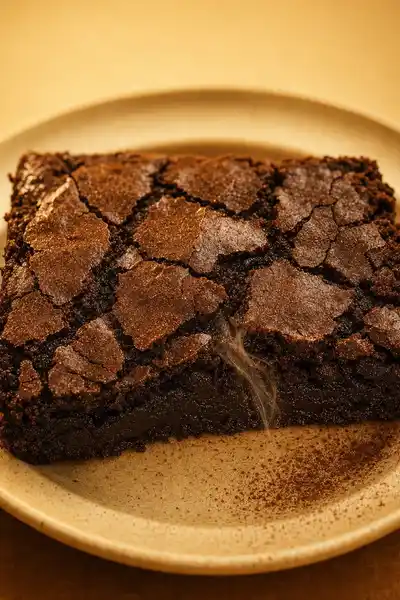
The clearest signal of Gilmore's approach is the recipe list itself, which reads less like a cleanse and more like a comfort-food menu that happens to be built from whole ingredients. Coconut banana muffins. A broccoli-cheddar dish she calls Better Broccoli Cheddar. Cauliflower fried rice, baked spaghetti, double chocolate brownies. These are not the foods of deprivation, and that's the point. She is betting that the reason detoxes fail is deprivation, so she engineers it out — the meals are meant to taste like the things people actually crave, remade so they don't leave you heavy afterward.
The remaking is where the whole-foods philosophy does its work. Instead of processed shortcuts and refined sugar, the recipes reach for natural sweeteners, vegetables standing in for grains, and unprocessed fats. Cauliflower does the job of rice. Dates and maple sweeten a brownie. The substitutions aren't there to shave off calories — Gilmore pointedly refuses to count them — but to keep meals aligned with the food-combining logic and gentle on digestion. The measure of success isn't how little you ate. It's whether you feel good an hour later.
04Chapter 4 — A kitchen built for the long game
Step back from the recipes and Everyday Detox is really making an argument about where health lives. Not in a week of willpower, but in the ordinary furniture of a kitchen — what's in the cupboard, what's easy to reach for at six on a tired Tuesday. A good part of the book is given over to stocking a detox-friendly kitchen precisely because Gilmore understands that behavior follows infrastructure. If the pantry is full of whole ingredients and the cheat sheet is on the fridge, eating well stops being a daily act of resolve and becomes the path of least resistance.
This is the quiet reframing the whole book performs on the word detox. In common usage, detox names an event: a thing you do, a beginning and an end, a before and after. Gilmore drains that meaning out and replaces it with something closer to upkeep — a way of cooking you keep doing because it's pleasant, not a sentence you serve. The absence of a finish line, which sounds like a drawback, is the actual innovation. A cleanse you can complete is a cleanse you will eventually abandon. A way of eating with no end date is one you might still be doing next year.
05Conclusion
The pizza at eleven at night, at the tail end of a failed cleanse, is the scene Gilmore is quietly writing against on every page. Everyday Detox exists because the intense reset doesn't work — not because people are weak, but because a plan built on deprivation contains its own ending. Her answer is to remove the ending altogether. A hundred recipes for muffins, fried rice and brownies, all arranged so they sit well in the body and in the day, add up to a kitchen you can keep instead of a diet you have to survive.