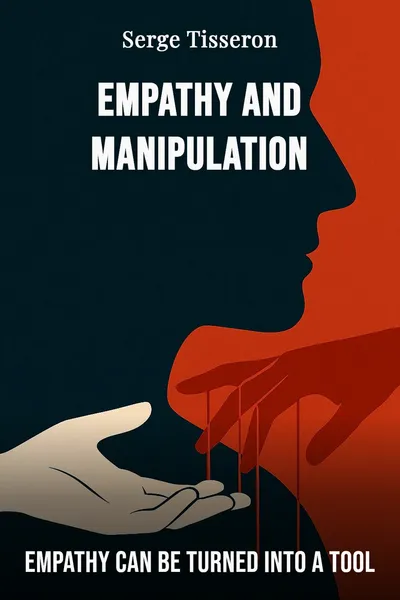
Empathy and Manipulation
Empathy can be turned into a tool
Description
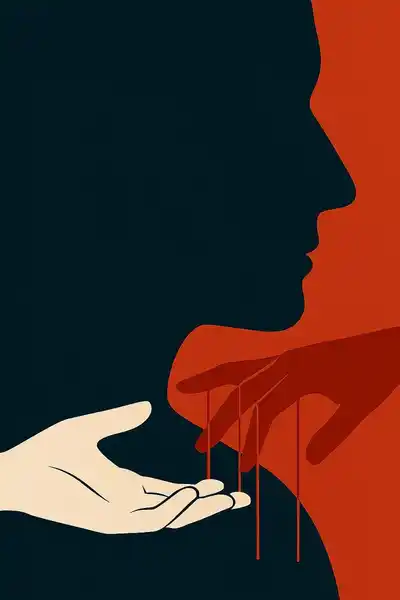
We tend to treat empathy as a settled good — the quality that makes someone trustworthy, the thing we wish there were more of in the world. The French psychiatrist and psychoanalyst Serge Tisseron spends a whole book quietly unsettling that assumption. His argument, laid out in Empathy and Manipulation, is that the capacity to feel what another person feels is not a moral guarantee at all. It is a faculty, and like any faculty it can be aimed. A con artist reads your sadness with the same accuracy as a friend; the difference is what each of them does with what they read.
Tisseron, who has spent decades studying how screens, images and relationships shape us, refuses the cozy version where empathy and kindness are the same thing. He separates the strands: feeling another's emotion, grasping their point of view, caring about their fate. Those strands usually travel together, which is why we bundle them under one warm word. But they can be pried apart. And once they are pried apart, empathy stops being a shield against cruelty and becomes, in the wrong hands, its most efficient instrument.
What makes the book uncomfortable is that it does not stop at individual predators. The same logic scales up. States, employers and the companies that run our screens have all discovered that knowing how we feel is worth a great deal — and that the feeling can be harvested, measured and fed back to us without anyone caring about us at all.
The question we’re asking : If empathy can read us so well, what stops it from being used against us — and who has learned to do exactly that?What we’ll see : How a single warm word hides several very different faculties, and what happens when the ones we admire get separated from the ones we trust.
Table of contents
01 Chapter 1 — Empathy was never one thing
Tisseron's first move is to take the word apart. What we call empathy, he argues, is really a bundle of distinct capacities that happen to cooperate most of the time. There is emotional contagion — the raw, almost automatic resonance that makes us wince when someone else is hurt, that makes a baby cry when another baby cries. There is cognitive perspective-taking — the deliberate effort to model what another person thinks and feels from where they stand. And there is what he treats as a further, moral step: actually being moved to care about that person's situation, to want it to improve.
These layers develop at different ages and lean on different circuits. A toddler catches emotions before it can take anyone's point of view; perspective-taking arrives later, with language and the slow discovery that other minds are genuinely other. Tisseron insists on this because the everyday intuition — that a person who feels your pain will therefore be good to you — quietly assumes all the layers come as a package. They do not. You can read someone's state with great precision and feel nothing warm about them whatsoever.

02 Chapter 2 — The dark side that reads you perfectly
Once empathy is separated from caring, the figure of the skilled manipulator comes into focus. Tisseron describes people who are, in a narrow technical sense, highly empathic: they pick up micro-signals, they track your mood shifts, they know the exact sentence that will make you soften or panic. What they lack is the moral layer. They feel-with you in order to act on you, not alongside you. The reading is excellent; the alignment is absent.
He is careful not to reduce this to a clinical category. The seducer, the cult recruiter, the abusive partner, the brilliant salesperson — these are not all pathological, and most of us use small instrumental versions of empathy every day, when we gauge a boss's mood before asking for something. The difference Tisseron draws is one of degree and respect. Ordinary tactical empathy still treats the other as a subject; manipulation treats them as a lock to be picked, their inner life reduced to a set of levers.
03 Chapter 3 — Companies learned to feel for us
Tisseron moves the argument out of the living room and into the market, where the same mechanics operate at scale. Modern commerce has discovered that emotion is the most valuable thing a customer leaks. Where older advertising sold a product's qualities, contemporary marketing sells recognition: brands that claim to understand you, that speak your anxieties back to you, that promise to feel what you feel. The warmth is engineered, measured and A/B-tested, but it lands on us as something like friendship.
He is especially attentive to how this reshapes the language of institutions. Companies now speak of empathy as a corporate value, train staff in it, print it on their walls. Customer service is scripted to acknowledge your frustration before anything is actually fixed. Tisseron's point is not that any individual employee is cynical; it is that empathy has been detached from the person and turned into a protocol — a performance of feeling-with that serves the organisation's goals, whatever happens to yours.
04 Chapter 4 — The empathy we delegate to machines
Step back from the individual swindler and the clever brand, and a larger shift comes into view — the one Tisseron is really worried about. Empathy, historically a bond between two present bodies, is increasingly becoming something institutions manage on our behalf. States speak of empathising with citizens; employers run empathy workshops; platforms promise emotionally attuned experiences. In each case the faculty is being lifted out of relationships and installed as a function of systems that have no inner life to feel with.
Tisseron is particularly struck by the rise of machines built to simulate it — companion apps, care robots, chatbots designed to soothe. He does not dismiss them outright; a robot that comforts an isolated elderly person is doing something, and the comfort is not nothing. But he insists we name what it is. The machine performs the reading without the caring, the mirror without the stake. It is, structurally, the manipulator's empathy — accurate, responsive, and indifferent — now offered as a public service rather than a private crime.
05 Conclusion
Tisseron ends roughly where he began, with the con artist and the nurse who read us equally well. The whole book is an effort to keep us from mistaking the reading for the relationship. Empathy, in his telling, is a powerful instrument of knowledge about others, and instruments do not come with intentions attached. What makes it trustworthy is never the accuracy of the feeling but the care riding alongside it — the willingness to be moved for someone, not merely moved by them.
Related books