Dreamland
How a Mexican cartel conquered America
Description
For most of the twentieth century, American heroin followed a script everyone thought they understood. It came through big-city networks on the coasts, moved by large Colombian and later Mexican organizations, and it stayed in the places the movies told us it belonged: alleys, needle parks, the wrong side of a large downtown. Then, somewhere around the late 1990s, the script fell apart. Heroin turned up in Charlotte, in Huntington, West Virginia, in Salt Lake City, in the tidy suburbs of Columbus, Ohio. It arrived in towns that had never seen it, and it killed the children of dentists, coaches and nurses. Nobody could quite say who had brought it, or why so many people were suddenly ready to buy.
In Dreamland, the journalist Sam Quinones spent years tracing that mystery back to its two sources, and the answer he found was stranger than a single cartel. On one side, a cluster of farming families from a small sugar-cane county on Mexico's Pacific coast, a place called Xalisco, in the state of Nayarit, had quietly built a way of selling heroin that owed more to fast food than to organized crime. On the other side, a revolution in American medicine had spent a decade teaching millions of people that they should never have to feel pain, and handing them the pills that made opiates ordinary.
The two stories ran on separate tracks for years before they collided, and when they did, the collision produced one of the deadliest drug epidemics in the country's history. Quinones tells it as a work of reporting, not a courtroom argument, and the picture that emerges refuses to sit comfortably with anyone. The book's title comes from a swimming pool in Portsmouth, Ohio — a place that once held a town together, and that was paved over.
The question we’re asking : How did the cheapest, purest heroin ever sold reach the veins of small-town America, and why were so many people ready to buy it?What we’ll see : A farming county's homemade delivery system, an American medical revolution, and the moment the two met in the middle of the country.
Table of contents
01 Chapter 1 — A little county called Xalisco
The men who reshaped American heroin did not look like traffickers, and that was the point. Quinones traces them to Xalisco, a small county in Nayarit on Mexico's Pacific coast, a place of sugar cane fields and one modest town. The families there were poor but not desperate, and what they wanted was ordinary: a truck, a house with a second story, enough money to come home in January dressed well enough to be somebody at the town festival. Heroin was the fastest way an unschooled ranchero could get there.
What set the Xalisco boys apart was the product and the posture. They cooked black tar heroin, a dark, sticky, potent form of the drug that was cheaper to make than white powder and often far purer. They did not use it themselves, avoided guns, and treated the whole thing as a business to be entered young and exited before the money or the luck ran out. Many of them barely finished school; almost all of them saw the trade as a temporary sacrifice for a permanent step up back home.

02 Chapter 2 — The pizza-delivery model of heroin
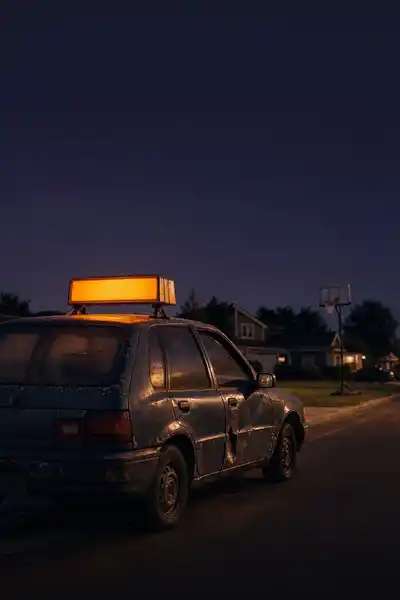
The genius of the Xalisco system was that it stripped fear out of buying heroin. Instead of forcing an addict into a dangerous neighborhood to meet a menacing stranger, the cells ran what amounted to a delivery service. A customer called a phone number. An operator, sometimes back in Nayarit, took the order and relayed it to a driver circling the city in a cheap car, balloons of tar heroin tucked in his mouth so he could swallow the evidence if stopped. The driver pulled up, made the handoff in seconds, and drove on to the next call.
The drivers were salaried employees, not dealers taking a cut, which changed everything. They had no incentive to cut the product or cheat the customer, because their pay did not depend on the sale. So the service was polite, punctual and consistent. Quinones records how the cells behaved like any customer-focused company: they offered deals to steady buyers, free samples to newcomers coming out of detox, and coupons when business was slow. Complain about quality and they would make it right. The comparison the book keeps returning to is pizza delivery, and it is not a joke.
03 Chapter 3 — How the pills opened the door
The Xalisco boys could never have conquered the heartland on their own. Quinones argues that American medicine unlocked the door for them, over a decade, with the best of intentions. Beginning in the late 1980s and through the 1990s, a movement swept through pain management insisting that doctors had been cruelly under-treating pain, and that opioids, properly prescribed, rarely led to addiction. That reassurance rested on remarkably thin evidence — most famously a five-sentence letter to a medical journal in 1980, later cited as if it were a landmark study.
Into that shift walked Purdue Pharma with OxyContin, launched in 1996 and marketed as a long-acting painkiller so smoothly released that it posed little risk of abuse. The company promoted it aggressively to ordinary family doctors, and prescriptions exploded. Patients discovered that crushing the pill defeated the time-release coating and delivered a pure opiate rush. Whole regions — Appalachia, the Rust Belt, rural Western towns — filled up with people, many of them young, who had first met opiates as a legitimate prescription for a back injury or a wisdom-tooth surgery.
04 Chapter 4 — A market America built for itself
It would be easy to read Dreamland as the story of a foreign menace, but Quinones keeps resisting that. The Xalisco system worked because it answered something the country was already asking for. His larger claim is that the epidemic was a marketplace that America helped design — a meeting of a homegrown appetite for painlessness and a supply engineered to satisfy it with maximum convenience and minimum friction.
The title carries the argument. Dreamland was a vast swimming pool in Portsmouth, Ohio, the kind of place where a whole town spent its summers together for generations — a shared, public, physical life. By the time the pills and the tar arrived, the pool had been drained and paved into a strip mall parking lot, and Portsmouth had hollowed out. Quinones lets that image stand for something broader: a country that had traded communal life for isolation, convenience and private consumption, and that increasingly treated any discomfort as a problem to be medicated away.
05 Conclusion
The epidemic Quinones chronicles did not arrive as an invasion. It seeped in through phone calls and prescription pads, one polite delivery and one reassuring doctor's visit at a time, until towns that had never known heroin were burying their young. The Xalisco system spread because it was quiet, cheap and convenient; the demand spread because a medical revolution and a hollowed-out communal life had prepared the ground. Neither half of the story makes sense without the other, and that is Quinones's point.
Related books