The Elements of Power
The metals that power tomorrow
Description
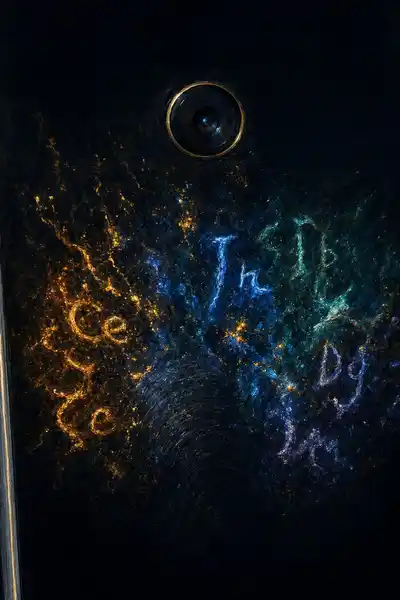
Somewhere on the desk, in a pocket, on the nightstand, there is a phone. Turn it over and it looks like a single object — glass, metal, a slab of intent. But it is closer to a small United Nations of the periodic table. The glass gets its shine from cerium, a soft metal buffed into the surface. The screen answers a fingertip because of indium, spread in a coating so thin it is nearly invisible. The colors look vivid because of terbium and a handful of other rare earths tuned to specific wavelengths. And the battery holds its charge thanks to lithium and cobalt. None of these names show up in the ad. Most of us could not point to where they come from on a map.
That anonymity is exactly what David S. Abraham, a natural-resource strategist, set out to break in his book The Elements of Power. His argument is direct: a small group of metals almost nobody talks about has quietly become the foundation of modern life. They are in wind turbines, guided missiles, electric cars, MRI machines, LED bulbs, fighter jets. We tend to notice oil because we buy it by the gallon and watch its price on the news. These metals move through the world under the radar, in quantities too small to feel and consequences too large to ignore. A few kilograms of the wrong element, unavailable at the wrong moment, can stall an entire product line.
Abraham's method is to follow the material itself — to walk the path a metal takes from an open pit in one country through refineries, traders and factories in a dozen others, until it ends up in the device we hold without a second thought. What he finds along that path is a system far more fragile, more secretive, and more geopolitically loaded than the tidy supply chains of the tech industry would suggest.
The question we’re asking : How did a handful of obscure metals become the hidden foundation of modern technology — and what happens when we depend on things we can neither see nor control?What we’ll see : We follow these metals out of the ground and into our devices, and watch what that dependency does to markets, borders and the ground itself.
Table of contents
01Chapter 1 — The metals hiding in a phone
For most of history, the materials that mattered were the ones we could name. Wood, stone, copper, iron, coal, oil — bulk substances, mined and burned and forged in quantities anyone could grasp. The metals Abraham writes about are different in kind. They arrive in trace amounts, measured in grams rather than tons, and they do jobs no common material can do. A rare earth called neodymium, alloyed into a magnet, produces a pull so strong that a marble-sized piece can hold hundreds of times its own weight — which is why it powers the tiny motors in a phone, the vibration alert, and the generators inside wind turbines.
Abraham's phone is his best exhibit. Cerium, one of the more abundant rare earths, is used as a fine polishing powder to smooth the glass. Indium tin oxide forms the transparent, conductive layer that lets a capacitive screen sense the electrical charge of a fingertip. Europium and terbium fluoresce in specific colors, sharpening the reds and greens of the display. Lithium and cobalt sit in the battery. Tantalum, pulled from a mineral called coltan, stores charge in the capacitors. Gallium and germanium handle signals. A single handset can contain dozens of distinct elements, many of them present in fractions of a gram.

02Chapter 2 — From a mine in Baotou to a pocket in Ohio
To understand the risk, Abraham traces the physical journey. Take a rare-earth metal that begins its life in the mines around Baotou, in Inner Mongolia, where China has concentrated much of the world's rare-earth production. For years China supplied roughly nine-tenths of global rare earths — not because the deposits exist nowhere else, but because it was willing to do the difficult, polluting refining work that other countries had abandoned. The ore is dug, crushed, and put through repeated chemical baths to coax apart elements that are chemically almost identical twins. This is slow, corrosive, expensive work, and it produces rivers of toxic residue.
From the refinery the metal enters a trading network that Abraham describes as remarkably opaque. Unlike oil, which is bought and sold on transparent global exchanges, many of these metals move through private deals, small specialist traders, and long-standing relationships. Prices can swing wildly and are often quoted differently from one buyer to the next. A metal may pass through several intermediaries and cross several borders before it reaches a component maker in Japan, South Korea, or Taiwan, where it is turned into a magnet, a phosphor, or a capacitor.
03Chapter 3 — The three ways a rare metal can break
Abraham's larger warning is that our appetite for these metals is accelerating precisely as the ways to obtain them grow more fraught. The clean-energy transition is metal-hungry in a way the fossil economy never was. An electric car needs far more copper, lithium, cobalt, and rare earths than a gasoline one. A wind turbine leans on neodymium and dysprosium magnets. Solar panels use tellurium, gallium, and indium. The irony is sharp: the technologies meant to lighten our environmental footprint depend on digging, crushing, and chemically stripping the earth on a scale that is itself deeply damaging.
The environmental cost is the first fault line. Refining rare earths generates acidic, sometimes radioactive waste, and around Baotou Abraham describes tailings ponds and poisoned land that are the hidden underside of the green economy. A device marketed as clean has often been born in a place made filthy. This gap between the image of high technology and its material origins runs through the whole book.
04Chapter 4 — The new resource age
Step back from any single element and a longer pattern comes into focus. Abraham frames the present moment as the latest in a sequence of material ages. The Bronze Age was defined by an alloy of copper and tin; the mastery of iron reshaped warfare and agriculture; the twentieth century ran on oil and steel. Each material did not just enable new tools — it reorganized power. Whoever controlled the tin routes, the coalfields, the oil reserves shaped the politics of their era. Abraham's claim is that we have entered a rare-metal age, and that these small, obscure elements now play the role that bronze, iron, and oil once did.
But there is a crucial difference. Oil is a single substance you can measure, store, and price on an open market. The rare-metal age depends on dozens of distinct elements, each with its own geology, its own refining chemistry, its own tangled supply chain and its own set of substitutes and vulnerabilities. No single actor commands them all, and no simple metric captures the whole. That complexity makes the new age harder to govern than the oil age it is quietly replacing. There is no OPEC of terbium, no futures market that tells us in advance where the strain will fall.
05Conclusion
Pick the phone back up. It still looks like a single object, but now the illusion is harder to hold. Inside it is a map — of a mine in Inner Mongolia, of refineries breathing acid fumes, of traders working in the dark, of factories in half a dozen countries, of a global system so intricate that no one fully sees it end to end. Abraham's achievement in The Elements of Power is to make that map legible, to give names to the metals we carry around without knowing them, and to show that their smallness in weight is matched by their largeness in consequence.
Related books