
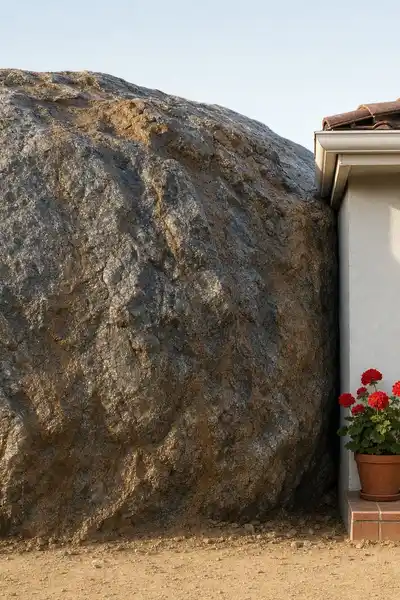
The Control of Nature
When people battle nature
Description
Somewhere below Baton Rouge, in a set of enormous concrete gates called the Old River Control Structure, a small number of Army Corps engineers spend their days making sure the Mississippi does not do the one thing it has been trying to do for centuries: abandon its channel and pour itself into the Atchafalaya, leaving New Orleans and Baton Rouge stranded on a salt-water estuary. The river wants to switch beds, the way it has switched beds roughly every thousand years. In 1973 it nearly succeeded, undermining the structure during a flood while the men inside listened to the concrete groan. They held. They have held ever since. Whether they keep holding is, McPhee makes clear, an open question.
That standoff is the opening movement of The Control of Nature, John McPhee's 1989 book about the places where human beings have declared war on the physical world and refuse to concede. He goes to three of them: the lower Mississippi, the volcanic coast of Iceland, and the steep foothills above Los Angeles. In each, something vast and indifferent is doing what it has always done, and a determined set of people has decided it will not be allowed to. The book is reportage, but it reads like dispatches from a front line that never quite resolves.
What holds the three stories together is not a thesis so much as a temperament. McPhee is fascinated by the combatants on both sides — the river, the lava, the mountain on one hand, and on the other the hydrologists, farmers, and flood-control officials who wake up every morning to fight them. He does not tell us who ought to win. He watches, closely, and lets the collision speak.
The question we’re asking : What happens when people decide that a river, a volcano, or a mountain will not be allowed to do what it has always done?What we’ll see : Three battlegrounds where human ingenuity meets geological force — and the strange, stubborn people who refuse to step aside.
Table of contents
01Chapter 1 — The river that wants to move
Rivers on flat land do not stay put. The Mississippi carries staggering amounts of sediment, and over centuries it builds its own bed higher than the surrounding country, until the moment comes when a shorter, steeper path to the sea becomes irresistible and the whole river jumps course. It has done this many times across the delta, and by the middle of the twentieth century it had chosen its next escape: the Atchafalaya, a distributary that offered a route to the Gulf less than half as long as the current one. Left alone, the Mississippi would have taken it.
The problem was that the current channel had become the spine of an economy. Baton Rouge and New Orleans, the refineries and the port and what McPhee calls the American Ruhr strung along the river, all depended on the Mississippi staying exactly where it was. If it jumped, the old channel would silt up and turn brackish, and hundreds of miles of industrial infrastructure would find themselves on a dying stream. So in the 1950s Congress instructed the Army Corps of Engineers to freeze the geography — to hold the split between the two rivers at the ratio it had reached, thirty percent to the Atchafalaya, seventy to the main stem, and never let it change.

02Chapter 2 — New life on a black island
In January 1973, on the small Icelandic island of Heimaey, the ground opened. A fissure appeared on the edge of the town of Vestmannaeyjar and began throwing up fire and then lava, and within hours the entire population of some five thousand was evacuated by fishing boat across the winter sea. Heimaey mattered out of all proportion to its size: its harbor was one of Iceland's most important fishing ports, sheltered and deep, and the advancing lava was heading straight for the harbor mouth. If the flow sealed the entrance, the town would have no reason to exist.
What followed is the strangest of the book's three campaigns, because the weapon was water. A physicist named Thorbjorn Sigurgeirsson had reasoned that seawater pumped onto the front of a lava flow could chill it, thicken it, and slow it enough to steer it — or at least stop it before it choked the harbor. The Icelanders brought in pumps, laid pipe across the hardening crust, and began spraying the lava with the sea. Over months, they moved millions of tons of water onto the flow. Men worked on top of ground so hot it could ignite their boots, dragging hoses toward a wall of molten rock that was actively trying to bury their town.
03Chapter 3 — The debris that comes down the mountain
The San Gabriel Mountains rise directly behind Los Angeles, and they are among the fastest-disintegrating mountains on earth. They are steep, young, fractured, and shedding rock as fast as they push upward. When fire strips their slopes and heavy rain follows, the mountainsides do not merely erode. They liquefy into debris flows — dense, moving masses of boulders, mud, cars, and trees that come down the canyons at freeway speed and stop only when they reach flatter ground. That flatter ground, increasingly, is covered in houses.
McPhee tells this through the people who live where the debris lands, and his portraits are unforgettable: the family in Shields Canyon whose home filled to the ceiling with mud and rock in a matter of minutes, who dug themselves out and, remarkably, stayed. He renders the physical experience of a debris flow with a novelist's attention — the sound, the smell, the way a house becomes a container for the mountain. These are not people who wandered innocently into danger. Many understood the risk and chose the view anyway, and the choosing is part of what fascinates him.
04Chapter 4 — Winning by not quite losing
Set the three side by side and a pattern surfaces that McPhee never announces but arranges the whole book to reveal. In none of these places does anyone win in the way that word is normally meant. The Corps has not defeated the Mississippi; it has committed to holding a line the river will keep testing. The Icelanders did not defeat the volcano; they cooled its edge and got lucky with its timing. Los Angeles has not defeated the San Gabriels; it has agreed to spend forever hauling them out of concrete pits. Control, in each case, turns out to mean a standoff that must be re-won continuously, with no final victory available.
This reframes what the engineers and residents actually are. It is tempting to read them as either heroes or fools — brilliant technicians bending the planet to human will, or arrogant people building where they should not. McPhee refuses both cartoons. His combatants are stubborn, sometimes reckless, frequently ingenious, and above all committed to a fight they cannot conclude. The man tending Old River Control and the woman who dug her family out of the mud are engaged in the same enterprise: refusing to grant that nature gets the last word, while knowing, at some level, that nature is under no obligation to negotiate.
05Conclusion
The book returns, in the end, to the sense of a contest still under way. The gates at Old River are still metering the Mississippi. The harbor at Heimaey is still sheltered by rock that used to be underground. The debris basins above Los Angeles are still being dug out after the storms. Nothing in McPhee's three theaters has been settled; everything has been postponed, maintained, held. He leaves us not with a verdict but with the ongoing sound of the argument.