Hyperbole and a Half
Drawings that feel like truth
Description
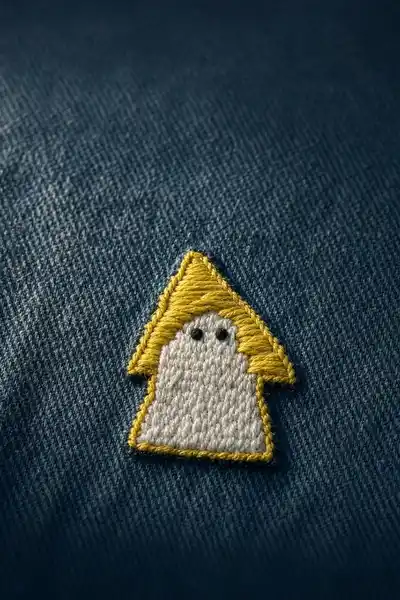
In 2009, a young woman in Bend, Oregon started posting illustrated stories on a blog called Hyperbole and a Half. The drawings were made in Paintbrush, the kind of software that comes free with a computer — jagged lines, flat fills, a recurring self-portrait with a lemon-yellow triangle for hair and two dots for eyes. The stories were about her dogs, her childhood, a birthday party she ruined at four years old by demanding an entire cake. They were funny in a way that felt almost accidental, as if someone had drawn their own memory faster than they could second-guess it. Within a couple of years the blog had millions of readers, and phrases from it — "ALL THE THINGS," the manic caps-lock energy of a mind spinning out — had leaked into how a whole internet talked about itself.
Then the posts stopped. For over a year, Allie Brosh went quiet. When she came back, in 2013, it was with two entries titled "Adventures in Depression" and "Depression Part Two" — and the same crude yellow figure, the same MS Paint aesthetic, was now describing what it feels like when the inside of your head goes flat and gray and stops producing anything at all. The drawings hadn't changed. What they were carrying had. That same year she gathered the blog's best work, plus new material, into a book called Hyperbole and a Half. Bill Gates called it "funny and smart as hell."
The strange thing is that nobody expected the drawings to hold that weight. They look like something a bored kid would make. And yet, over and over, they land somewhere careful sentences don't — a feeling caught before the reader has time to defend against it. The book made a lot of readers laugh until they had to stop, and then, a few pages later, sit very still.
The question we’re asking : How does a book drawn in crude MS Paint figures end up capturing feelings that polished writing usually can't reach?What we’ll see : We follow Brosh from her dogs and her four-year-old self into the flatness of depression, and watch what her deliberately simple line is actually built to do.
Table of contents
01Chapter 1 — The dog, the goose, and the childhood self
The book opens in familiar territory: animals and memory. Brosh writes about her "simple dog," a creature so cognitively empty that she runs tests to confirm it — hiding treats, watching the dog fail to grasp basic object permanence, narrating its inner life as a fog with nothing in it. She writes about her "helper dog," anxious and neurotic, spiraling into panic on a cross-country move. And she writes about the time a wild goose got into the house and she and her husband barricaded themselves in a room, two adults defeated by a large bird, texting each other from three feet apart.
The childhood pieces run on the same engine. There is the four-year-old who, on learning that a party is being held for another child, becomes consumed by a single demand for cake — a want so total it overrides every social rule around her. There is the letter she wrote her future self, promising to be a better and more responsible person, which her present self reads back with the flat horror of someone who has not become that person at all. Brosh returns again and again to the gap between who we intend to be and what we actually do at three in the morning when there is a whole cake in the kitchen.

02Chapter 2 — The crude line that carries the weight
It is worth being exact about how the drawings look, because the look is the argument. Brosh works in a basic paint program with a mouse. Her figures are lumpy and asymmetrical. The yellow ponytail sticks up like a party hat. Eyes are dots, mouths are single wobbling lines, hands are mittened blobs. Backgrounds are often just a wash of flat color or nothing. It is the visual language of someone who cannot draw, deployed by someone who very much can.
Because the figure carries almost no detail, it carries pure state instead. A slight change in the angle of the mouth-line, or the size of the eyes, swings the whole face from smug to devastated. When Brosh wants to show a mind overloaded, she doesn't render a complex expression — she scales the eyes up, floods the panel with red, and lets the caps-lock text do the rest. The crudeness isn't a limitation she works around. It's the instrument. A photorealistic face would give the reader too much to read; the blob gives them exactly one thing to feel.
03Chapter 3 — When the drawings stop being funny
The turn comes with the depression pieces, and the book is built so that the reader is unguarded when it arrives. After chapters of animals and tantrums, Brosh uses the identical visual toolkit to describe something that has no comedy in it at all. In "Adventures in Depression" and its sequel, the yellow figure goes numb. Brosh describes the early phase as an emotional shutdown — feelings simply switch off — and then a later, worse phase where even the sadness is gone, replaced by a flat nothing that no encouragement can reach.
She draws this with the same dots and lines, and it is devastating precisely because the tools haven't changed. There is a now-famous sequence where she looks for something, anything, that might make her feel, and finds a lone shriveled piece of corn under the refrigerator — and starts laughing, then can't stop, then is crying, the whole breakdown rendered in the same lumpy figure that earlier wanted cake. The absurd object and the real despair sit in one image, and the reader cannot fully separate them.
04Chapter 4 — A picture that names what words miss
Step back and the book's real subject comes into focus: it is about the distance between an inner state and any language we have for it. Brosh's whole method is a way of getting under that distance. We are usually bad at describing what happens inside us — the honest report gets sanded down into acceptable phrases, and by the time a feeling reaches words it has been edited into something more presentable than what we actually felt. The crude drawing skips that edit. It points at the state directly, before the socially acceptable translation happens.
This is why the same yellow figure can hold both a cake tantrum and a depressive collapse. Both are experiences that resist polite description. A four-year-old's total, unreasonable want and an adult's total, reasonless numbness are alike in that neither survives being made articulate — say them out loud in careful sentences and they shrink into something manageable and slightly false. Brosh's line refuses to make them manageable. It keeps them the wrong size, which is their true size.
05Conclusion
The book ends where it began, with the same figure, the same yellow hair, the same refusal to arrange life into lessons. Brosh doesn't tell us she recovered, or that the dogs got smarter, or that the four-year-old grew into someone responsible. She lets the pieces sit next to each other — the goose and the corn, the tantrum and the numbness — and trusts that a reader who laughed at one will feel the weight of the other, because they were drawn by the same hand in the same crude line.
Related books