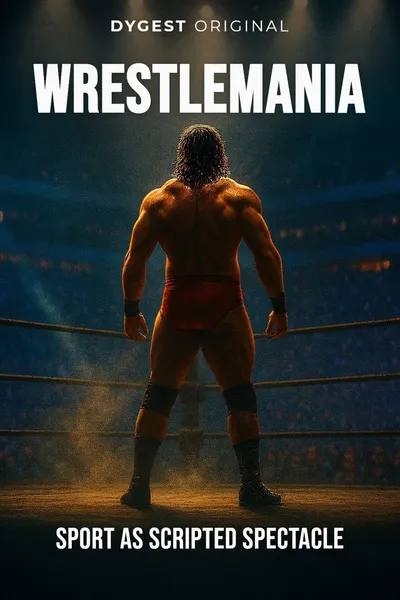
WrestleMania
Sport as scripted spectacle
Description
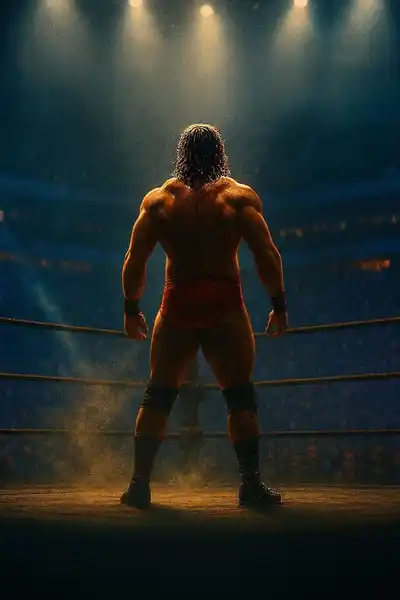
On March 31, 1985, a sold-out Madison Square Garden watched Hulk Hogan and Mr. T beat Roddy Piper and Paul Orndorff in the main event of the first WrestleMania. Muhammad Ali was a guest referee. Liberace danced with the Rockettes. Billy Martin did ring announcing. Vince McMahon, who had taken over his father's wrestling company a few years earlier, had bet most of what he had on turning a regional circuit of territorial promoters into a single national television product. The show drew a reported million-plus viewers on closed-circuit broadcast, and the bet paid. WrestleMania became an annual event, and the event became the spine of an industry.
Four decades on, WrestleMania fills stadiums for two nights, streams to a reported hundred-plus countries, and anchors a company that Endeavor folded into a multibillion-dollar media group in 2023. The performers train like athletes, bleed like fighters, and sometimes break like them. And everyone in the building knows the finish was decided beforehand. The outcome is written. The rivalry is booked. The punches are, mostly, pulled. This is the strange thing worth sitting with: a product that openly tells you it's fake has outlasted most of the leagues that insist they're real.
Wrestling calls its central convention kayfabe — the shared agreement to treat the staged as genuine. For most of the twentieth century that agreement was defended like a trade secret. Then the industry said the quiet part out loud, and somehow got bigger. Understanding why means looking at where the money comes from, what the audience is actually buying, and why the lie, once admitted, lost none of its power.
The question we’re asking : How does a spectacle that admits it's scripted build a business most real sports would envy?What we’ll see : We trace the deal struck between a wrestling company and the crowd that pays to believe.
Table of contents
01 Chapter 1 — The night the circus became the main event
Before 1985, American wrestling was a patchwork. The country was carved into territories, each run by a local promoter who controlled his region and respected the others' borders. A wrestler worked a circuit for a few months, got over with the local crowd, then moved on before the act went stale. It was a decent living and a closed world, built on handshake agreements and the understanding that nobody raided anybody else's town. The product was regional, the stars were regional, and television was a tool for selling tickets to the live show, not the main event itself.
Vince McMahon broke the map. Having bought the company from his father in 1982, he ignored the territorial truce and started putting his wrestlers on cable across the whole country, raiding rival promotions for their biggest names. Hulk Hogan, a charismatic giant with a handlebar mustache and a catchphrase, became the face of the expansion. The strategy enraged the old promoters, who correctly saw that national television would strangle their local draws. Within a few years most of the territories were dead or absorbed. McMahon had turned a confederation of fiefdoms into a single brand.

02 Chapter 2 — Kayfabe, and the long art of the agreed-upon lie
Kayfabe is the word wrestling uses for its founding fiction: the agreement to present scripted events as spontaneous, staged combat as real, booked rivalries as genuine hatred. The term's origins are murky — carnival slang, probably, from the days when wrestling shared a midway with the strongman and the bearded lady. For most of the twentieth century, protecting kayfabe was close to a religious duty. Wrestlers who played villains and heroes were kept apart in public. They stayed in character at restaurants, at airports, in hospitals. A man who had been thrown through a table at eight o'clock did not let a fan see him laughing at nine.
The discipline was total because the illusion was the asset. If a casual viewer concluded the whole thing was choreographed, the reasoning went, the drama collapsed and the tickets stopped selling. So the industry lied with remarkable consistency, and it lied upward: wrestlers told state athletic commissions it was a real sport, which conveniently dodged the regulation and taxes that came with being a real sport. The fiction was load-bearing in more ways than one.
03 Chapter 3 — What you're actually paying for
For a long time, the money came from bodies in seats and pay-per-view buys — fans paying a one-time fee to watch the big show at home. WrestleMania was the flagship purchase, the night casual viewers would spend on a card they'd ignored all year. That model made the company cyclical and dependent on a few huge nights, and it meant every storyline had to drive toward a moment someone would pay thirty or forty dollars to see resolved.
The real reinvention was the shift from selling events to selling access. In 2014 the company launched a streaming service bundling its entire library and live shows for a monthly fee, trading the big one-off pay-per-view windfall for predictable recurring revenue. But the deeper change came later, when it stopped being a broadcaster at all and became a licensor. Rather than airing its own content and hoping fans bought it, the company sold the rights to its weekly programming and its streaming catalog to media giants for sums that dwarfed anything ticket sales could produce. Multi-year television deals worth billions turned the audience from a thing you monetized directly into a thing you rented out.
04 Chapter 4 — The crowd that knows, and chants anyway
The thing WrestleMania depends on isn't the wrestlers' athleticism or McMahon's dealmaking. It's the crowd's decision to meet the fiction halfway. A stadium full of people who could tell you, without hesitation, that the finish was booked weeks ago will still rise as one when the hero kicks out at the last second, will still boo a villain they know is a kind man outside the ring, will still weep at a retirement they understand was scheduled by a writers' room. They are not fooled. They are participating.
This is a more honest contract than most entertainment offers. A film asks you to forget it's a film; the illusion works only if the seams stay hidden. Wrestling shows you every seam and asks you to care anyway — and the caring is the point. The chant of "this is awesome" at a well-executed match isn't a verdict on realism. It's applause for a shared performance the crowd considers itself part of. The audience isn't the passive recipient of the spectacle. It's a cast member, and the loudest one.
05 Conclusion
Forty years after Hulk Hogan slammed his way through the first main event, WrestleMania still works the way it did that night at Madison Square Garden: by stacking a year of stories onto one engineered evening and trusting a crowd to show up and believe on purpose. The celebrities change, the stars age out, the broadcast deals get bigger. What holds steady is the arrangement underneath — athletes risking real bodies for written endings, and an audience that pays precisely because it knows.
Related books