
Diet for a Small Planet
Eating for a smaller planet
Description
In 1971, a twenty-seven-year-old named Frances Moore Lappé sat in the agricultural library at Berkeley, working through a question that wouldn't leave her alone. She had dropped out of graduate school in social work, convinced she could understand hunger better by following the food than by following the theory. What she found in the data surprised her. The world was not running out of food. There was more than enough grain to feed everyone on the planet, and yet a large share of it never reached a human mouth at all. It was being fed to livestock, and most of what went in came back out as far less than it started.
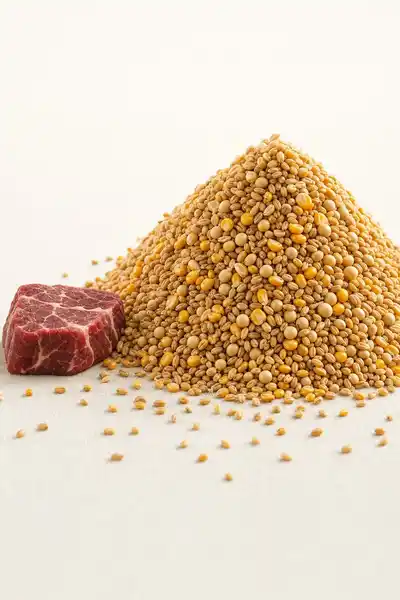
The numbers were stark. To produce a pound of beef in a feedlot, an animal ate something on the order of seven pounds of grain and soy — protein that humans could have eaten directly, converted at a steep loss into a smaller amount of meat. The American steak, in other words, was a kind of reverse engine, taking abundant plant protein and shrinking it. Lappé called this a protein factory in reverse, and the phrase captured a quiet scandal hiding inside an ordinary dinner. The hungry world and the well-fed table were not separate problems. They were connected through the feedlot.
Out of that insight came a small book with recipes in the back, published the same year. It sold in the millions, was revised across decades, and put a strange idea into circulation in American kitchens: that what we eat is never only a private matter of taste or health, but a choice that ripples outward into land, grain, and other people's plates.
The question we’re asking : How did a young researcher turn a fact about grain and cattle into a way of eating that millions of people adopted — and why does the argument still hold half a century later?What we’ll see : How one number reframed hunger, protein, and the everyday meal as connected pieces of a single system.
Table of contents
01Chapter 1 — A library, a question, and a number that didn't add up
Lappé was not a nutritionist or an agronomist by training, and she has always said that worked in her favor. She came to the question of hunger as an outsider, willing to ask what specialists had stopped asking because they assumed they already knew the answer. The reigning explanation in the early 1970s was scarcity: too many people, not enough land, a planet straining against its own appetite. Paul Ehrlich's The Population Bomb had come out in 1968, and the mood it captured — that famine was simply the arithmetic of too many mouths — was everywhere.
What Lappé did was check the arithmetic. She looked at how much grain the United States produced, and where it went. A startling portion of the harvest, well over half of the cropland's output, was cycled through livestock rather than eaten by people. Cattle in particular were inefficient converters. The grain that disappeared into producing American meat each year, she calculated, could have closed a meaningful part of the world's protein gap if it had gone to people instead.

02Chapter 2 — Protein without the steak
The practical core of Diet for a Small Planet is an argument about protein, and it arrives at a moment when most Americans believed that protein and meat were essentially the same thing. The cultural assumption ran deep: a real meal had meat at its center, and everything else was a side. Vegetables were what you ate so your mother would let you leave the table. Lappé set out to show that this was a habit dressed up as a nutritional law.
Her claim was that a plant-centered diet could supply all the protein a person needs, and supply it well, without passing it through an animal first. Beans, grains, nuts, seeds, dairy in modest amounts — these carried protein in abundance. The trick the book taught was how to combine them so that the body could use them fully. Grains were a little short on certain building blocks; legumes were short on different ones; put them on the same plate and each covered for the other.
03Chapter 3 — The myth of the second-class plant
Behind the recipes sat a piece of received wisdom that Lappé wanted to dismantle. For decades, plant proteins had been filed under a dismissive label: incomplete. The word implied something deficient, a lesser fuel that the body could only half use. Meat protein, by contrast, was complete — the gold standard, the real thing. This vocabulary had quietly settled into textbooks and dietary advice, and it carried more weight than the science behind it deserved.
The distinction was real but had been wildly overstated. It was true that animal proteins more closely matched the proportions of amino acids the human body uses, and that any single plant food tended to run low on one or two. But the leap from there to the idea that plants couldn't nourish a person was a leap the evidence never supported. Whole populations had lived, worked, and raised children for generations on diets built around grains and legumes. The proof was historical, sitting in plain sight.
04Chapter 4 — Eating as a political act
The deepest move in Diet for a Small Planet is the one in its title. A small planet is a planet whose limits you can feel, where the grain in a feedlot in Iowa and the empty bowl somewhere else are understood to be sitting on the same finite ground. Lappé's argument was that the ordinary act of choosing dinner connects to that whole system, whether we notice it or not. The plate is small; the consequences are not.
This is why the book landed as something larger than a cookbook or a diet plan. It proposed that eating is a daily decision about how to use the earth — that every meal is a small vote about what land grows, what gets wasted, and who is left out. Lappé was careful not to turn this into guilt. She wasn't telling anyone they were starving a child by ordering a hamburger. She was saying that the systems feel impersonal and unchangeable precisely because we experience them one private meal at a time, and that this is also where they can be reached.
05Conclusion
Lappé began at a library table with a single number that refused to behave, and the book she built from it never strayed far from that starting point. Hunger was not destiny written into a crowded planet; it was the outcome of choices about how food moves, choices visible all the way down to the meal in front of us. The grain that vanished into the feedlot was the thread that tied the well-fed table to the empty bowl, and pulling on it changed the shape of the whole question.