Defending Beef
Grass-fed case for beef
Description
Nicolette Hahn Niman spent years as an environmental lawyer taking on industrial hog and cattle operations — the kind that pool waste in open lagoons and treat animals as production units. She was, by any reasonable measure, exactly the person you would expect to want beef gone from the plate. Then she married Bill Niman, a rancher, moved onto grazing land in California, and started watching cattle up close, day after day, season after season. What she saw complicated the story she thought she already knew. The animals she had been fighting on paper turned out to behave very differently depending on how they were raised — and the land underneath them told a story her legal briefs had never captured.
Out of that tension came "Defending Beef," a book that does something genuinely awkward for its moment. It argues, from the environmental left rather than against it, that beef is not the climate villain it has become in the popular imagination — at least not all beef, and not automatically. Niman does not defend the feedlot. She defends the cow, and specifically the cow on grass, managed well, kept where grazing animals have roamed for millions of years. The distinction sounds small. In her telling it changes almost everything about whether that steak is a problem or part of a solution.
It is a claim that cuts against a lot of confident headlines, and Niman knows it. She is not asking anyone to eat more meat, or to ignore what factory farming does. She is asking a narrower, harder question about what we are actually measuring when we say beef is bad — and whether the number we keep repeating is describing the animal or the system we happened to build around it.
The question we’re asking : Is beef itself the environmental problem, or is it the way we've chosen to produce most of it?What we’ll see : How a former anti-livestock lawyer came to argue that cattle, managed well, can heal land rather than wreck it — and why the case turns on grass.
Table of contents
01Chapter 1 — The lawyer who married a rancher
Before she defended beef, Niman prosecuted it. As a lawyer for Robert F. Kennedy Jr.'s Waterkeeper organization, she spent the late 1990s and early 2000s going after industrial animal operations — the confinement barns, the manure lagoons, the concentrated feedlots that turn thousands of animals into a point-source pollution problem. Her objections were specific and, in her view, entirely correct: this way of raising animals fouls water, degrades air, and treats living creatures as inventory. Nothing in the book walks any of that back.
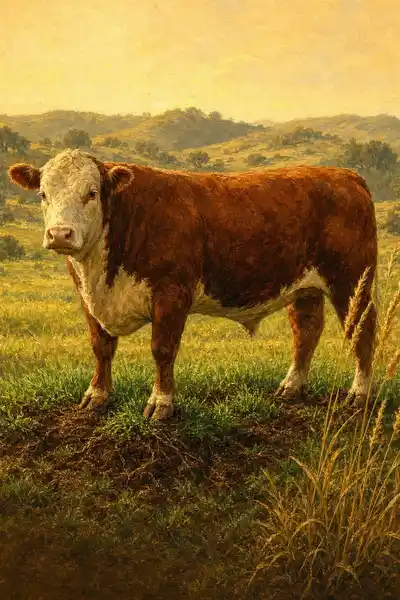
What changed was proximity. When she moved to the ranch Bill Niman had built, she found herself living alongside cattle that were not confined, not fed a grain-heavy diet in a dirt pen, not standing in their own waste. They moved across pasture, ate grass, and left the land in a state she had not expected. The gap between those animals and the ones she had sued in court was so wide that lumping them together started to feel less like rigor and more like a category error.

02Chapter 2 — What a cow actually does to grass
The heart of Niman's argument is ecological, and it begins with a fact that predates agriculture entirely. Vast grasslands — the American prairie, the African savanna, the Eurasian steppe — coevolved with large grazing herbivores. Bison, antelope, wild cattle: these animals were not intruders on the grass. The grass, in a real sense, depends on them. Grazed, trampled, and fertilized in cycles, then left to recover, grassland stays healthy. Remove the grazers entirely and the system does not simply relax into a garden; in many places it degrades.
This is where properly managed grazing enters the story. Niman draws on the idea that cattle, moved in tight groups across pasture and then rotated off before they overgraze, can mimic what wild herds once did. The animals bite the grass, stimulating regrowth; their hooves press seed and litter into the soil; their manure feeds it. Done well, the practice builds soil organic matter — which is to say, it pulls carbon out of the atmosphere and stores it in the ground. Healthy grassland soil is one of the planet's larger carbon reservoirs, and Niman argues that grazing animals are part of how that reservoir gets maintained.
03Chapter 3 — Not all beef is the same meat
Having reframed the environmental question, Niman turns to the plate. Here the popular verdict is just as settled: red meat is bad for you, linked to heart disease, best avoided. She pushes back, and again the move is to break the category apart rather than defend it whole. Beef, she argues, is not one substance. What an animal eats changes what its meat becomes, and the difference between grass-fed and grain-finished is not cosmetic.
Her nutritional case runs against decades of dietary orthodoxy that treated saturated fat as the primary dietary enemy. Niman marshals the argument, gaining ground in nutrition science, that the case against saturated fat was overstated and that the real culprits in modern diets lie elsewhere — in refined carbohydrates and heavily processed foods. Beef, in this reading, was convicted partly by association, swept up in a broader panic about fat that the evidence has not fully supported. She treats this as contested territory rather than settled fact, which is the right posture, but she wants the contest reopened.
04Chapter 4 — The trouble with a single villain
Step back from the cattle and the grass, and "Defending Beef" is really a book about how we argue over food — and our persistent appetite for a single villain. Beef became that villain because it is legible: a big animal, a familiar emissions figure, a food easy to feel guilty about. A clean target is satisfying. It gives the concerned eater something concrete to renounce. Niman's discomfort is that the cleanliness is an illusion, purchased by ignoring the differences that actually matter.
Her deeper point is about what gets lost when a whole category stands trial for its worst version. The feedlot is the worst version, and it earns its criticism. But when the criticism expands to indict every cow, it takes down the grazing rancher alongside the industrial operator, flattens the distinction between restoration and extraction, and quietly forecloses a way of using land that might be part of the answer rather than the problem. The verdict feels rigorous. In practice it removes options.
05Conclusion
The woman who once sued cattle operations for a living ended up defending the cow — not the feedlot, not the industry, but the animal on grass, doing something close to what grazing herds have done for as long as there have been grasslands. Her case does not ask anyone to eat more meat. It asks whether the number we repeat about beef is describing the animal itself or the system we built around it, and whether tearing up the pasture would leave us better off than keeping the herd on it.
Related books