
Thus Spoke the Plant
When plants think and speak
Description
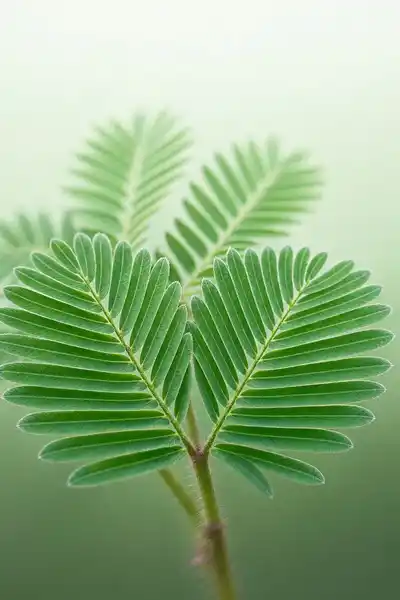
In a greenhouse and later in a lab, an Australian ecologist named Monica Gagliano began doing something to plants that most biologists reserve for animals: she trained them. She dropped potted Mimosa pudica plants — the ones that fold their leaves when touched — over and over, watching to see whether they would keep flinching. They stopped. Not from exhaustion, she argued, but because they had learned the fall was harmless. Weeks later, undisturbed, they still remembered. That result, published in 2014, is where her book "Thus Spoke the Plant" plants its flag.
Gagliano did not arrive at plants through botany. She trained as a marine biologist, studying fish, until a series of experiences she describes as both scientific and deeply personal pushed her toward the vegetal world. Her book braids two threads that most researchers keep carefully apart: rigorous, peer-reviewed experiments on plant behavior, and a first-person account of dreams, encounters, and shamanic sessions that, she says, told her which experiments to run. It is an unusual document — part lab notebook, part memoir, part manifesto for a science willing to treat plants as something other than furniture.
The claims land hard because they collide with an old certainty. No brain, no neurons, no nervous system as we know it — and yet, Gagliano insists, learning, memory, communication, even choice. Whether we find that persuasive or maddening, the book forces a question we rarely bother to ask, because the answer has always seemed obvious.
The question we’re asking : Can a plant learn, remember, and communicate — and what would it mean if it could?What we’ll see : How one scientist's experiments and her willingness to listen turned plants from objects into subjects, and unsettled the line we draw around minds.
Table of contents
01Chapter 1 — The scientist who let plants change the question
Gagliano's path into plant research was not tidy, and she refuses to tidy it up in the telling. She had built a solid career studying coral-reef fish, the kind of work that gets funded and cited. What broke the pattern, in her account, was a growing discomfort with treating living things as data points to be extracted and discarded. She writes about the moment she stopped seeing the animals she studied as specimens and started seeing them as beings with lives of their own — a shift that made her existing research feel untenable.
From there she turned to plants, which is a strange direction to turn if what you want is to be taken seriously. Plants are the organisms Western science has most confidently placed at the bottom of the ladder: alive, yes, but passive, reactive, closer to rock than to animal in the popular imagination. Gagliano's wager was that this ranking says more about us than about them. We had never really asked whether plants could learn, because we had already decided they couldn't.

02Chapter 2 — The experiments that shook the botany desk
The Mimosa study is the centerpiece, and it is worth understanding why it caused a stir. Mimosa pudica famously closes its leaves when disturbed — a defensive reflex. Gagliano built a rig that dropped potted plants a short distance onto a cushioned surface, harmless but startling. At first the plants closed up. After repeated drops, they stopped bothering, keeping their leaves open. To rule out fatigue, she shook them a different way; they closed again immediately. The plants had not run out of energy — they had discriminated between a threat and a false alarm, which is the signature of learning called habituation.
The finding that unsettled critics most was memory. When Gagliano returned to the same plants weeks later, they still "remembered" that the drop was harmless, retaining the learned response far longer than many animals retain comparable ones. A plant, with nothing resembling a brain, appeared to hold onto information about its own past. The study passed peer review and was published, though not without a long fight and considerable skepticism about what words like "learning" and "memory" should be allowed to mean.
03Chapter 3 — When the plant does the talking
The book's title is not a metaphor Gagliano treats lightly. She means, quite literally, that plants communicate — with each other, with other species, and in her more radical passages, with us. The scientific end of this claim rests on a growing body of work, some hers, showing that plants exchange information through channels we are only beginning to map: airborne chemicals, root secretions, and even sound.
The sound research is among her most provocative. Gagliano and colleagues reported that the roots of young plants could detect the vibrations of running water and grow toward it, and that plants may emit and respond to acoustic signals in ranges we don't normally listen for. If true, it suggests a sensory world running underneath the visible one — a plant not passively soaking up its surroundings but actively probing them, gathering data, and acting on it. The environment, in this picture, is not a backdrop. It is a conversation the plant is already having.
04Chapter 4 — A different kind of mind, and what it asks of ours
Strip away the more startling anecdotes and a serious argument remains, one that reaches past botany. Western science inherited a hierarchy — mineral, vegetable, animal, human — with cognition available only near the top and only to creatures with brains. Gagliano's work chips at the load-bearing assumption of that whole structure: that intelligence requires the hardware we happen to possess. If a plant can learn and remember without a neuron, then either those words mean less than we thought, or minds are far stranger and more widely distributed than we allowed.
This is why the book unsettles rather than merely informs. To grant a plant learning is to demote the brain from the sole author of intelligence to one solution among several. It invites a science that studies behavior on its own terms rather than measuring every organism against the human template and marking down whatever falls short. Gagliano's plants are not lesser animals; they are competent beings that solved the problems of survival by an entirely different route, and doing so quietly indicts how confidently we ranked them.
05Conclusion
The Mimosa plants that stopped flinching are still, years later, the hinge the whole book turns on. A living thing with no brain kept a record of its own experience and acted on it — and a scientist who had walked away from studying beings as specimens was there to notice. Gagliano's achievement is not that she proved plants think in the way we do. It is that she designed experiments careful enough to make the question unavoidable, and honest enough to admit where the questions came from.