The Meaning of Human Existence
Why we're here, where next
Description
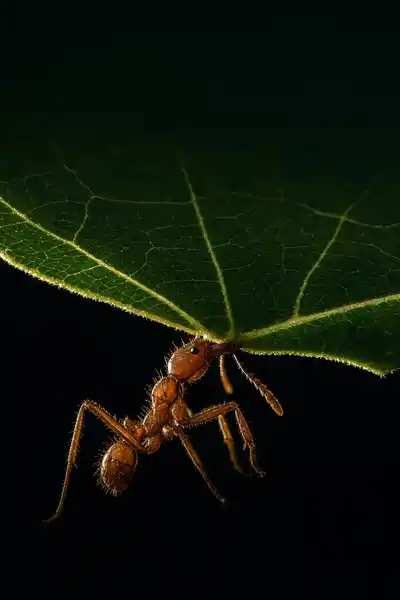
Edward O. Wilson spent most of his life studying ants — millions of them, colonies that build cities out of instinct without a single individual understanding the plan. Late in his career, having become one of the most decorated biologists alive, he turned that same patient eye on us. The question he asked in his 2014 book is disarmingly plain, the kind a child asks and adults quietly stop asking: what is the meaning of human existence? Not the meaning of your life or mine, but the meaning of the whole species — where we came from, why a creature like us is here at all, and what, if anything, we are for.
Wilson's answer refuses the two usual escape routes. He will not reach for religion, and he will not reach for the tidy notion that we are a cosmic afterthought. Instead he goes looking in the deep past, in the strange evolutionary road that turned a middling African primate into the only species that reflects on its own origins. For him, meaning is not a message waiting to be decoded from the sky. It is something closer to a story — the accumulated record of the accidents, gambles and contradictions that produced us.
The word meaning, he insists, can be read two ways. There is the human sense, which assumes intention: something means what it was meant to do. And there is the wider sense, in which meaning is simply the sum of the causes that made a thing what it is and the consequences that follow. Wilson bets that the second reading, applied honestly to our own species, tells us more about why we are here than any of the answers we usually prefer.
The question we’re asking : If we take the biologist's view of our own species, what is the meaning of human existence — and does it point anywhere?What we’ll see : An ant scientist turns the tools of evolution on the human animal, and finds our meaning written in how we came to be.
Table of contents
01Chapter 1 — The accident that made a conqueror
Wilson's starting point is that nothing about us was inevitable. For roughly three and a half billion years, life on Earth got along without anything resembling a mind that could ask why it existed. Bacteria ruled, then more complex cells, then animals of astonishing variety — and none of them built civilizations or wondered about their place in the universe. The arrival of a species like ours was, in his phrasing, a very near thing, the product of a long chain of improbable steps that could easily have gone another way.
The chain, as he tells it, runs through a specific set of biological accidents. Our lineage happened to be large-bodied, which allowed for a big, expensive brain. It happened to live on land rather than water, where fire could eventually be controlled and cooking could feed that brain. It happened to have grasping hands freed by upright walking. Remove any one of these preconditions and the animal that reflects on meaning never appears. Dolphins are clever, octopuses are clever, but they were never going to write books about their own origins.

02Chapter 2 — The eusocial gamble
The deepest question in Wilson's book is not how we got smart but how we got social — because for him the two are inseparable. Only a handful of times in the history of life has evolution produced what he calls eusociality: a way of living in which members of a group cooperate so tightly, across generations, that they form something like a superorganism. Ants did it. Termites and certain bees did it. And, astonishingly, one line of large mammals did it too. That line was ours.
Eusociality is rare because it requires a specific setup. Wilson emphasizes the defended nest — a site worth protecting where the young are raised together and where individuals gain more by staying and cooperating than by striking out alone. In the human case the nest was the campsite, the hearth, the place where food was shared and children were reared collectively. Around that fire, cooperation became the winning strategy, and the brain grew to manage the intricate social calculations it demanded: who to trust, who owes what, who is watching.
03Chapter 3 — A chimera by design
Out of that unresolved gamble comes what Wilson considers the defining fact of human nature: we are a chimera, an animal assembled from parts that do not fit. The forces of individual selection built the instincts we tend to label as sin — greed, vanity, the drive to dominate. The forces of group selection built the instincts we call virtue — loyalty, empathy, the willingness to sacrifice for others. Neither set is going away, because both were rewarded across millions of years. We did not fall from grace; we were born divided.
Wilson finds this genuinely liberating rather than tragic. The great religions, he suggests, have always sensed the conflict and dramatized it as a battle between good and evil, flesh and spirit, waged inside every soul. The biology says something less mythic but just as strange: the conflict is real, it is inherited, and it has no final resolution because a species with pure selfishness would fall apart and a species with pure altruism would be outbred. We are meant, if the word applies at all, to hold both.
04Chapter 4 — The lonely planet and what comes after
Having traced where we came from, Wilson turns to where we might be going, and he does something surprising: he deflates the destinations we usually reach for. We will not, he argues, find our meaning by colonizing the galaxy — the distances are punishing and Earth remains the only home our biology was built for. And we should not expect it to arrive from outside. If alien civilizations exist, they will almost certainly not resemble us, will not share our eusocial history, and are unlikely to hand down the answers we crave. There is no rescue coming from the stars.
This is the step back the whole book has been building toward. For Wilson, the meaning of human existence is not a secret held elsewhere in the universe, waiting to be received. It is entirely of this planet, written in the specific evolutionary path that made us — the accident, the gamble, the chimera. To look for meaning in a cosmic destiny is, in his view, to keep missing the point. The point is in the mirror.
05Conclusion
Wilson began with ants and ended with us, and the symmetry is deliberate. The ant colony achieves its order by dissolving the individual into the group; we achieved our humanity by refusing that bargain, keeping our stubborn selves and paying for it in permanent inner conflict. That refusal, on his account, is not a defect in the design. It is the design. The improbable animal that spread across the planet and learned to ask why it exists is the same animal torn between the greed that individual selection rewarded and the loyalty that group selection required.
Related books