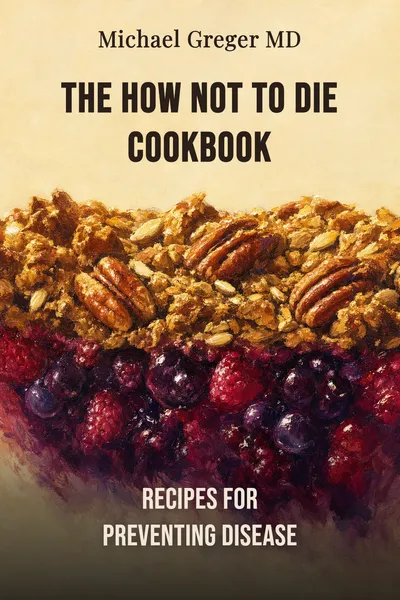
The How Not to Die Cookbook
Recipes for preventing disease
Description
In 2015, a physician named Michael Greger published a book with a title that dared you to argue with it: How Not to Die. It was a dense, heavily footnoted survey of what the research said about the leading causes of premature death in the wealthy world — heart disease, several cancers, type 2 diabetes, high blood pressure — and what a diet built around whole plant foods seemed to do to each of them. The book sold well and made a strong case. It also left readers with a practical problem. Knowing that leafy greens and beans and berries show up again and again in the studies is one thing. Getting them onto a plate on a Tuesday night, in a form you actually want to eat, is another.
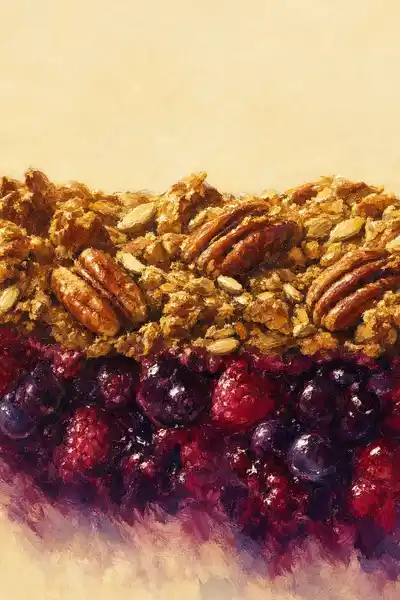
So Greger wrote a second book to answer the question the first one raised. The How Not to Die Cookbook, published in 2017, takes the evidence and turns it into roughly a hundred and twenty recipes — Superfood Breakfast Bites, Spaghetti Squash Puttanesca, a Two-Berry Pie with a pecan-sunflower crust instead of butter and flour. The premise is disarmingly simple: if the science points at certain foods, the useful move is not another lecture about them but a way to cook them that survives real life.
That shift, from citation to skillet, is where the book gets interesting. A cookbook framed as disease prevention is making a quiet but large claim — that the everyday act of deciding what to eat is also, cumulatively, medicine. It asks us to hold two things at once: the pleasure of a good meal and the arithmetic of a long life. Whether those two things can share a plate is the wager the whole book is built on.
The question we’re asking : Can the evidence behind a plant-based diet actually be cooked — turned into food people will make again — without becoming either a lecture or a compromise?What we’ll see : How a wall of research gets translated into a daily plate, and what that translation asks of the way we think about eating.
Table of contents
01 Chapter 1 — From data to dinner
Greger's starting material is not opinion but a mountain of published studies, and the cookbook never quite lets us forget it. His first book had gone cause of death by cause of death — coronary artery disease, various cancers, diabetes, kidney failure — and pulled out the dietary threads running through each. The recurring finding, stated plainly, was that populations eating mostly whole plant foods tended to suffer less from exactly the diseases that kill most people early in richer countries. The cookbook is his attempt to make that finding operational, which is a genuinely different job.
The gap he is bridging is real. Nutrition advice tends to die between what studies suggest and what a tired person can assemble after work. Telling someone that cruciferous vegetables show up favorably in the cancer literature does very little on its own. Telling them how to roast broccoli so it caramelizes, or fold kale into a soup so it stops tasting like a chore, does something. Greger's bet is that the recipe, not the citation, is the unit of behavior change.

02 Chapter 2 — The Daily Dozen becomes a plate
The organizing device Greger carries over from his first book is a checklist he calls the Daily Dozen: food groups he suggests hitting every day. Beans. Berries. Other fruits. Cruciferous vegetables. Greens. Other vegetables. Flaxseeds. Nuts and seeds. Herbs and spices. Whole grains. Beverages, mostly water and tea. And exercise, folded in as the twelfth item. It is less a rigid prescription than a scorecard, nudging the day toward foods the research favors without demanding perfection.
The cookbook's real work is turning that abstract list into meals where the boxes get ticked almost by accident. A single dish is engineered to cover several categories at once — a grain bowl that quietly delivers whole grains, greens, beans and a spice or two, so that eating well becomes a byproduct of eating something good rather than a separate act of discipline. The checklist recedes; the plate does the accounting.
03 Chapter 3 — Cooking without the crutches
The hardest constraint Greger sets himself is what he removes. The recipes are not just plant-based; they largely avoid added oils, refined sugar and salt, the three ingredients most cuisines lean on to make things taste immediately good. He treats even olive oil as a processed food to be minimized rather than celebrated, which puts him at odds with mainstream healthy-eating advice. That is a bold position, and it is where the cookbook has to prove it can cook, not just prescribe.
Take away oil, sugar and heavy salt and you have to find flavor somewhere else. The book leans on techniques that build taste without the usual crutches: roasting to draw out natural sweetness, toasting nuts and spices, using vinegars, citrus and miso for the savory depth that salt usually provides, and treating herbs and spices as central rather than garnish. You sauté in broth or water instead of oil. You blend cashews or seeds to get the creaminess a sauce would normally borrow from dairy or fat.
04 Chapter 4 — What it means to treat food as medicine
Step back from the recipes and the book is making an argument about where prevention actually happens. Not in the clinic, not in an annual checkup, not in a supplement, but in the small repeated decision of what goes on the plate, three times a day, for decades. Greger's project relocates health from the doctor's office to the kitchen counter — a shift that is empowering and demanding in equal measure, handing you both the control and the responsibility.
The reframe worth sitting with is that a cookbook, in Greger's hands, is a preventive instrument. We are used to thinking of medicine as something that intervenes after a problem appears. A recipe for Spaghetti Squash Puttanesca is trying to work upstream of that, in the years before anything shows up on a scan — reframing cooking dinner as low-grade, cumulative treatment whose effects are statistical and slow, which is precisely what makes it so easy to neglect.
05 Conclusion
The book ends where the first one couldn't: at the table. Where How Not to Die assembled the case, The How Not to Die Cookbook makes it edible — taking a wall of studies about heart disease, cancer and diabetes and rendering it as Superfood Breakfast Bites, a briny squash puttanesca, a berry pie with a crust of pecans and sunflower seeds. The Daily Dozen supplies the structure; the techniques for coaxing flavor from whole plants without oil, sugar or salt supply the craft. What holds it together is the refusal to separate health from pleasure.
Related books