Pictures at a Revolution
The year cinema changed forever
Description
On the evening of April 10, 1968, the Academy handed its Best Picture Oscar to In the Heat of the Night, a film about a Black detective solving a murder in a Mississippi town that did not want him there. The ceremony had been postponed two days out of respect for Martin Luther King Jr., assassinated the week before. In the same category sat four other films, and if you lined them up you got something close to a cross-section of a country arguing with itself. There was a gentle interracial-marriage drama, a bleak and beautiful gangster picture soaked in blood, a whispered comedy about a drifting college graduate, and a bloated musical about a man who talks to animals. Five films, one envelope, two Americas.
Mark Harris's Pictures at a Revolution takes that single Oscar slate and pulls it apart thread by thread, tracing each of the five nominees back to the moment someone first said yes. What he finds is not a tidy story of the new sweeping away the old. It is a messy, overlapping, years-long scramble in which Warren Beatty begged a studio to make Bonnie and Clyde, Mike Nichols worried his career was already over, Sidney Poitier carried the weight of representing an entire people, and a young unknown named Dustin Hoffman could barely get an audition. The films were made in the same few years, by an industry that had no idea what it was becoming.
The mid-sixties looked, from the executive suites, like business as usual. The Sound of Music was printing money, the production code still policed what could be shown, and the men who ran the studios had been running them for decades. Then, over roughly three years, the ground moved. Harris's book is the story of how five films caught that movement — some by intent, some by accident, one by refusing to notice it at all.
The question we’re asking : How did a single year's crop of Best Picture nominees end up marking the exact seam where old Hollywood tore open and something new came through?What we’ll see : We follow five films from first pitch to Oscar night, and watch an industry, and a country, change underneath them.
Table of contents
01Chapter 1 — Five envelopes, two Americas
The genius of Harris's frame is that he does not pick a hero and a villain. He takes the five 1967 Best Picture nominees as a set and treats them as core samples drilled into the same cultural ground. In the Heat of the Night and Guess Who's Coming to Dinner both starred Sidney Poitier, both circled race, and both did it in ways that already felt like a generation apart. Bonnie and Clyde and The Graduate spoke to a young audience the studios barely understood. And Doctor Dolittle — a lavish, troubled musical that nearly bankrupted Twentieth Century-Fox — sat among them as a fossil, nominated more by campaign spending than by love.
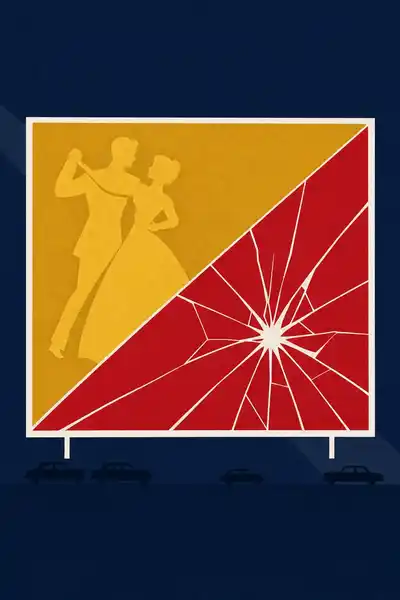
What makes the grouping so telling is that these films were not competing on style points. They were competing on which America they believed in. Guess Who's Coming to Dinner imagined progress as a well-mannered dinner where everyone eventually agrees. Bonnie and Clyde imagined it as an ambush, romantic and violent and without apology. The two could not both be the future, and yet there they were, on the same ballot, made under the same roof by the same handful of companies.

02Chapter 2 — The old guard and the movie nobody wanted
To understand the shock, you have to feel how solid the old system still seemed. In 1965 The Sound of Music had become one of the highest-grossing films ever made, and Fox concluded, reasonably enough by its own logic, that the answer to every question was another giant musical. That conviction produced Doctor Dolittle: enormously expensive, endlessly troubled, plagued by a difficult star in Rex Harrison and by animals that would not cooperate. It is the book's great cautionary figure — the studio betting the house on the thing that had worked last time.
Harris is careful not to make the old guard cartoonish. Men like Jack Warner had built the studios and had genuine instincts; they simply belonged to a world where a production code told you what you could not show, where stars were contract property, and where a film's job was to reassure. When Warren Beatty walked into Warner's office and pushed for Bonnie and Clyde — a picture about likable killers, shot with a French New Wave sensibility — he was asking the studio to make something it had spent thirty years learning not to make.
03Chapter 3 — The kids who had nothing to lose
Against that establishment, Harris sets a loose cast of outsiders who were, in various ways, stuck. Warren Beatty had been a sensation in Splendor in the Grass and then watched his career stall, and he essentially produced Bonnie and Clyde into existence to prove he could still matter. Mike Nichols had been half of a legendary comedy duo with Elaine May; when it ended, he was terrified he had no future, and The Graduate was his second film as a director. Dustin Hoffman was an unknown stage actor, wrong for leading roles by every studio metric, and Nichols cast him anyway.
These were not revolutionaries with a manifesto. They were talented, anxious people making the boldest choices available to them, often because the safe choices were closed off. Beatty's gamble on Bonnie and Clyde was as much survival as vision. Nichols's decision to build The Graduate around an awkward, ambiguous young man rather than a matinee idol was instinct as much as strategy. What united them was a willingness to trust an audience the studios had written off.
04Chapter 4 — When the ballots came in
Step back from the five productions and the Oscar slate becomes something more than a horse race — it becomes a readable map of a hinge moment. Harris's argument, made through story rather than lecture, is that 1967 was the year the studio system's authority to define what a movie should be simply stopped holding. The old machinery still turned; the ceremony still happened; the tuxedos were the same. But the films that mattered were no longer the ones the system had been built to produce, and everyone in the room could feel it.
The clarifying thing is that the revolution announced itself as a split decision. In the Heat of the Night won, and it was in many ways a bridge film — modern in its subject, relatively conventional in its craft, palatable to older voters. Bonnie and Clyde and The Graduate, the pictures that actually pointed forward, went home with far less than their cultural impact deserved. The Academy, like the industry it represented, could sense the shift without quite being able to reward it. That hesitation is the whole story in miniature.
05Conclusion
By the spring of 1968, the careers had already sorted themselves. Nichols and Hoffman were launched into decades of work; Beatty and Dunaway were counterculture stars; Fox was nursing the wound of Dolittle; and Poitier was still, brilliantly, boxed in. The studios that had seemed so permanent a few years earlier were entering a period of turmoil and reinvention that would define the seventies. The five films that shared a single ballot went on to wildly different afterlives, but they had already done their collective work: they had marked the seam.
Related books