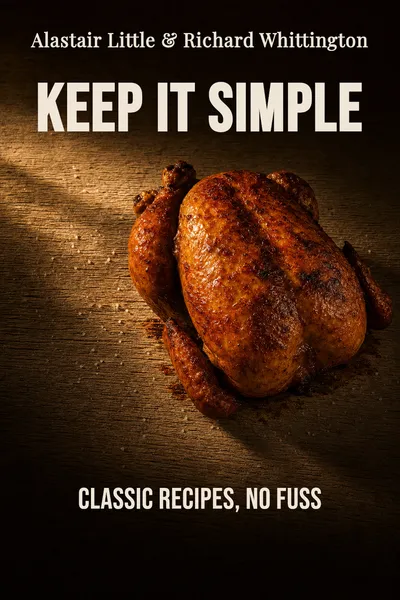
Keep it Simple
Classic recipes, no fuss
Description
Open most cookbooks built around the classics and you meet the same quiet threat on every page: a shallot brunoise, a reduction held at exactly the right temperature, a garnish that exists mostly to be photographed. The dishes we grew up eating — a roast chicken, a bowl of pasta, a plate of braised meat — arrive dressed up as tests. Keep it Simple takes the opposite bet. It looks at the same familiar repertoire and asks a blunt question: how much of this actually needs to be there?
The answer, across the book, is: less than we've been told. Its recipes revisit dishes almost everyone recognizes and then trim them back to the parts that carry the flavor. A good tomato, salt, olive oil, heat, time. The premise is that a classic earns its place not through complication but through a handful of decisions made well, and that most home cooks already have the instincts — they've just been talked out of trusting them by cookbooks written to impress rather than to feed.
That's a modest-sounding claim with a surprisingly large reach. It touches what we buy, how we spend a weeknight, and whether cooking feels like a chore or a pleasure. A book that tells us to do less is really making an argument about where the quality in a dish comes from — and about who traditional cooking is supposed to belong to.
The question we’re asking : What does a cookbook mean when it promises to keep the classics simple, and what has to be true for that promise to hold?What we’ll see : How the book strips familiar dishes back to what matters, and what that reveals about home cooking.
Table of contents
01 Chapter 1 — The premise: fewer moving parts
The organizing idea of Keep it Simple is easy to state and harder to practice: a classic dish is usually a short list of good ingredients treated with respect, and everything past that short list is optional. The book works through the familiar repertoire — soups, roasts, pastas, braises, a few desserts — and in each case asks what the dish is actually made of once the flourishes are pulled away. What's left is almost always leaner than the version we half-remember from a restaurant menu or a television kitchen, where a plate arrives layered with sauces and sides that have more to do with presentation than with taste.
This is not a shortcut book, and it takes care to say so. Simplicity here doesn't mean fewer steps for their own sake, or a pantry of jarred substitutes standing in for the real thing. It means removing the parts that don't earn their keep. A cream sauce that hides a mediocre piece of fish isn't simpler than a squeeze of lemon; it's more complicated and worse. The book's instinct, again and again, is to subtract until only the load-bearing elements remain — and then to make those elements as good as they can be.

02 Chapter 2 — What simple actually asks of the cook
The catch, which the book is honest about, is that simple is not the same as easy. When a dish leans on three things instead of fifteen, the cook loses the safety net. There's no rich sauce to paper over an overcooked steak, no pile of garnish to distract from a bland soup. So the techniques Keep it Simple teaches are less about elaborate skills than about attention: knowing when the pan is hot enough, when to stop stirring, when a thing is done and needs to come off the heat before we ruin it. The margin for error is smaller, and the book doesn't pretend otherwise.
A lot of the book's practical advice lives in these small margins. Salt early and taste as you go. Let meat rest. Don't crowd the pan. Buy the tomatoes in season and leave them alone in February. None of it is secret, and that's rather the point — these are the habits a good home cook builds by paying attention, not the tricks a professional guards behind a closed kitchen door. The book collects them and gives them back plainly, as if to say these were always ours to use.
03 Chapter 3 — The recipes that carry the argument
The recipes are where the philosophy either holds or falls apart, and Keep it Simple stakes its case on the most familiar dishes it can find. A roast chicken with little more than salt, heat, and a hot oven. A tomato sauce that asks for good tomatoes, garlic, oil, and time, and forbids almost everything else. A soup that is really just one vegetable, stock, and the confidence to leave it be. These are dishes chosen precisely because everyone thinks they know them, and because everyone has, at some point, made a fussier version and wondered whether it was worth the trouble.
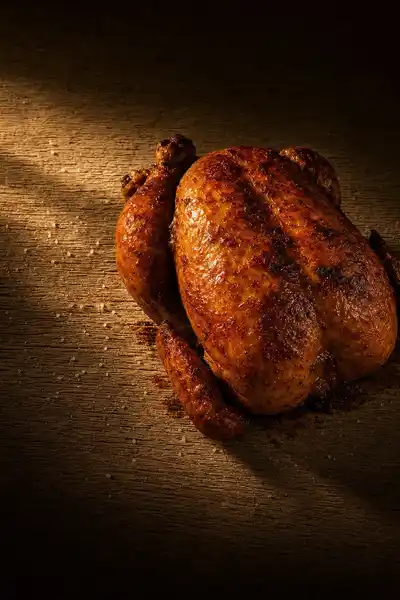
What the book does with them is instructive. Take the roast chicken: no brining ritual, no compound butter forced under the skin, no trussing diagram. Salt it well, let it sit, get the oven properly hot, and pay attention to the color rather than a timer. The result is meant to prove the thesis in a single bite — that the plainest version, done attentively, is not a compromise but the best version. The complications we've been sold turn out to be, mostly, decoration we can happily leave off the plate.
04 Chapter 4 — When a classic stops being intimidating
Step back from the recipes and Keep it Simple is really addressing a feeling more than a skill gap. Most home cooks aren't incapable of a good roast or a proper sauce; they're intimidated out of trying by the sense that the classics belong to someone more serious — a chef, a purist, a person with the right pans and the right pedigree. The book's quiet project is to dismantle that intimidation, and it does so mainly by refusing to treat these dishes as sacred, by putting them back within arm's reach of an ordinary kitchen.
There's a small politics in that. The great classic dishes were, for the most part, peasant and household food before they were restaurant food — things made from what was on hand, cooked without ceremony, repeated until they were second nature. Somewhere along the way they got promoted, plated, and fenced off behind technique. Stripping them back is, in a sense, returning them to the kitchens they came from. The book treats simplicity not as a trend or a diet but as a restoration, a way of handing a dish back to the people who invented it.
05 Conclusion
Keep it Simple ends more or less where it began, with a plate of familiar food and a short list of ingredients treated well. Its argument never really changes across the book; it just accumulates evidence — a roast, a sauce, a soup, a plain cake — until the case feels less like a claim and more like common sense. Do fewer things, buy better, pay attention at the moments that matter, and the classics look after themselves. The complications, it turns out, were mostly ours to put down.
Related books