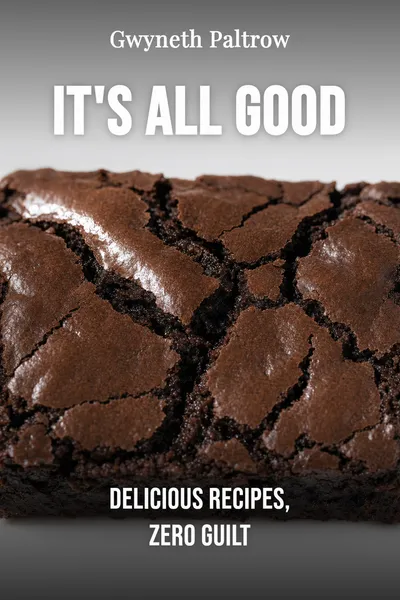
It's All Good
Delicious recipes, zero guilt
Description
In the winter of 2011, Gwyneth Paltrow was feeling wrecked. Exhausted, foggy, aching in a way that painkillers weren't touching. A doctor ran a panel of tests and came back with a list that read like a small verdict: she was, the results suggested, intolerant to a whole roster of things she ate every day. Gluten. Dairy. Eggs. Coffee. Refined sugar. Not a fad, not a cleanse she'd read about — a printout telling her the food filling her fridge was part of what was making her feel terrible.
Most people would have filed that under "depressing" and quietly grieved the cheese. Paltrow, working with the cook and writer Julia Turshen, went the other way. The two of them treated the elimination list as a design brief. If bread, sugar, and butter were off the table, what could still land on it — and taste like something you'd actually want to eat twice? The answer became It's All Good, published in 2013: a collection of 185 recipes built inside the constraint, not around apologizing for it.
The premise sounds like deprivation dressed up in nice photography. Huevos rancheros without the usual crutches, Korean-style chicken tacos, salmon burgers with pickled ginger, brownies engineered to skip the sugar and butter. The bet running underneath all of it is that you can subtract the ingredients a body reacts to and still end up somewhere worth eating — that health and pleasure aren't the trade-off the diet industry keeps insisting they are.
The question we’re asking : Can a cookbook built entirely around what you remove still be about pleasure rather than penance?What we’ll see : How a diagnosis turned into a system for cooking well inside strict limits — and what that says about where we look when we want to feel better.
Table of contents
01 Chapter 1 — The doctor's note that started a cookbook
The origin story is not glamorous, and It's All Good doesn't pretend otherwise. Paltrow opens by describing a stretch of feeling genuinely unwell — the kind of low-grade wrongness that doesn't send you to the hospital but drains the color out of ordinary days. The tests she took, ordered by the doctor and functional-medicine practitioner Alejandro Junger, pointed to food intolerances and a system asking for a reset. The book grew directly out of that moment, which is why it reads less like a lifestyle statement and more like a response to a problem.
The list of things to cut was long enough to feel like a wall. Gluten, dairy, eggs, sugar, coffee, alcohol, shellfish, deep-water fish, anything processed. Read together, it eliminates most of what a typical Western kitchen runs on. The instinct is to see a cookbook built on that list as a punishment menu — a chart of what's forbidden with a few sad substitutions penciled in the margins.

02 Chapter 2 — The pantry with the doors shut
Before the recipes, It's All Good spends real time on the pantry, and this is where the philosophy actually lives. A book built on subtraction needs a clear account of what remains, and Paltrow lays out a working larder: good olive oil, coconut oil, gluten-free grains like quinoa and brown rice, a rotation of vinegars, tamari instead of soy sauce, maple syrup and honey as the sweeteners of last resort, an armory of dried chiles and fresh herbs. The point is that a restricted kitchen isn't an empty one — it's a differently stocked one.
The organizing logic is elimination, not asceticism for its own sake. The recipes skip gluten and refined sugar, lean away from dairy, and keep fat lower than a rich-food cookbook would. But the tone stays practical rather than moralizing. There's no lecture about willpower, no scolding, no promise that suffering equals virtue. The book assumes you want to enjoy dinner and treats that as compatible with the rules rather than opposed to them.
03 Chapter 3 — Cooking around the missing ingredients
The heart of the book is the 185 recipes, and they're where the premise gets tested against reality. The range is wider than the restrictions might suggest. There are huevos rancheros reworked to fit the rules, Korean-inspired chicken tacos, soups and broths meant to feel restorative, salads that carry a meal rather than decorate one, and a run of fish dishes that reflect Paltrow's lean toward lighter proteins. Breakfast, lunch, dinner, and the in-between are all accounted for, so the diet doesn't collapse the minute someone gets hungry at three in the afternoon.
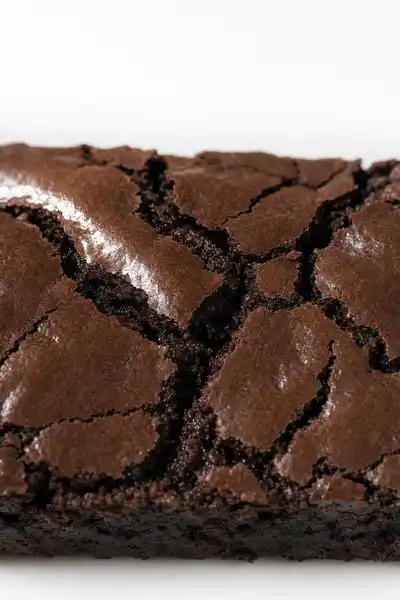
The clever engineering shows up most in the places where you'd expect the constraint to hurt — dessert and comfort food. This is where the book has to prove it isn't just virtuous salads. The "power brownies" attempt a fudgy brownie without conventional flour or refined sugar. The banana "ice cream" — frozen bananas blended until they turn creamy — is the kind of trick that sounds too simple to work and mostly does, standing in for dairy ice cream with something naturally sweet. These aren't perfect replicas, and the book doesn't pretend they are; they're honest workarounds that scratch the itch without breaking the rules.
04 Chapter 4 — Food as the thing you fix first
Step back from the individual dishes and It's All Good makes a larger claim about where to look when you feel bad. Its answer is: the plate. Before the supplements, before the gym membership, before the wellness gadgetry, the book puts the daily act of eating at the center of how the body feels. That's a genuinely old idea dressed in modern packaging — the notion that food is the first lever, that what you eat several times a day compounds in ways a single intervention can't.
The book's real insistence is that subtraction, not addition, is the move. Most food culture sells you on adding — a superfood, a supplement, a new ingredient that promises to fix things. Paltrow's project runs the other direction. It's about identifying what a specific body reacts badly to and removing it, then rebuilding the pleasure of eating inside those narrower walls. The energy and the clearer head she describes come from taking things away, which is a harder sell than a miracle addition but a more honest one about how bodies often work.
05 Conclusion
The book that began with a discouraging printout ends up somewhere more generous than its origin. Paltrow and Turshen took a list of everything a body was rejecting and turned it into 185 ways to keep eating well anyway — huevos rancheros, chicken tacos, salmon burgers, brownies that skip the sugar, ice cream made of nothing but frozen bananas. The diagnosis set the walls; the cooking filled the room. The title lands as a small argument rather than a slogan: even inside real constraint, dinner can still be good.
Related books