
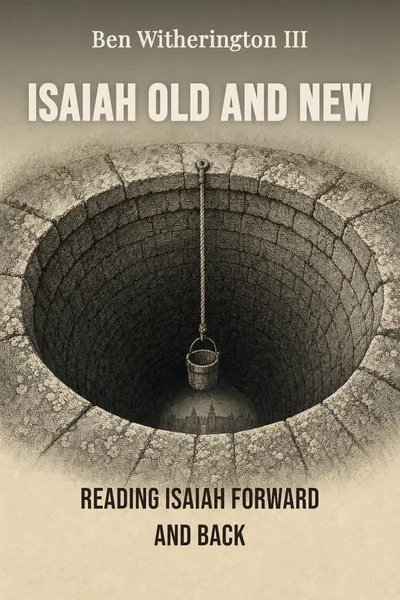
Isaiah Old and New
Reading Isaiah forward and back
Description
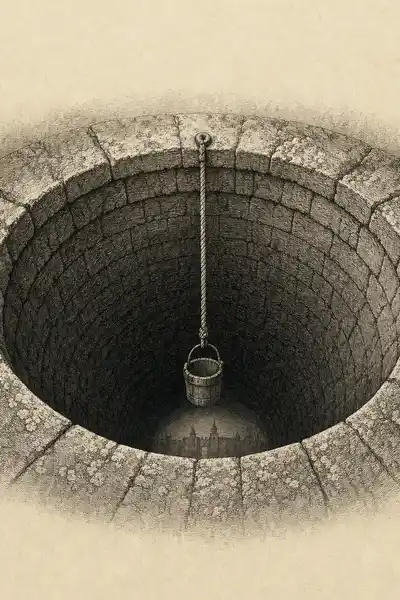
No single book of the Hebrew scriptures shows up in the New Testament as often as Isaiah. When the Gospel writers reach for a phrase to explain who Jesus is, when Paul builds an argument about Israel and the nations, when the early church tries to make sense of suffering and vindication, Isaiah is the well they keep going back to. A servant who suffers for others, a virgin who conceives, a voice crying in the wilderness, a light for the Gentiles — these images did not originate with the first Christians. They inherited them, and they read them as if the whole story had been pointing their way all along.
That habit of reading has a cost, and Ben Witherington III, a New Testament scholar teaching at Asbury Seminary, names it plainly in Isaiah Old and New. When we approach Isaiah already knowing how the New Testament uses it, we tend to skip a step. We treat the book as a quarry of proof-texts, a collection of predictions waiting to be matched with fulfillments. What gets lost is Isaiah himself — a prophet, or prophets, speaking to real crises in Jerusalem across a span of centuries, addressing kings and exiles who had never heard of Bethlehem.
Witherington's wager is that these two readings are not rivals but sequence. You cannot understand how Isaiah was heard later until you have heard him first. His book is at once a working commentary on the prophet and an argument about how sacred texts travel through time, picking up meanings without shedding their origins.
The question we’re asking : How should we read a book that speaks to its own moment and yet keeps being reheard as speaking to ours?What we’ll see : How Isaiah worked in its own world, how the early church received it, and what happens when we let both readings correct each other.
Table of contents
01Chapter 1 — The book before the quotations
Start with a difficulty most readers never notice. The book of Isaiah does not read like the work of one afternoon or one author. Its sixty-six chapters swing across a vast historical distance. The opening sections address the kingdom of Judah in the eighth century BCE, under the shadow of Assyria, with a king named Ahaz and later Hezekiah on the throne. But by the fortieth chapter the scene has shifted entirely: the audience is in exile in Babylon, roughly two centuries later, and the comfort being offered is release from that captivity. Later chapters seem to speak to a community already returned home, rebuilding and quarreling.
Scholars have long divided the book accordingly — First, Second, and sometimes Third Isaiah — and Witherington takes that scholarship seriously without letting it dissolve the book into fragments. His point is that whatever the compositional history, the finished work holds together around persistent themes: the holiness of God, the failure of the people, the promise that judgment is not the final word. The prophet who condemns Jerusalem's injustice and the voice that announces comfort to exiles are bound into one long meditation on how a covenant people survives its own disasters.

02Chapter 2 — Reading forward: Isaiah in his own world
To read Isaiah forward is to move with the grain of the text, in the direction its first hearers would have taken it. Witherington walks through the book as a commentator, chapter by chapter, attentive to the political pressures, the poetic structures, and the theological claims that a Judean audience would have recognized. This is the less glamorous half of the work, but he treats it as the foundation everything else rests on.
The eighth-century material is soaked in the geopolitics of empire. Assyria is rising, small kingdoms are scrambling for alliances, and Isaiah keeps insisting that trust belongs to God rather than to armies or treaties. The prophet's oracles against the nations, his visions of a coming righteous king, his savage critique of a worship that ignores the widow and the orphan — all of it is addressed to people making concrete decisions under threat. The famous passages about a child on whose shoulders the government will rest were, in their setting, declarations about the house of David and the hope of just rule.
03Chapter 3 — Reading backward: what the first Christians heard
The second movement of the book turns around and reads Isaiah backward — from the New Testament toward its source. This is where Witherington's expertise as a New Testament scholar takes over, and where the interpretive stakes rise. The early Christians did not read Isaiah as neutral historians. They read it as people convinced that in Jesus something long promised had arrived, and they combed the prophet for language equal to their conviction.
The results are everywhere in the Gospels and the letters. Matthew reads the Immanuel sign as pointing to a virgin birth. Mark opens with the wilderness voice from Isaiah's fortieth chapter, applying it to John the Baptist. The suffering servant of the later chapters becomes, across the New Testament, the deepest available vocabulary for the crucifixion — a death understood as bearing the sins of many. Paul, arguing over why so much of Israel had not embraced the gospel, mines Isaiah for both the hardness of hearts and the promise of a remnant and the ingathering of the nations.
04Chapter 4 — The two directions have to meet
Step back from Isaiah for a moment and the larger argument comes into view. What Witherington is really examining is the phenomenon scholars call intertextuality — the way texts quote, echo, and reshape earlier texts, and the way meaning accumulates across that chain. Isaiah is his test case precisely because it is the richest one available: no other book is so thoroughly reworked by the writers who came after it.
The temptation, in biblical studies, has been to specialize in one direction. Some scholars read only forward, reconstructing the historical prophet and treating later Christian uses as distortions to be stripped away. Others read only backward, so absorbed in fulfillment that the original context becomes an inconvenient formality. Witherington's contention is that both approaches, taken alone, produce distortions. Read forward only and you get a prophet with no future; read backward only and you get a proof-text with no past.
05Conclusion
The argument closes where it began, with a prophet speaking into the crises of ancient Judah and Babylon, and with communities centuries later finding in those words a language for their own convictions. Witherington's Isaiah Old and New refuses to choose between them. It is a commentary that takes the eighth-century prophet seriously and a study of reception that takes the New Testament writers seriously, and its wager is that neither task can be done well without the other. Reading forward gives us Isaiah's voice; reading backward gives us its long afterlife; only together do they give us the book as it actually functions in the tradition.