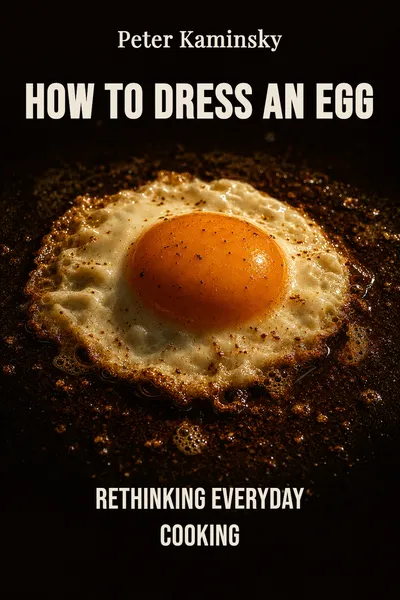
How to Dress an Egg
Rethinking everyday cooking
Description
Peter Kaminsky has spent decades writing about food — barbecue, fish, cured meat, the whole ecosystem of American eating. So when he decided to write a book called How to Dress an Egg, the title reads like a small joke at first. An egg? The thing most of us crack into a hot pan half-asleep, the cheapest protein in the fridge, the dish we make when there is nothing else to make. It is hard to imagine a food less in need of a book. And yet Kaminsky, working alongside the chef Ned Baldwin of the New York restaurant Houseman, treats the egg as exactly the right place to start.
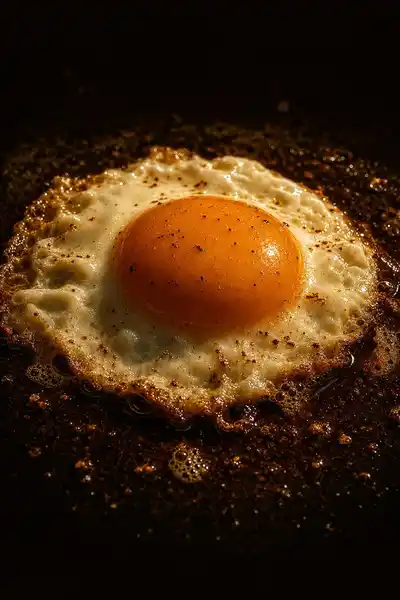
The wager of the book is that the foods we cook without thinking are the ones with the most room left in them. A fried egg has a hundred tiny decisions folded into it — the fat, the heat, the salt, the moment we call it done — and most of us have quietly outsourced all of them to habit. Kaminsky's method is to slow down, notice one variable, and change it. Brown the butter instead of melting it. Finish with a spoonful of something bright and acidic. The dish stays familiar, but it opens up.
What follows the egg is a tour through the staples we all already make: roast chicken, a pot of beans, a piece of fish, a green salad. Kaminsky is not chasing novelty for its own sake, and he is not asking anyone to buy a sous-vide machine. He is asking a quieter question about where flavor actually comes from, and why so much of it goes missing between the recipe and the plate.
The question we’re asking : Why do the foods we cook most often turn out to be the ones we understand least — and what changes when we pay attention?What we’ll see : How a veteran food writer and a working chef turn the humblest dish into a lesson in noticing, and follow the same logic across a kitchen full of everyday staples.
Table of contents
01 Chapter 1 — The egg was never the point
Kaminsky opens on the egg because it is the food we take most for granted, and because it exposes the gap between cooking and really cooking. Almost everyone can fry an egg. Very few of us can say why our fried egg tastes the way it does, or how we would make it taste better if we wanted to. The steps have become so automatic that the thinking dropped out years ago. That, for Kaminsky, is the whole opportunity — a dish so familiar that any small change registers immediately, without needing new ingredients or new equipment.
The book's central image is right there in the title: you dress an egg the way you would dress a salad. Instead of leaving the egg to stand alone, Kaminsky and Baldwin finish it with something — a drizzle of good oil, a scatter of herbs, a hit of vinegar or chili, a spoonful of yogurt underneath. The egg becomes a base rather than a whole. It is a modest idea with an outsized effect, because it shifts the cook's attention from the protein to the plate around it, where most of the flavor was waiting anyway.

02 Chapter 2 — Small moves, big returns
The engine of the book is a principle Kaminsky returns to again and again: the highest-leverage changes in home cooking are almost always small. Not a new cuisine, not a specialized gadget, not a three-day project — a single adjustment inside a dish we already make. Salt earlier. Let the meat rest. Toast the spices dry before they go in. Add acid at the end instead of the beginning. Each move is nearly free, and each one changes the result out of all proportion to the effort it takes.
Acid is the recurring hero. Kaminsky argues that most home cooking is under-seasoned not for lack of salt but for lack of brightness — a squeeze of lemon, a splash of vinegar, a pickled something on the side. The reason a restaurant plate tastes finished and ours often does not is frequently this one missing note. It is the kind of insight that sounds obvious the moment it is said, which is exactly why it had gone unnoticed. We were tasting for salt and forgetting to taste for balance.
03 Chapter 3 — Cooking with a chef in the room
Part of what gives the book its texture is the partnership behind it. Kaminsky is the writer, the enthusiast, the home cook who asks the questions any of us would ask. Ned Baldwin is the professional, the chef whose restaurant runs these techniques every night. The book is essentially a long, generous conversation between the two — the amateur's curiosity meeting the professional's hard-won shortcuts, with the reader sitting in on it.
This framing matters because it dissolves the usual distance between the restaurant and the home kitchen. Chef knowledge is often locked behind jargon and equipment, presented as something you need training to access. Baldwin's contributions do the opposite: they translate the reasoning behind a technique into terms a home cook can actually use on a Tuesday. Why does the chicken get salted the night before? Not because a rule says so, but because of what salt does to the meat over time. The why travels; the recipe alone rarely does.
04 Chapter 4 — The pleasure was hiding in plain sight
Step back from the eggs and the beans and the roast chicken, and Kaminsky's real subject comes into view: attention as an ingredient. The book is quietly making a case that the difference between food we tolerate and food we love is not talent, money, or equipment, but the willingness to notice what we are doing while we do it. Everyday cooking, in this reading, is the last stronghold of autopilot in a life we otherwise try to live deliberately — and it is precisely there, in the unexamined dish, that the most pleasure is left to recover.
This reframes what a cookbook is for. Most promise mastery of new things; this one promises a better relationship with the things we already do. It is closer to a way of paying attention than a set of recipes, and its ambitions are domestic rather than aspirational. Kaminsky is not trying to turn anyone into a chef. He is trying to make the ordinary meal — the one we will actually cook tonight and tomorrow and the night after — a little more alive.
05 Conclusion
The egg turns out to have been the perfect Trojan horse. Kaminsky chose the humblest dish in the kitchen precisely because it carried the least risk and the fastest reward, and by the end of the book its logic has spread everywhere — to the chicken, the beans, the fish, the salad, the sauces that hold a meal together. Dress the egg, and you learn to dress everything. The technique was never the destination; it was the way in.
Related books