From Jesus to Christianity
How a movement became faith
Description
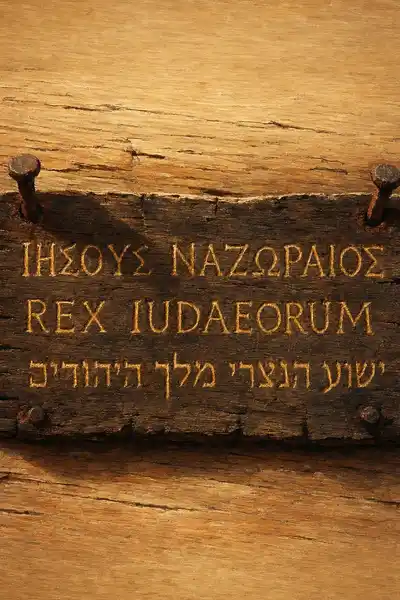
Sometime around the year 30, in a Roman-administered corner of the eastern Mediterranean, an itinerant Jewish teacher from Galilee was executed by crucifixion, a punishment Rome reserved for slaves and insurgents. He left no writings. He founded no church, wrote no creed, appointed no successors in any formal sense. Within his own lifetime he was one of several wandering preachers announcing that the God of Israel was about to act decisively in history. Three centuries later, the movement built around his memory was the official religion of the empire that had killed him.
That distance — from a Galilean preacher to a Mediterranean-wide faith with sacred texts, bishops, and doctrine — is the subject L. Michael White takes up in From Jesus to Christianity. A historian of early Christianity, White is less interested in what Jesus meant to say than in what happened next: how the people who came after him remembered, argued, wrote, and organized until a loose movement hardened into a religion. The New Testament, in his account, is not the starting point. It is the product of that long process, assembled over generations by communities working out who they were.
White's method is patient and resolutely historical. He treats the earliest Christians not as a single church waiting to be born but as scattered groups, often disagreeing, each shaping the story to fit its own situation. Reading the texts in the order they were actually written, rather than the order the Bible arranges them, changes almost everything about how the beginning looks.
The question we’re asking : How did a small Jewish renewal movement, built on the memory of an executed teacher, become the Christianity we recognize?What we’ll see : How the earliest followers remembered, wrote, and organized their way from a Galilean preacher to a faith with texts, leaders, and doctrine.
Table of contents
01Chapter 1 — A Jewish preacher, not a religion
The first thing White insists on is that Jesus was not a Christian. He was a Jew, teaching other Jews, entirely within the religious world of first-century Judaism. The categories we use — church, gospel, Christianity — did not yet exist and would have meant nothing to him or to the people who followed him around Galilee. To understand where the movement came from, we have to put it back in a world White reconstructs in some detail: a Judea under Roman occupation, thick with apocalyptic expectation, where more than one preacher was announcing that God was about to break into history and set things right.
Jesus belonged to that current. He spoke of the kingdom of God, gathered followers, clashed with religious authorities over how the Law should be lived, and was eventually handed to the Roman prefect and crucified as a troublemaker. What survives of his actual teaching is hard to isolate, because everything we have was written down decades later by people with their own concerns. White is careful here: the historian can sketch the shape of the man and his message, but the sources are already interpretations, not transcripts.

02Chapter 2 — The generation that wrote nothing down
For roughly the first twenty years, the movement produced no surviving texts at all. This is easy to miss, because the New Testament opens with the gospels, which read like the beginning. White reorders the shelf. The earliest Christian documents we possess are not the gospels but the letters of Paul, written in the 50s to communities he had founded or was corresponding with — occasional, argumentative letters dealing with specific quarrels, not a systematic account of Jesus's life. Paul, strikingly, says almost nothing about what Jesus taught or did before his death.
What filled that first generation, White argues, was oral tradition: stories, sayings, and formulas passed along by word of mouth, reshaped each time they were told. Communities remembered Jesus in the way communities remember anyone who matters to them — selectively, and in service of present needs. A saying would be recalled because it answered a live question about how to eat together, whom to admit, how to treat outsiders. The past was being edited by the present long before anyone reached for a pen.
03Chapter 3 — Communities that argued their way to a canon
The gospels, in White's reconstruction, come later — from roughly the years 70 to 100, a full generation or two after the crucifixion. That timing matters. Mark, generally reckoned the earliest, was written around the time Rome destroyed the Jerusalem Temple in 70, a catastrophe that shattered the world the first followers had known and forced the movement to rethink itself. Matthew, Luke, and John followed, each drawing on earlier traditions but each telling the story differently, for a different community with different pressures.
This is why the four gospels do not agree. White reads their differences not as errors to be reconciled but as evidence of the communities that produced them. Matthew writes for readers still deeply engaged with Jewish law; Luke widens the frame toward the gentile world and Roman society; John, latest and most distinct, presents a Jesus already close to divine. Each gospel is a portrait shaped by the situation of its authors and audience — a snapshot of a particular group working out what the figure of Jesus meant for them, decades after he was gone.
04Chapter 4 — When a movement needs a founder
Step back from the details and White's larger claim comes into view: Christianity was not founded so much as constructed, over generations, by people who came after its central figure. This inverts the intuitive picture, in which a religion begins with a founder who lays down teachings that followers simply preserve. In White's telling, the teachings, the texts, and even the developed figure of the founder himself were shaped downstream, by communities selecting and editing their memory to meet the demands of survival.
This is not a debunking. White is not saying the faith is a fabrication; he is describing how faith actually takes historical form. Religions, on this view, are made the way most durable human institutions are made — incrementally, through argument, through the accidents of which documents survive and which leaders prevail. The apostle Paul, the anonymous gospel writers, the bishops who fought over the canon: each generation received something unfinished and passed on something more defined, until the movement had a scripture, a creed, and a name.
05Conclusion
The distance from a crucified Galilean to an imperial religion, then, was crossed not in a single leap but in a long succession of small ones. No founder handed down a finished faith. Instead, followers who expected the world to end kept meeting when it did not; communities that disagreed about gentiles and law argued their way toward answers; storytellers and letter-writers set down what mattered to them; and, over three centuries, leaders decided which of those writings would count as scripture. What we call Christianity is the accumulated result of that work.
Related books