Don't Touch My Hair!
Hands off my hair
Description
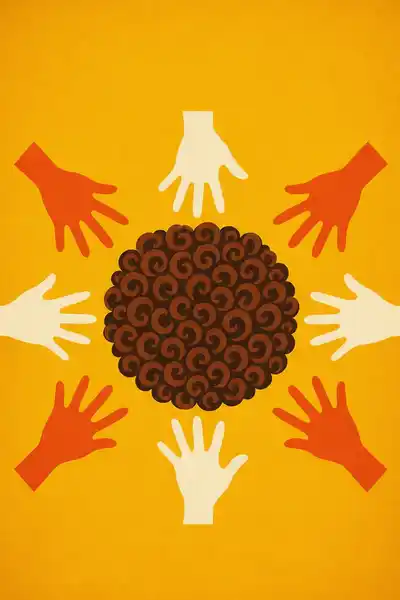
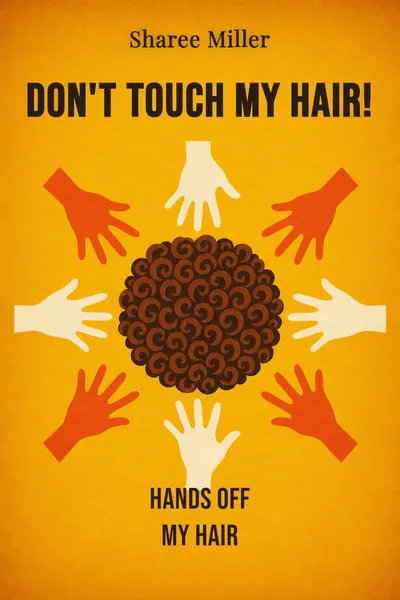
There is a moment nearly every curly-haired kid knows. Someone leans in, reaches out, and touches the top of her head before she has said a single word about it. In Sharee Miller's 2018 picture book Don't Touch My Hair!, that moment belongs to a little girl named Aria, whose coils are so gloriously springy that the whole world seems to want a feel. And the world, in Miller's telling, is not shy about it. Hands reach from every direction. Nobody thinks to ask.
What starts as one uninvited pat becomes a full-blown chase. Aria runs. She climbs, she dives, she blasts off — and everywhere she goes, more hands are waiting, always aimed at her head. Miller, an illustrator who built her early audience around drawing Black girls with natural hair, wrote and illustrated the book for kids who live this exact scene on the playground, in line at the store, at family gatherings. It is bright, funny, a little absurd, and completely serious about one thing underneath the fun.
Because the joke has a floor under it. Aria loves her hair. She is not embarrassed by it. What wears her down is not the attention itself but the fact that nobody waits to be let in. Miller takes a frustration that Black children — and Black women — describe over and over, and hands it to the youngest possible reader in a form they can laugh at and recognize at the same time.
The question we’re asking : How does a bright, silly picture book about a girl running from grabby hands turn into a lesson about permission?What we’ll see : An escalating chase, the two words that end it, and why a story about hair carries something much bigger than hair.
Table of contents
01Chapter 1 — A little girl and a world of reaching hands
We meet Aria at ease with herself. Her hair is a crown of coils, and Miller draws it with real affection — full, round, alive on the page. This matters, because the book never asks us to feel sorry for the hair or to see it as a problem. Aria likes it. The trouble comes entirely from the outside, from everyone else's hands.
And the hands are relentless. Strangers, kids, grown-ups, all of them drawn toward those curls like there is no question about whether they are allowed. Miller renders it the way it actually feels to a child on the receiving end: not one polite request but a steady stream of reaching, patting, tugging fingers that arrive without warning. The book's whole visual rhythm is built on this — every time Aria turns around, another hand is already there, palm open, mid-reach.

02Chapter 2 — The chase becomes a story
Once Aria runs, the book takes off with her, and Miller lets the imagination go big. This is where Don't Touch My Hair! earns its energy as a read-aloud. Aria does not just hurry down the sidewalk. She flees to fantastical places, each one a fresh escape — and each one, to her dismay, already crawling with hands that want her curls.
She dives underwater, and there are hands. She climbs, she soars into outer space, and the hands follow, sprouting from the most unlikely corners of every scene. Miller plays this for laughs, and it works, because the escalation is genuinely funny. The joke is the absurdity: no matter how far Aria goes, no matter how ridiculous the setting, someone somewhere is still reaching for her head. A kid listening will giggle at the sheer persistence of it, and then ask for the page to be turned again to see where the next hand hides.
03Chapter 3 — Two small words change everything
The turn in the book is beautifully simple. Aria stops running and speaks. She tells the people around her, plainly, that they cannot just reach out and touch her hair. And then Miller does the thing that makes the story land: she does not leave it at a refusal. Aria explains what would actually work. Ask first. Two small words, and the whole dynamic of the book tips over.
That is the whole hinge — permission. The book's real lesson is not that hair is untouchable or that Aria wants to be left alone forever. It is that there is a right way and a wrong way to approach another person's body, and the difference is whether you ask. When someone finally does ask, and Aria gets to say yes on her own terms, the tone shifts completely. The tension drains out. What was a chase becomes a conversation, and the hands that were once a threat become something she can welcome.
04Chapter 4 — A picture book that names something real
Step back from Aria and her chase, and Don't Touch My Hair! is doing something bigger than telling a fun story. It is handing a child the language of consent at an age when most books only manage manners. Sharing, saying please, taking turns — those are the usual lessons, and they are good ones. Miller goes further and teaches a boundary: this is my body, and you ask before you touch it. That is a foundational idea, and she delivers it in a form a four-year-old can hold without ever hearing a word as clinical as consent.
It matters, too, that the body in question is a Black girl's, and the boundary is about her natural hair. Miller writes from a real and specific frustration. Black women and children describe again and again the experience of strangers reaching for their curls uninvited, treating the hair as public, as a novelty, as something to be examined and remarked upon. By centering Aria and drawing her hair as gorgeous and worth loving, the book pushes back on that treatment while celebrating the very thing people keep grabbing at. The pride and the boundary arrive together, inseparable.
05Conclusion
By the end, Aria is right where she started — loving her hair, at ease in her own skin — except now the world around her has learned to ask. The hands are still curious, but they wait. That is the small, satisfying arc Miller draws: nothing about Aria had to change, only the way others approached her. The chase was never about the hair being a problem. It was about the reaching, and reaching turns out to be an easy thing to fix once someone names it out loud.
Related books