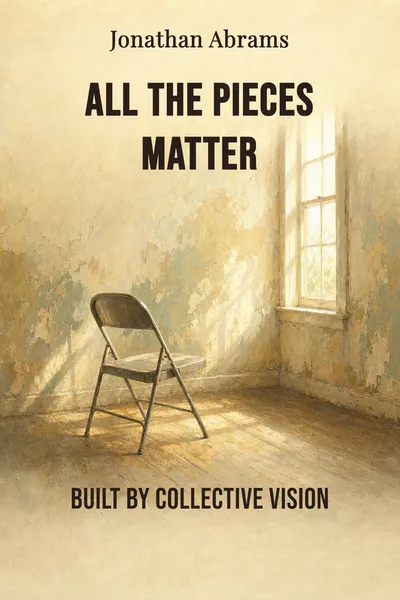
All the Pieces Matter
Built by collective vision
Description
When HBO put The Wire on the air in June 2002, almost nobody watched. The first season averaged a few million viewers a week — respectable for a premium channel, invisible next to The Sopranos — and the reviews were polite rather than ecstatic. The premise sounded like a hundred other cop shows: detectives in Baltimore building a wiretap case against a drug crew. Critics shrugged, ratings stayed flat, and for five seasons HBO renewed the thing almost grudgingly, year by year, never quite sure it had something worth keeping.
Then the strangest reversal in modern television happened. After the show ended in 2008, its reputation didn't fade — it grew. Universities built courses around it. Sociologists assigned episodes. By the time the cast started turning up in everything from blockbusters to the British costume drama circuit, The Wire had quietly become the answer to a tired bar argument about the greatest show ever made. A series that almost no one watched live became the one everyone agreed they should have.
Jonathan Abrams went looking for how that happened, and he did it by handing the microphone back to the people who built it. His book is an oral history — no narrator, no thesis, just the actors, writers, directors and crew telling it in their own words, contradictions and grudges intact. What emerges is less a portrait of a single visionary than a record of an argument that somehow held together for five years.
The question we’re asking : How does a show that fewer people watched than almost any HBO drama end up regarded as the form's high point — and who actually built it?What we’ll see : A landmark assembled by dozens of hands, recounted by the people whose words and faces made it.
Table of contents
01Chapter 1 — A show nobody was asking for
David Simon was a former Baltimore Sun crime reporter who had already turned his city's police work into one book and his year on a drug corner, written with the ex-detective Ed Burns, into another. He did not arrive in television as an outsider with a clean idea. He arrived as someone who believed the cop show was a lie, and wanted to make one that told the truth about how American institutions actually function — or fail to. The pitch was not sexy. It was, in his telling, a show about the death of the American city, smuggled onto the air disguised as a police procedural.
HBO in 2000 was riding The Sopranos and willing to gamble on prestige, but The Wire tested everyone's patience early. The first season moves slowly, withholds payoff, asks the viewer to track a dozen names before any of them pays off. Executives worried it was confusing. Abrams lets them say so, and lets Simon answer in the same breath — the confusion was the point. Real police work was tedious and bureaucratic, and a show that respected that would alienate anyone expecting a chase per episode.

02Chapter 2 — The casting that built a world
The Wire's casting is one of the great accidents of television, and the interviews make clear how much of it ran on instinct rather than fame. Almost none of the leads were stars. Idris Elba, who played the calculating drug lieutenant Stringer Bell, was a British actor hiding his accent. Dominic West, the Baltimore detective Jimmy McNulty, was also English. Wood Harris, Michael K. Williams, Sonja Sohn — the faces that would later define the show were, at the time, working actors lucky to be in the room.
Williams's story recurs throughout, because his character became the show's most beloved. Omar Little — a stickup man who robbed drug dealers and lived by a code — was not written as a centerpiece. Williams won the part after a brief audition, and the scar across his face, a real one from a bar fight, became part of the character before a word was changed. The oral history is full of these moments where a casting choice rewrites the writing, where an actor's body or voice pushes a part somewhere the script hadn't planned.
03Chapter 3 — Writers who refused to make it easy
The writers' room Abrams reconstructs was unusual for television, and not always comfortable. Simon recruited novelists — George Pelecanos, Richard Price, Dennis Lehane — crime writers with their own books and their own instincts, rather than career TV staffers. The result was prose-quality dialogue and a willingness to let scenes breathe, but also a room with strong personalities who did not defer easily. The accounts of those sessions carry the friction of smart people disagreeing about how honest a story could afford to be.
The governing rule was that the institutions came first. Each season widened the lens — from the drug trade to the docks, to City Hall, to the schools, to the newsroom Simon knew best of all. Characters were never granted the redemptive arc television usually promises. The good cop gets buried by paperwork; the smart kid gets swallowed by the corner. Writers describe the discipline of resisting the satisfying ending, of letting the system win the way it tends to in life.
04Chapter 4 — What the oral history finally makes audible
The form Abrams chose is not incidental — it is the argument. A conventional history of The Wire would name David Simon as its author and let everyone else be supporting cast. The oral history refuses that. By letting dozens of voices speak in sequence, often contradicting one another, it reproduces on the page the same distributed authorship that produced the show. Nobody holds the whole thing. The truth sits in the overlap between accounts, the way the truth of a case sat in the overlap of wiretaps.
This matters because The Wire's central conviction was that no individual stands above the system — not the commissioner, not the kingpin, not the mayor. The show dramatized institutions as machines larger than any person inside them. An oral history honors that conviction by structure alone: it shows a television landmark as the output of a collective, where the actor's scar, the location scout's corner, the novelist's ear and the executive's nerve all leave marks no single credit can capture.
05Conclusion
The Wire ended in March 2008 to an audience barely larger than the one that had ignored its premiere. By then the people who made it had mostly moved on — to films, to other series, to the ordinary intervals between jobs that actors and writers live in. Abrams catches them years later, looking back at something that had quietly outgrown them all, and the surprise in their voices is part of the record. Few of them knew, while making it, that they were making the thing it became.
Related books