The Biggest Story
The story that changed everything
Description
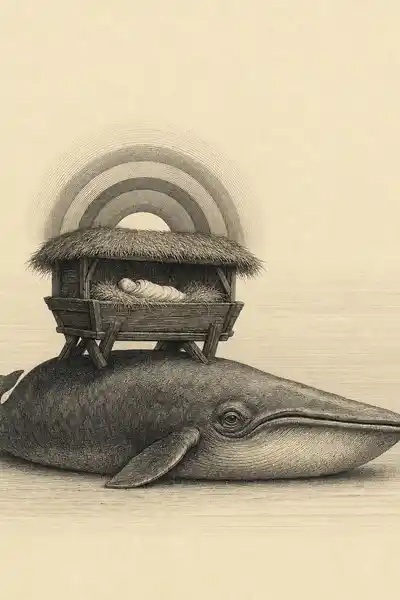
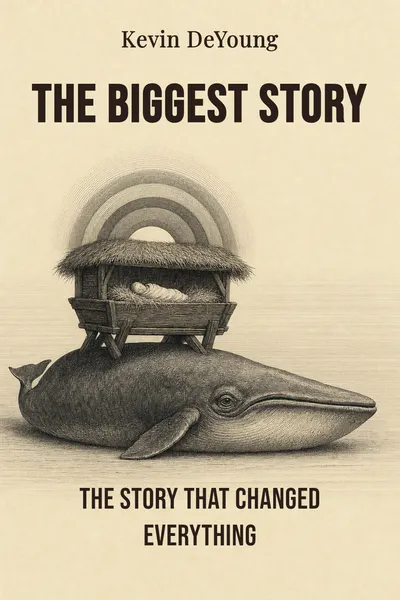
Somewhere in a children's Bible, there is usually a page with a rainbow, a page with a big fish, and a page with a baby in a manger, and none of them seem to have much to do with one another. That is roughly how most of us first meet the Bible: as a bin of unrelated stories, some frightening, some cozy, sorted by how well they hold a child's attention. Noah floats, Jonah sinks, David wins, Jesus is born, and each one arrives with its own little lesson stapled to the back. Kevin DeYoung, a Reformed pastor and writer, set out in a short 2015 book called The Biggest Story to do something quietly ambitious with that bin: to argue it was never a bin at all.
His claim is that the whole thing is one story. Not a collection, not an anthology, not a set of moral fables that happen to share a binding — but a single arc, with a beginning, a middle that goes badly wrong, and an ending it has been reaching toward the entire time. The snake in the garden and the baby in the manger, in this reading, are the same plot at two different moments. That is a bold thing to say about sixty-six books written across roughly a thousand years by dozens of hands, and it is the thing the book stakes everything on.
What makes the attempt worth following is not the theology alone but the structural gamble. DeYoung is betting that a story survives where a rulebook doesn't, that an arc lodges in memory in a way a list never will. And he is telling it to children first — which forces every abstraction to become concrete, every doctrine to become a scene. We come along to watch how someone tries to make an ancient library read like one continuous thread.
The question we’re asking : Can the sprawling contents of the Bible actually be told as one story — and what changes when they are?What we’ll see : How a pastor threads a garden, a wandering people, and a manger into a single arc, and why he thinks the shape itself is the point.
Table of contents
01 Chapter 1 — A garden, and a snake in it
DeYoung starts where the Bible starts, in a garden, but he refuses to treat it as a nice opening scene before the real drama begins. The garden is the drama. Everything is right: the first two people are at home, at ease, unafraid, and on speaking terms with God. There is no shame, no hiding, no death lurking at the edges. This is the picture the whole rest of the book will keep pointing back to — not as nostalgia, but as the shape of what got lost and the shape of what is being aimed for. He wants a child to feel how good it was, because the loss only lands if the goodness registered first.
Then the snake. In DeYoung's telling the fall is not primarily about a piece of fruit; it is about a suggestion, a whispered doubt that God is holding out on us, that we could do better running things ourselves. The first humans take the bait, and the consequences are immediate and physical: hiding, blaming, being sent out of the garden with the way back guarded. The point he presses is that this is not a small mistake with a tidy fix. Something structural breaks. The whole world tilts.

02 Chapter 2 — The people who kept losing the thread
After the garden, the story could easily dissolve into a catalog of famous names, and this is where children's Bibles usually turn into a highlight reel. DeYoung resists it. He runs the long middle of the Old Testament as a single, frustrating pattern, and the pattern is what he wants remembered more than any individual hero. God keeps choosing a person, then a family, then a whole nation, and keeps making the same promise: I will be your God, you will be my people, and through you the whole broken world will be put right.
So Abraham is called and told his family will bless every family on earth. His descendants become slaves in Egypt and are dramatically rescued through the sea. They are given a way to live, a land to live in, a temple where God will dwell close to them again — each of these, in DeYoung's framing, a partial return toward the garden, a room built to hold the presence that was lost. For a moment it looks like the story might resolve. The people are home; God is near.
03 Chapter 3 — A baby who was the whole plot
When Jesus arrives in DeYoung's telling, the manger is not a fresh start disconnected from everything before it. It is the answer to a question the book has been holding open for its entire length. The offspring promised in the garden, the blessing promised to Abraham, the king promised to David, the presence lost when the temple fell — DeYoung gathers all of these threads and ties them to one person. The reader who has been watching for the serpent-crusher is finally shown who it was going to be all along.
What he emphasizes is that Jesus does not come mainly to teach better rules or model better behavior, though he does both. He comes to do the one thing none of the earlier figures could: to take the break at the center of the world onto himself. The strike against the serpent's heel, hinted at in that first cryptic curse, turns out to be the cross. Jesus is struck, killed, buried — and this looks, for a devastating stretch, like the story finally losing for good. DeYoung lets that darkness sit, because the return matters only against it.
04 Chapter 4 — The story we keep trying to tell better
Step back from the theology for a moment and look at the choice DeYoung made about form. He could have written another book of Bible lessons — one virtue per chapter, courage from David, patience from Job, obedience from Noah. That is the default, and it sells. He wrote a single continuous story instead, and that decision says something about how he thinks meaning actually gets passed down. A list of lessons asks to be obeyed. A story asks to be inhabited. The bet is that people, and especially children, hold onto the second far longer than the first.
There is a reason the arc form keeps reappearing across cultures for the material that matters most. Origins, a rupture, a long middle of failure and longing, a costly turn, a restoration that is more than the start — this is the shape of the oldest human storytelling, and DeYoung is deliberately reading the Bible into it rather than fighting it. His claim is not that he imposed a plot on scattered texts but that the plot was there and the fragmentation was ours, a byproduct of meeting the book one flannelgraph page at a time.
05 Conclusion
The book ends back in a garden, or rather in something like it made new — a restored world where the presence lost at the start is finally, permanently at home again. DeYoung closes the loop he opened on the first pages: the promise made over the serpent comes fully due, death is done, and the whole long arc lands where it was always leaning. The rainbow, the fish, the manger, the empty tomb turn out to be stations on one road rather than pictures in a bin. Read this way, the last page rhymes with the first, and the thousand years in between stop being a jumble and start being a plot.
Related books