Small Fry
A reckoning in Silicon Valley
Description
In 1978, a young woman named Chrisann Brennan gave birth to a daughter on a commune-adjacent farm in Oregon, in a field, with the baby's father present for the delivery. That father was Steve Jobs, then twenty-three, already building the company that would make him one of the most famous people alive. He named the baby Lisa. Then, for years, he denied she was his — even after a paternity test put the probability at 94.4 percent, even while a computer called the Apple Lisa quietly carried her name. The daughter grew up between two houses: her mother's, which moved constantly and often had no money, and her father's, which had money and something colder in its place.
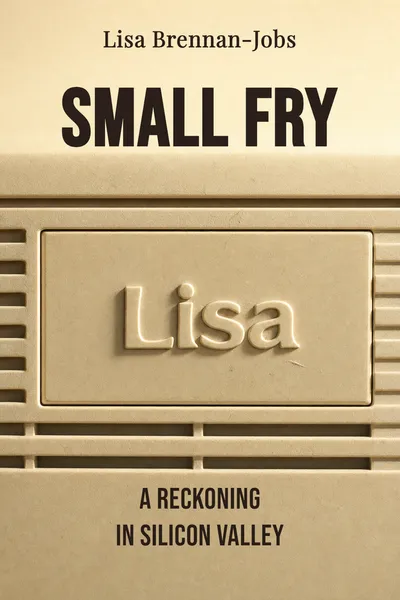
Decades later, that daughter, Lisa Brennan-Jobs, sat down to write it herself. "Small Fry," published in 2018, is her memoir — not a biography of a titan, not a tell-all, but the story of a childhood assembled from its own strange details. The nickname of the title is one her father gave her. The book was met with a chorus of reviewers reaching for the same uneasy words: beautiful, devastating, discomfiting, revelatory. It reads like a novel and cuts like one.
What makes it linger is not the scandal — most of the outline was public. It's the texture. A father who could be dazzlingly present and then withhold everything. A girl learning to read a man the way you read weather. And a writer, years on, refusing to flatten any of it into a verdict.
The question we’re asking : What does it feel like to grow up as the unclaimed child of a man the world adored, and what does a daughter do with that story once she holds the pen?What we’ll see : How a private childhood inside the Jobs orbit becomes, in one writer's hands, something closer to literature than to score-settling.
Table of contents
01 Chapter 1 — The name on the birth certificate
The facts arrive early and stay unresolved. Lisa was born in 1978 to Chrisann Brennan, Steve Jobs's on-and-off girlfriend from his Homestead High days. Jobs was present at the birth and helped choose the name, then spent years insisting the child was not his. A 1980 paternity test placed the odds of his fatherhood at 94.4 percent. He still resisted. For a stretch, Chrisann raised Lisa on welfare while Jobs's net worth climbed into the hundreds of millions with Apple's 1980 public offering.
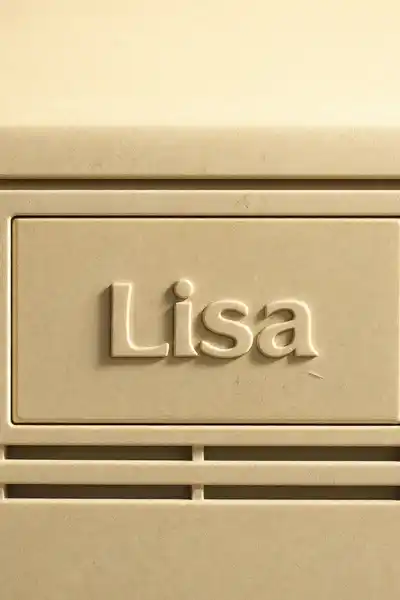
Then there was the computer. Apple released a machine called the Lisa in 1983, and for years Jobs maintained the name was a coincidence, an acronym invented after the fact. Late in his life, in a conversation with the musician Bono that Lisa recounts, her father admitted the obvious: the computer was named for her. "The book is about you, then," she thought — a small, enormous restoration. Her name had been out in the world all along, on a product, before he would put it on himself.

02 Chapter 2 — A house without heat
Money is everywhere in "Small Fry" and almost never where you'd expect. Lisa moved thirteen times before she was in her teens, following her mother through rentals and borrowed rooms, sometimes lit by candles because the power was off. Meanwhile her father lived in grand, half-empty houses — famously under-furnished, a mattress on the floor, a single lamp, a BMW in the drive. The wealth was colossal and rationed like a scarce resource. He questioned the price of things. He could refuse to pay her college tuition and then, later, relent.
The scenes that stay with readers are domestic and small. A request for money met with a lecture. A moment when she asks, as a teenager, whether she can have his old Porsche when he's done with it, and he tells her she'll get nothing — a line delivered flatly, cruelly, and never quite retracted. Warmth arrives too, unpredictably: a bike ride, a shared silence, an evening when he was tender and funny and entirely hers. The unpredictability is the point. She learned to track his moods the way you'd learn a difficult climate.
03 Chapter 3 — The daughter he almost claimed
For a period in her adolescence, Lisa lived with her father and his wife, Laurene Powell, and their growing family. It should have been the reconciliation the story seemed to be building toward. Instead it delivered a subtler ache. She was inside the house now, present at the meals, folded into a family — and still often made to feel provisional, a guest who might overstay. There were rules about affection, moments withheld, a sense that belonging was conditional and could be revoked.
Some of the book's most quietly wounding passages come from these years: the family therapy sessions where she pleaded for a warmth that wouldn't come, the small refusals, the way a request to be told she was loved could be turned into a negotiation. Jobs was capable of saying devastating things and then behaving as though nothing had happened. Brennan-Jobs records them, but she also records the reconciliations, the late tenderness, the fact that she kept coming back and so, in his way, did he.
04 Chapter 4 — What a memoir does that a biography can't
Steve Jobs has been written about exhaustively — the authorized biography, the business histories, the eulogies. Those books mostly ask what he built and how he changed the world. "Small Fry" asks a different, smaller, harder question: what was he like across a kitchen from a child who needed him? That shift in scale is the whole achievement. A biography aggregates a life into significance. A memoir refuses the aggregation and insists on the individual afternoon, the specific sentence, the exact quality of a silence.
This is why the book unsettled some of Jobs's admirers, and even some of his family. It doesn't argue that he was a bad man; argument isn't its mode. It simply records, in a daughter's voice, moments that no admiring account had room for. And by staying at that human scale, it does something the myth-making cannot: it returns Jobs to the category of person, capable of ordinary cruelty and ordinary tenderness, rather than leaving him as an icon whose flaws get folded into genius.
05 Conclusion
The book ends where a person's story often ends, with a death and an incomplete peace. Jobs died in 2011, and the apologies that came late did not undo what came before, nor were they nothing. Brennan-Jobs leaves the account exactly that unbalanced, because that is how it was. The girl who tracked her father's moods like weather grew into the writer who could finally name each front and pressure system, without flinching and without vengeance.
Related books