Mere Christianity
Christianity stripped to its core
Description
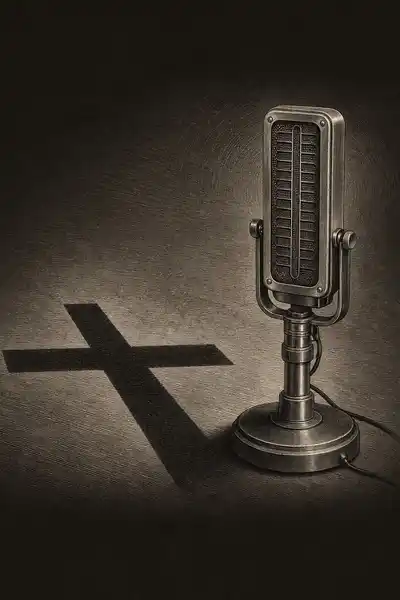
In the autumn of 1941, with Britain at war and cities blacked out against the bombers, the BBC handed a middle-aged Oxford don a fifteen-minute slot to talk about religion. C. S. Lewis was a literature tutor, not a clergyman, and he spoke into the microphone the way he might have argued a point over a pint — plainly, a little combatively, without the churchy vocabulary most listeners expected. The talks ran across four series between 1941 and 1944. People wrote in by the hundreds. Lewis answered as many letters as he could.
Those broadcasts became three slim books — The Case for Christianity, Christian Behaviour, and Beyond Personality — and in 1952 Lewis gathered them into a single volume he called Mere Christianity. The word "mere" was doing real work. He was not defending Catholicism, or the Church of England, or any particular tradition. He wanted to describe the thing they all had in common before the arguments started: the belief a Baptist and a Roman Catholic and an Orthodox Christian would all recognize, underneath the divisions that had set them killing each other for centuries.
That is an odd ambition for a book, and it is what makes this one strange even now. Lewis is not selling a church. He borrows a builder's image: mere Christianity is a hall with doors leading off it into the various rooms, and the hall is not a place to live but a place to wait and choose. What he tries to do in the pages before those doors is describe the hall itself — and the way he goes about it says as much as the argument.
The question we’re asking : How do you describe a faith without belonging to one branch of it — and can the shared core survive being stripped that bare?What we’ll see : How a wartime radio voice built a case from ordinary human quarrels, followed it into uncomfortable places, and tried to keep one voice across three books.
Table of contents
01 Chapter 1 — The wartime voice on the radio
Lewis had not always been a believer. He described himself as an atheist for most of his twenties, someone angry at a God he did not think existed, and he came back to Christianity slowly, partly through long walks and longer arguments with friends like J. R. R. Tolkien. By the time the BBC called, he had already written The Problem of Pain and had a reputation as a Christian who could argue. What he had not done was speak to a mass audience of strangers, many of them frightened, many of them not religious at all, at a moment when death felt close.
The tone he chose is the thing people remember first. He does not preach. He reasons out loud, and he does it with the manner of a friend who has thought about this more than you have and wants to talk it through rather than convert you on the spot. He uses homely comparisons — a fleet of ships, a piano, a toy soldier — instead of theological terms. When he reaches for something technical he defines it in passing, the way you would explain a word to someone across the table.

02 Chapter 2 — The argument from a quarrel
Lewis opens not with God but with an argument between two people. Listen to any ordinary quarrel, he says, and you hear something curious. People do not simply say "I want this and you can't stop me." They say "that's not fair," "you promised," "how would you like it if someone did that to you." Both sides appeal to a standard of behaviour they expect the other to know already. The quarrel only makes sense because both people believe in some rule above them both.
From this he builds his first move. There seems to be a law of decent behaviour that humans did not invent and cannot fully keep, one they know about even as they break it. He calls it the Law of Human Nature, or the moral law, and he distinguishes it carefully from instinct and from social convention. Instinct tells you what you want to do; the moral law often tells you to do the thing you want to do least. It is less like a fact about how people behave and more like an instruction about how they ought to.
03 Chapter 3 — The cost of taking it seriously
The second and third parts of the book turn from argument to conduct, and this is where Lewis becomes bracing. Christian behaviour, he insists, is not a set of extra rules bolted onto a normal life to make it duller. It is a claim on the whole person. He compares it to the difference between improving an old house and having it rebuilt: you expected some repairs, and instead the builder starts knocking down walls, and it hurts, because he is making a different kind of house than you had in mind.
He works through the virtues without sentimentality. Forgiveness, he notes, is a lovely idea until you actually have someone to forgive, and then it becomes one of the hardest things a person can attempt. Charity is not a warm feeling but an action you can choose even when the feeling is absent — behave as if you loved someone, he says, and the feeling often follows. On sex, on money, on the daily traffic of resentment, he refuses to let the reader off easily, and he refuses to pretend he finds it easy himself.
04 Chapter 4 — Belief in three books, one voice
Step back from the arguments and the striking thing about Mere Christianity is what Lewis was refusing to do. He could have written a defence of his own Anglicanism. He could have settled scores with the traditions he disagreed with. Instead he set himself the harder task of describing only what the branches share — and he took real trouble to keep his own denominational preferences out of it, even asking Christians of different traditions to check the manuscript so that nothing sectarian slipped through.
The image that holds the whole thing together is the hall and the rooms. Mere Christianity is the entrance hall; the particular churches are the rooms off it, where there are fires and chairs and meals. Lewis is clear that you are not meant to stay in the hall. It is a place to wait and to choose a door, and he tells the reader to choose the room where the doctrines are truest, not the one with the best wallpaper. But the hall is real, and standing in it honestly is worth something.
05 Conclusion
The talks that became this book were made for a country that did not know how the war would end, by a man who had been an unbeliever and remembered exactly what unbelief felt like. That double memory runs through everything. Lewis argues like someone who has stood on the other side of his own conclusions, which is why he keeps anticipating the reader's objection before the reader can raise it, and why the tone never tips into the pulpit.
Related books