Epicureanism
Pleasure, properly understood
Description
Somewhere around 306 BC, a man named Epicurus bought a plot of land just outside Athens, between the city and the port of Piraeus, and started a school in the garden that came with it. That garden became the school's name — the Garden — and its address said a lot about the project. Plato taught in the Academy, Aristotle at the Lyceum, both inside the intellectual traffic of the city. Epicurus set up shop past the walls, in a place where you grew vegetables. He admitted women. He admitted slaves. He asked his followers not for brilliance but for a certain willingness to stop chasing things that were making them miserable.
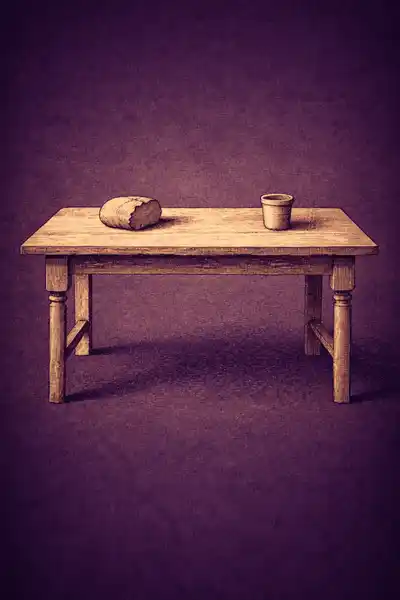
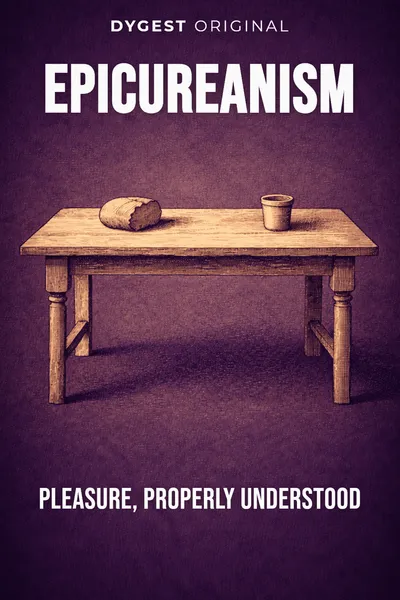
His name has not aged the way he might have hoped. To call something epicurean today is to praise a tasting menu, a cellar of good wine, a life organized around refined indulgence. The word sits in restaurant reviews and lifestyle copy, a soft synonym for luxury. Epicurus himself lived on bread and water, kept a little cheese on hand for the days he wanted to feel rich, and wrote that the person who is not satisfied with a little is satisfied with nothing. The gap between the man and the adjective is one of the widest in the history of ideas.
So there is something to untangle here, because the caricature is not a small error. It flips the philosophy on its head. Epicurus did build his whole system on pleasure — that part is true. But what he meant by pleasure, and what he thought stood in its way, points almost exactly opposite to the life his name now advertises. Getting the word right turns out to be a way of getting something right about wanting itself.
The question we’re asking : What did Epicurus actually mean by pleasure, and how did a philosophy of restraint end up naming its opposite?What we’ll see : How a garden school turned the pursuit of happiness into a careful arithmetic of desire, fear, and the strange sufficiency of having enough.
Table of contents
01 Chapter 1 — A garden outside the city walls
Epicurus was born on the island of Samos around 341 BC, to Athenian parents, and came to philosophy through the atomism of Democritus before building something of his own. By the time he settled in Athens in his mid-thirties, the world he had grown up in was gone. Alexander's empire had risen and fractured; the old Greek city-state, the frame that gave a citizen's life its shape and meaning, no longer held. People were left to figure out privately how to live well in a world that had stopped organizing that question for them. The Garden was one answer.
The community there was deliberately small and deliberately unusual. It withdrew from public life rather than competing for it, which by the standards of Athenian ambition was close to a scandal. Politics, the arena where a Greek man was supposed to make his name, Epicurus advised his friends to avoid. Live unnoticed, he said — a phrase that has followed him ever since. The point was not misanthropy. It was that the game of status and reputation was a treadmill that delivered anxiety far more reliably than it delivered satisfaction.

02 Chapter 2 — What pleasure turned out to mean
The foundational move is simple and, stated flatly, sounds like exactly the hedonism the caricature imagines. Pleasure, Epicurus argued, is the beginning and the end of the happy life. It is the good we are built to seek, the thing every creature reaches for before it can reason, the natural measure by which we judge that something is worth having. Pain is the evil we are built to avoid. There is no higher standard hiding behind these; they are the standard. So far, so indulgent.
The reversal is in what he meant by the word. Epicurus split pleasure in two. There is the kinetic kind — the active, moving pleasure of eating when hungry, drinking when thirsty, the satisfaction of a desire in the act of satisfying it. And there is the katastematic kind, the settled, standing pleasure of a body without pain and a mind without disturbance. The second, he insisted, is the real goal. The moving pleasures are pleasant, but they are the froth on top. The deep thing, the thing worth organizing a life around, is the calm state underneath, which he called ataraxia — freedom from trouble.
03 Chapter 3 — The two fears that run the show
If pleasure is really the calm state, then the enemy is not deprivation but anxiety, and Epicurus thought two anxieties did most of the damage to human peace of mind. Everything else in his physics and theology was, in the end, engineering aimed at dismantling them. The first is the fear of the gods. The second is the fear of death. Between them, he argued, they poison more lives than hunger ever has.
On the gods, his position was radical for its time and often mistaken for atheism, which it was not. Epicurus held that gods exist but that they live in perfect serenity, entirely indifferent to human affairs. A being in a state of blessed calm would have no reason to meddle, reward, or punish. So the whole apparatus of divine anger — the storms sent in judgment, the plagues as retribution, the terror of offending heaven — rests on a misunderstanding of what a god would even be. This is where his atomism did its work: if the world runs on atoms colliding in the void, weather is weather, not a message. There is nothing up there watching your account.
04 Chapter 4 — The philosophy the word betrayed
It is worth sitting with how thoroughly the label inverted the thing. Epicureanism spent centuries as the school Christianity most loved to hate, precisely because it denied a providential god and an afterlife — Dante parks the Epicureans in flaming tombs, among those who taught that the soul dies with the body. To early opponents, a philosophy that made pleasure the goal and denied divine judgment could only be an invitation to debauchery, and they said so loudly and often. The reputation for gluttony was, in large part, a hostile caricature that stuck because it was useful to its makers. By the time the theology stopped mattering, the slur had outlived its motive and simply became the meaning of the word.
What that betrayal costs is a genuinely uncommon idea about wanting. Most of the machinery around us runs on the opposite premise: that satisfaction lies in the next acquisition, the better version, the intensity just out of reach. The empty desires Epicurus warned about — for status, for accumulation without end — are more or less the operating system of a consumer economy, and they are empty in exactly his sense, because they have no natural stopping point. A desire with no ceiling can never report success. The garden's whole quiet radicalism was the claim that the goalpost can, in fact, be reached, and that reaching it is mostly a matter of wanting the right, small, finite things.
05 Conclusion
Epicurus died around 270 BC, in considerable pain from kidney stones, and left behind a letter written on what he knew was his last day. It is a remarkable document. He describes the agony frankly, and then sets against it the memory of his conversations with friends, which he says leaves the day, on balance, a happy one. It is not a denial of suffering. It is a man testing his own philosophy at the hardest possible moment and finding that the settled pleasures held — that a life could be counted good even from inside real pain, because the calm he had cultivated was doing its work when he needed it most.
Related books