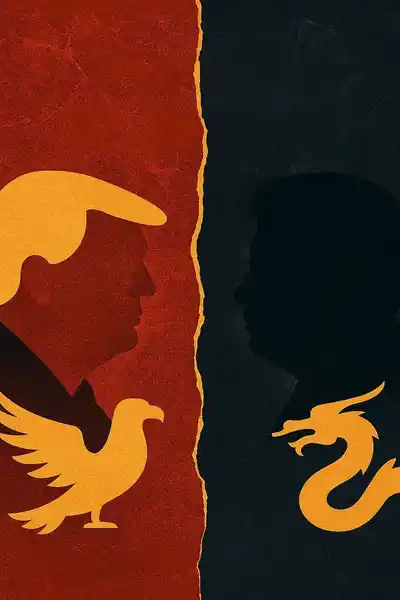
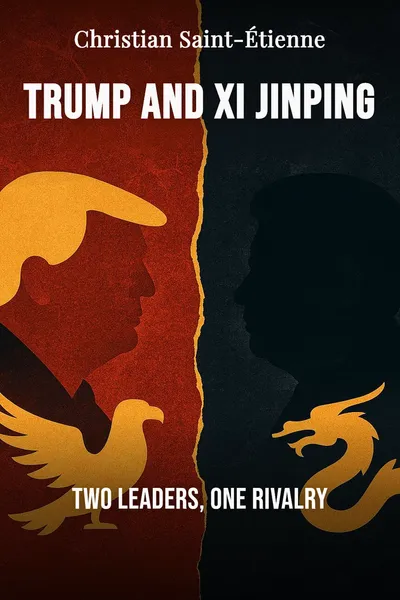
Trump and Xi Jinping
Two leaders, one rivalry
Description
On the surface they could not look less alike. One is a real-estate heir turned television showman turned president, loud, transactional, allergic to the fine print, governing by instinct and by grievance. The other is the son of a purged Communist Party veteran, a man who spent decades climbing a bureaucratic ladder in near-silence before concentrating more authority in his hands than any Chinese leader since Mao. Donald Trump and Xi Jinping belong to different worlds, speak to their nations in opposite registers, and would struggle to agree on what a good deal even looks like.
And yet, in the reading Christian Saint-Étienne offers, the two men are the sharpest available lens onto the single rivalry that will shape the century — the contest between the United States and China for economic, technological and military primacy. Each incarnates the operating system of his country. Trump embodies a democracy that still believes in the raw projection of force, in pressure and leverage applied in real time. Xi embodies a state built for the long game, able to plan across decades precisely because it answers to no electorate.
Reading the two leaders side by side turns an abstract geopolitical standoff into something we can actually hold. The duel is not really about personalities, tariffs or a particular summit photograph. It is about which model — the improvising democracy or the patient autocracy — is better suited to win a struggle that runs through semiconductors, currencies, supply chains and the South China Sea all at once.
The question we’re asking : What does reading the US-China rivalry through its two leaders reveal that a map of tariffs and fleets cannot?What we’ll see : How two opposite temperaments encode two opposite systems of power, and why the clash between them runs deeper than either man.
Table of contents
Related books