
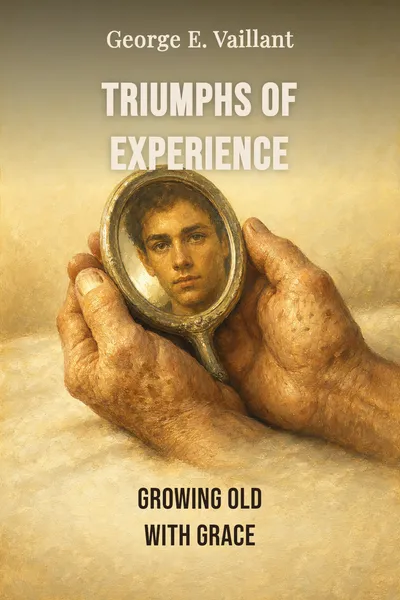
Triumphs of Experience
Growing old with grace
Description
In 1938, a research team at Harvard began quietly following 268 sophomores, picking young men who seemed healthy, capable, and likely to succeed. They measured the length of their brows, mapped their family histories, sent doctors to their homes, and asked them, over and over, decade after decade, how life was going. The men went off to war, took jobs, married, divorced, drank, prospered, fell apart, recovered. Most of them died. A few are still alive. The study that observed them, the Grant Study of Adult Development, became the longest continuous look at human life ever attempted — three-quarters of a century of watching ordinary lives unfold from the inside.
George Vaillant, the psychiatrist who ran the study for more than four decades, had already reported on the men once, in the 1977 book Adaptation to Life, which followed them to about age fifty-five. That book taught a generation how adults mature. But the interesting part had not happened yet. The men were still middle-aged. What Vaillant could not know then was who among them would flower in their seventies and eighties, who would sour, and whether the promising twenty-year-old had told the truth about the eighty-year-old he would become.
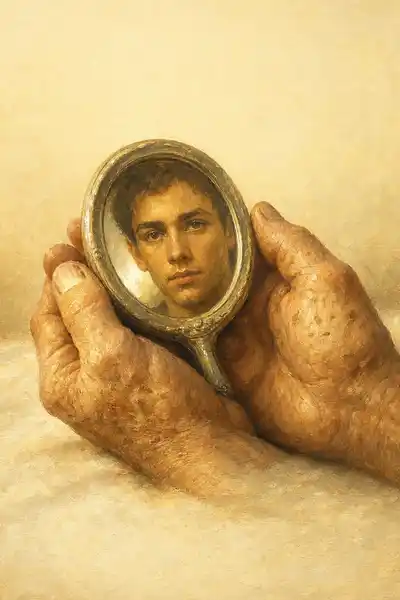
Triumphs of Experience is the answer, written when the surviving men were in their nineties. It is a strange and moving document: a scientist looking back across seventy years of data about people he came to know, and finding that the smart bets placed in 1938 were often wrong. The boys who looked golden did not always age well. Some of the wrecks became the wise old men. The findings unsettle almost everything we assume predicts a happy ending.
The question we’re asking : Across seventy-five years of watching real lives, what actually determines whether we grow old well?What we’ll see : The men behind the longest study of a human life, the surprises their late years delivered, and what the data quietly insists we are responsible for.
Table of contents
01Chapter 1 — The men who agreed to be watched for a lifetime
The Grant Study was named for its funder, the department-store magnate William T. Grant, who wanted to know what made young men succeed rather than merely why they failed. The Harvard health service picked the subjects between 1939 and 1944, choosing sophomores judged sound in body and mind — the opposite of the usual clinical sample, which studies the sick and hopes to generalize backward. Here the plan was to start with the well and watch what happened. Among the early cohort was a young John F. Kennedy, whose file remains sealed, and Ben Bradlee, later the editor of the Washington Post.
The men were poked, measured, and interviewed with an intensity that would be hard to imagine now. Researchers recorded the hang of their testicles, the shape of their skulls, their reactions to stress in a lab. Their mothers were interviewed about their infancies. Every few years a questionnaire arrived; every so often a staff member visited in person. The archive that grew from this became extraordinary precisely because nobody knew in advance which details would matter — so they kept nearly everything.

02Chapter 2 — What actually predicts a good old age
The first surprise is that the man who does well at fifty is not reliably the man who does well at eighty. Vaillant had assumed, as most of us do, that a life runs on a fairly straight line — that early promise cashes out into late contentment. It often did not. Some of the most admired midlife achievers grew brittle and isolated in old age, while men who had struggled through their forties and fifties arrived at a serene, generous eighties. Lives kept turning corners no one saw coming, which is itself the study's most hopeful news: development does not close at retirement.
When Vaillant asked what did travel forward across the decades, the answer was consistent and slightly unfashionable: relationships. The warmth of a man's connections — to parents in childhood, to a spouse, to friends and colleagues later — predicted late-life flourishing better than income, cholesterol, or IQ. A man's capacity to be loved and to love in return did more work than almost any other variable. The men who had built rich bonds by thirty tended to have money, health, and joy at eighty; those who had not, tended not to.
03Chapter 3 — The undoing of Prohibition's favorite drink
If relationships were the study's great constructive force, alcohol was its great destructive one. Vaillant is blunt that nothing in the seventy-five years of data did more damage to health and happiness than heavy drinking. It was the single strongest disruptor of the men's lives — corroding marriages, careers, and bodies, and standing behind a large share of the divorces and early deaths. Having spent much of his career studying addiction, Vaillant treated this finding not as incidental but as central.
What made alcohol so devastating was partly its stealth. It rarely announced itself as the cause. A man's marriage would fail, his liver would give out, his children would drift away, and each disaster seemed to have its own local explanation. Only when the whole life was laid end to end did the pattern surface: the drinking had usually come first, and the wreckage had followed. Cause and effect, so easy to reverse in the moment, became legible only across decades.
04Chapter 4 — The self does more than the genes
Step back from the men and the study lands on a claim that runs against a lot of contemporary common sense. We are told, increasingly, that our fates are written in our DNA — that longevity, temperament, even happiness are inheritances more than achievements. The Grant Study, watching real bodies age across seventy years, tells a more demanding story. After eighty, Vaillant found, physical health was shaped less by heredity than by habits laid down before fifty: whether a man smoked, drank heavily, exercised, kept his weight down, stayed married. The genes set a stage, but the daily choices wrote the play.
This is why the book carries its slightly stern title. The triumphs are triumphs of experience — of what the men did with the years, not what they were handed at the start. The credit for aging with grace, the study keeps insisting, belongs more to the person than to the ancestry. That is a heavier responsibility than a genetic story would grant us, but also a more generous one, because it leaves the ending open long after we assume it has been decided.
05Conclusion
The boys picked in 1938 for their promise did not, as a group, deliver the future the researchers expected. Some of the surest bets aged into loneliness; some of the doubtful cases became the wise, contented old men who make the study's late findings possible. Vaillant, who kept their files and their confidences for more than forty years, ends less as a scientist announcing results than as a companion reporting what a long life looks like from the far side of it — full of course corrections nobody could have forecast at twenty.