The World as Will and Representation
A blind will beneath appearances
Description
In 1818, a thirty-year-old German philosopher finished a book almost no one would read for decades. Arthur Schopenhauer had money, a low opinion of the professors around him, and a conviction that he had solved the single problem philosophy exists to solve. The book was called The World as Will and Representation. It sold poorly. Copies sat in the warehouse; some were eventually pulped. Schopenhauer, undeterred, spent the rest of his life adding to it, publishing a second volume of supplements in 1844, insisting to anyone who would listen that he had gotten the whole thing right the first time.
His starting point sounds almost innocent. Everything we know, we know as an appearance — an image assembled by our senses and our minds. The tree, the street, the person across the table: all of it arrives already shaped by us. Kant had said something similar and stopped there, walling off the true nature of things as forever unknowable. Schopenhauer refused the wall. He thought there was one place where we get behind the appearance, one crack in the surface where the world lets us feel what it actually is. What he found there was not comforting.
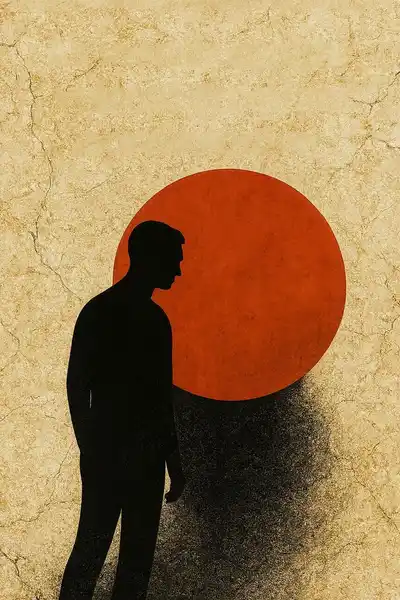
Beneath every appearance, he argued, runs a single blind striving he called will — restless, aimless, and indifferent to the suffering it produces. It is what pushes the plant toward light, the animal toward prey, the person toward the next desire that will never quite satisfy. If that is what the world is made of, the obvious question becomes how anyone lives with it. Schopenhauer's answer is bleak, and then, surprisingly, it is not.
The question we’re asking : If the world beneath appearances is a blind, ceaseless will, what does that make of our lives — and is there any relief from it?What we’ll see : How Schopenhauer takes us from the surface of things to the striving underneath, and where he says we can finally, briefly, step off.
Table of contents
01 Chapter 1 — The world is my representation
Schopenhauer opens with a sentence he wants to land like a shock: the world is my representation. He means it literally. Whatever we call reality reaches us only as something perceived — organized in space and time, sorted into cause and effect by a mind built to do exactly that. We never meet the raw object. We meet the object as it shows up for a knowing subject, and the two go together like a front and a back. No subject, no world of appearances; no appearances, nothing for a subject to be aware of.
This is his debt to Kant, and he acknowledges it openly, even affectionately, calling Kant's distinction between appearance and thing-in-itself the greatest achievement of modern philosophy. Where Kant had drawn a line — we know how things appear, never what they are — Schopenhauer accepts the line and then wonders what lies on the far side. Space, time, and causality, he argues, are the machinery of representation itself. They belong to the seeing, not to the seen. Strip them away and the ordinary world dissolves into something we cannot picture, because picturing is precisely the thing we are trying to get behind.

02 Chapter 2 — Behind the door, the will
From that one inside view, Schopenhauer makes his great leap. If my own body, seen from within, reveals itself as will, then perhaps will is the key to everything else. He argues that we can read the rest of the world by analogy with the only piece of it we know from the inside. What we call my willing in the case of my own arm is the same force that appears, in other guises, as gravity holding a stone to the earth, as a crystal forming, as a plant turning toward the sun, as an animal's hunger. One will, expressing itself at every level of nature, dressed each time in a different appearance.
This is the thing-in-itself Kant had left blank. Schopenhauer fills it in with a single word, and insists the word does not mean anything like conscious choice. The will is not a person deciding. It is striving without a chooser — blind, groundless, without purpose beyond its own perpetuation. It wants nothing in particular because it is wanting itself, the bare drive to be and to keep being. Reason, consciousness, the whole apparatus of the intellect arrive late and serve the will, the way a lantern serves the one who carries it. We think we are steering. Mostly we are being pushed, and inventing reasons afterward.
03 Chapter 3 — A hunger that never eats its fill
What does it feel like to be will? Schopenhauer's answer is the dark heart of the book: it feels like wanting. To will is to lack, and to lack is to suffer. Desire is a want that hurts until it is met; satisfaction is the brief silence before the next want arrives. We are pulled forward by needs that, once satisfied, are simply replaced. The relief we call happiness is only the momentary absence of a particular pain, and it never lasts, because the will does not rest. Its nature is to strive, and striving has no finish line.
So life swings, he says, between pain and boredom like a pendulum. When we want and cannot have, we suffer. When we finally get what we wanted, the wanting dies and, with nothing to strain toward, we grow bored — and boredom, for Schopenhauer, is its own quiet torment, the will idling with no object, feeling its own emptiness. The satisfied are not spared; they are simply moved to the other end of the swing. There is no stable point in the middle where a person could settle and be content, because contentment would mean the will had stopped, and a will that stopped would no longer be a will.
04 Chapter 4 — Two exits from the wheel
Schopenhauer's picture, taken whole, is not a counsel of despair but a map with two exits, and both matter more than the darkness that surrounds them. The first is art. When we lose ourselves in a piece of music, a painting, a landscape held still by attention, something unusual happens: we stop wanting. For a moment we are no longer a striving individual pursuing an object, but a pure, will-less spectator, and the object is no longer a thing to be used but a form contemplated for its own sake. The pain of desire lifts because desire itself has, briefly, gone quiet. This is why beauty feels like peace and not like acquisition.
Among the arts he gives music a place apart. The others show us the world's forms; music, he says, does not copy appearances at all but speaks the language of the will directly — its swellings and resolutions, its tensions and releases, are the very rhythm of striving and satisfaction rendered without objects. To listen is to feel the inner life of the world without having to suffer it. It is the will made audible, and made bearable.
05 Conclusion
The book that sat unsold in a warehouse eventually found its readers. Late in Schopenhauer's life, and more so after his death in 1860, his one idea worked its way into music, into literature, into the young Nietzsche, into a whole mood of European thought. The reason it lasted is not that its conclusions are cheerful — they are not — but that its starting move is honest. It takes the ordinary experience of wanting, the small daily fact that satisfaction never quite sticks, and follows it all the way down until it becomes a claim about what the world is made of.
Related books