The Tiger
When humans and tigers collide
Description
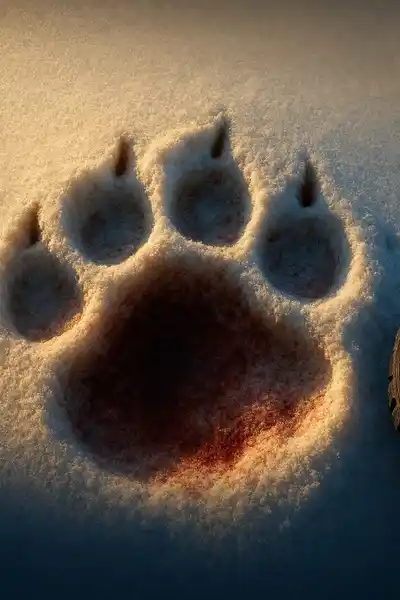
In December 1997, in a valley of Russia's Far East called Primorye, a man named Vladimir Markov did not come home. What his neighbors found at his cabin was not a body in the ordinary sense. It was a scatter of belongings, a blood-dark patch of snow, and the tracks of an Amur tiger — the largest cat on earth — leading off into the taiga. The animal had waited for Markov. It had staked out his cabin, destroyed his possessions, and then killed and eaten him with a deliberateness that the men who read the snow found almost impossible to describe as anything other than personal.
That detail is the engine of John Vaillant's The Tiger. A team of government inspectors, led by a laconic biologist-turned-enforcer named Yuri Trush, is sent to find and kill the animal before it kills again. What could have been a straight adventure story becomes something stranger and heavier, because the closer Trush looks, the more the attack resembles retribution. The tiger, it emerges, may have had a reason. And Markov, like nearly everyone in this frozen, poached-out corner of the post-Soviet collapse, may have given it one.
Vaillant uses this single manhunt to open onto something much larger: a place where a Cold War border, a broken economy, an ancient ecosystem, and a six-hundred-pound predator with a very long memory all press against the same handful of people. The story is true, the reporting exhaustive, and the tiger — by the end — is no longer only an animal.
The question we’re asking : What happens when a predator that has shared the forest with people for millennia starts hunting them back — and why now?What we’ll see : A frozen manhunt in the Russian Far East opens onto poaching, empire, and the very old contract between humans and the animals that could eat us.
Table of contents
01 Chapter 1 — A killing that read like a verdict
Yuri Trush worked for Inspection Tiger, a small squad created in the mid-1990s to protect the roughly four hundred Amur tigers left in the wild, most of them in Primorye. His usual quarry was poachers. In December 1997 the job inverted: he was hunting the tiger itself, because a tiger had eaten Vladimir Markov, and a tiger with a taste for people cannot be left in a landscape where people live scattered through the trees.
What Trush read at the scene unsettled him. Tigers are ambush hunters that generally avoid humans; a fatal encounter is usually an accident of surprise, a startled animal defending itself or a cub. This was not that. The tiger had apparently lain in wait at Markov's cabin for something like twelve to forty-eight hours, ignoring easier prey, and had consumed the man almost entirely. It had also, before the kill, methodically wrecked the things that carried Markov's scent — a mattress dragged out, gear torn apart. To the men in the snow it looked less like predation than a grudge being settled.

02 Chapter 2 — The forest that survival built
To understand the animal, Vaillant slows down and explains what an Amur tiger actually is. Adapted to a climate that swings from summer heat to winters of minus forty, it is the largest tiger subspecies, a male reaching well over two hundred kilograms, capable of dragging a full-grown horse and remembering, for a very long time, the face and scent of an individual that has wronged it. It is, in the plainest sense, an apex predator that has never had reason to fear anything in its forest except, recently, us.
That forest is itself a marvel of accident. Primorye sits at a biological crossroads where the boreal taiga meets subtropical species that survived the ice ages, so tigers share ground with things that seem to belong to other continents entirely. It is one of the last places on earth where a big cat, wolves, bears, and old-growth Korean pine all persist together — a functioning wilderness of a kind that has vanished from most of the temperate world.
03 Chapter 3 — When the taiga stopped feeding its people
The break was economic and it was recent. When the Soviet Union collapsed at the end of 1991, the state jobs, the timber wages, the guaranteed if meager stability of Primorye's villages evaporated almost overnight. Men like Markov were left in a forest full of value with no legal way to convert it into food. So they poached — sable, deer, boar, and, when the opportunity came, the tiger itself, which was catastrophic on two counts at once.
Here the border matters. Just across the rivers lies China, where tiger parts have long commanded extraordinary prices in traditional medicine — bones, whiskers, organs, each with a buyer. A single poached tiger could be worth more than a Primorye villager might otherwise see in years. The demand pulling from the Chinese side and the desperation pushing from the Russian side met in the taiga, and the animal that Indigenous law had protected for centuries became, almost instantly, a commodity to be smuggled out in pieces.
04 Chapter 4 — The oldest bargain we keep breaking
Step back from the frozen valley and the tiger becomes an argument about something we have almost forgotten we ever had. For nearly all of human history, we lived alongside animals capable of eating us, and that fact shaped us. Vaillant suggests our alertness, our fear of the dark, perhaps our very capacity for reading intention in another creature's eyes, were sharpened by predators that read us right back. We were, for a long time, prey as well as hunters — and both sides knew it.
What the Primorye tiger restores, briefly and terribly, is that mutual recognition. When the animal stakes out Markov's cabin, it is behaving as a being that has assessed a specific human, judged him, and acted. The horror of it is inseparable from a kind of awe, and Vaillant refuses to let us reduce it to a mechanical creature-feature. This is what it once felt like to share the world with something that could hold you accountable.
05 Conclusion
Trush's squad did eventually corner the tiger, and the encounter ended the only way it could — with the animal dead and the men who killed it shaken by what they had done and what they had understood. There is no triumph in the ending, only the grim closing of a loop that never should have opened. A man had wronged a tiger; a tiger had killed the man; a state agency had killed the tiger; and the forest that produced all three was still emptying out, kill by kill, sale by sale, across the Chinese border.
Related books