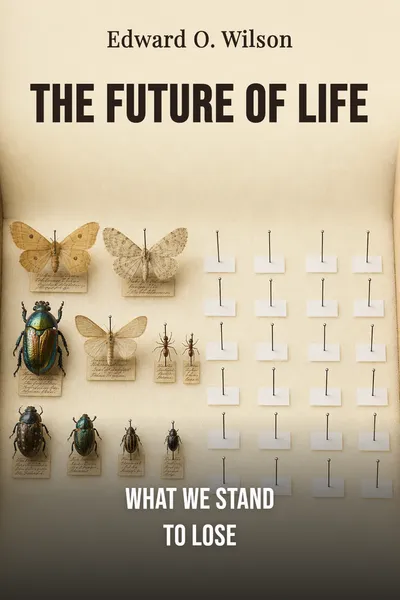
The Future of Life
What we stand to lose
Description
Edward O. Wilson opens The Future of Life, published in 2002, with a letter to a man who had been dead for a hundred and forty years. He writes to Henry David Thoreau, from the shore of Walden Pond, as one naturalist to another. He describes what has changed since 1854 — the highways, the noise, the shrinking woods — and what has not: the same water, the same light, the same stubborn richness of small life underfoot. It is an odd way to begin a book about extinction, addressing a ghost. But Wilson wanted a witness who could measure the distance we have travelled, and how fast.
Wilson was, by the time he wrote it, one of the most decorated biologists alive — the man who had spent a career among ants and then built a case that the diversity of living things is the great, underappreciated fact of our planet. The book is his warning, but it refuses the tone of the sermon. He counts what we are losing: species we have only just named, and many more we will lose before we ever name them at all. He also counts what those species might have given us — foods, medicines, materials, the quiet work of keeping soil and water alive.
Then he does something the environmental literature rarely dared. He argues that saving this variety of life is not the enemy of prosperity but its long-term condition, and he tries to prove it with numbers rather than feeling. The book moves between wonder and accounting, between the poetry of a rainforest floor and the balance sheet of what nature does for us for free.
The question we’re asking : What exactly do we stand to lose as the diversity of life collapses, and is saving it really at war with human wealth?What we’ll see : How one biologist weighs the living planet — its unknown riches, the narrow moment we are passing through, and the case that its rescue and our prosperity are the same problem.
Table of contents
01 Chapter 1 — The letter to Thoreau
The letter is not a stylistic flourish. Wilson chose Thoreau because Walden had made a single pond into a whole world, and because Thoreau had understood, before the word ecology existed, that a place is a web of relationships and not a backdrop. Standing at the same water in the twenty-first century, Wilson can name organisms Thoreau could not have known were there — the microbes, the mites, the fungal threads knitting the forest together. He knows more, and he is watching more of it disappear.
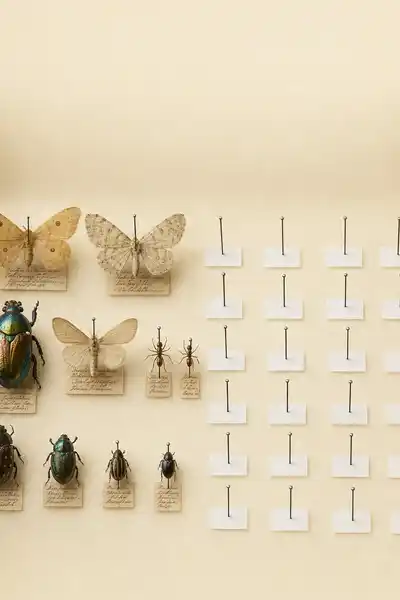
From that quiet opening the book widens fast. Wilson's lifelong subject was the sheer abundance of species, what he liked to call biodiversity, a term he did much to popularize. His point is that we live on a planet whose living variety we have barely begun to catalogue. Somewhere between 1.5 and 1.8 million species had been formally described by his count, and the true number, once bacteria, fungi, and the teeming invertebrates of soil and canopy are included, could run to many millions more. We are, in his phrase, an astonishingly ignorant species about the one thing that keeps us alive.

02 Chapter 2 — The living planet we barely know
Wilson takes the reader down to the places where life is densest and least known. The canopy of a tropical rainforest, where a single tree can host a small nation of beetles. The deep soil, where a handful holds thousands of species and billions of individuals. The hot springs and ocean vents where organisms thrive in conditions that would kill anything he had been taught was possible. He calls these the frontiers of biology, and he insists we have explored them the way a torch explores a cave — a small bright circle in a vast dark.
The wonder is not idle. Every one of these species is, in his framing, a masterpiece of engineering refined over millions of years, and each carries information we cannot yet read. He returns again and again to what this catalogue has already given us. A humble Pacific yew yielded taxol, a cancer drug. Wild relatives of crops carry the genes that rescue harvests from new diseases. Bacteria from a Yellowstone hot spring gave us the enzyme that makes modern DNA testing possible. The pattern is plain: our medicine cabinets and our fields are stocked from the wild, often by accident, long after the organism was nearly written off as useless.
03 Chapter 3 — The bottleneck we're driving through
The central image of the book is a bottleneck. Human population and consumption are climbing toward a peak that Wilson, drawing on the demography of his day, expected to crest somewhere in this century before easing. The next several decades are the narrow neck: the moment of maximum pressure on the rest of life, when the most damage will be done in the least time. The question is how much of the living world will still be there when we come out the other side.
He names the drivers plainly, and gives them a mnemonic he called HIPPO. Habitat destruction is the largest — forests cleared, wetlands drained, reefs bleached. Then invasive species, carried by trade into ecosystems with no defenses against them. Pollution. Population, the multiplier behind all the rest. And overharvesting, the fishing and hunting that empties a place faster than it can refill. Ordered by weight of impact, habitat loss dwarfs the others, but they compound one another, and a species pushed to the edge by one is finished off by the next.
04 Chapter 4 — Wealth, God, and the false trade-off
The step Wilson most wants the reader to take is away from the oldest reflex in the debate: that protecting nature means sacrificing prosperity, jobs against owls, growth against green. He spends the last third of the book dismantling it. The trade-off is real only when conservation is treated as pure cost and nature's services are treated as free. Once you put a price on what forests and fisheries and wetlands actually deliver, the arithmetic inverts. Clearing a mangrove for a shrimp farm can look profitable on a spreadsheet and be a net loss once the lost storm protection and nursery fisheries are counted.
His constructive move is to enlist the tools of the market rather than fight them. He describes debt-for-nature swaps, where a poor country's foreign debt is forgiven in exchange for protecting a wilderness. He points to the growing practice of paying communities to keep an ecosystem intact because the watershed downstream is worth more than the timber. Conservation, done well, becomes an economic strategy for the long term rather than a charitable drag on the short. The point is that the two goals were never truly opposed; they were badly accounted.
05 Conclusion
Wilson leaves the reader where he began, back at the edge of a world he loves and has spent a lifetime studying up close. The letter to Thoreau bookends a plain proposition: the diversity of life is the richest thing our planet has made, we are losing it faster than we can even name it, and the decades in front of us are the ones that count. He does not promise the fight is won. He argues, with the care of a man who has counted the specimens, that it is winnable, and that the cost of trying is small measured against what waits on the other side.
Related books