The Coming Plague
How viruses warn us
Description
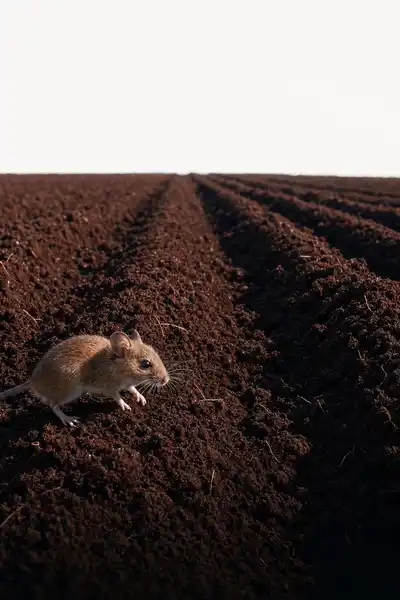
In 1962, in a farming region of eastern Bolivia, people in the town of San Joaquín began to bleed. First the fever, then the exhaustion, then blood from the gums and the gut. Whole families died. The doctors who arrived had no name for it, no cause, no cure. It took a young American virologist named Karl Johnson, who nearly died of the disease himself, to trace it to a virus carried by a local mouse — and to work out why the mice had suddenly moved in. Farmers had cleared new land, sprayed DDT that killed the village cats, and left the door open, so to speak, for a rodent that had always been there but had never before met people at such close range.
That story opens Laurie Garrett's 1994 book The Coming Plague, and it sets the pattern for everything that follows. Garrett, a science journalist, spent years reporting from the places where new diseases surface — clinics in Zaire, refugee camps, research labs chasing viruses nobody could yet identify. She tells each episode as a piece of on-the-ground reporting, then pulls back to explain what the microbe was actually reacting to. The recurring answer is uncomfortable: the diseases were not arriving out of nowhere. We were meeting them halfway.
Reading the book decades on, after Ebola tore through West Africa and after a coronavirus reorganized the world, the effect is strange. Garrett was writing before any of that, and yet the mechanisms she laid out — cleared forests, contaminated water, misused antibiotics, war, and the enormous movement of displaced people — read like a set of instructions for exactly what came next. She was not predicting a specific plague. She was describing the conditions that make plagues, and arguing that we had been building those conditions for fifty years.
The question we’re asking : If new diseases keep surprising us, why did one reporter see them coming — and what was she actually watching?What we’ll see : A fifty-year tour through the outbreaks that should have been warnings, and the human choices that kept turning microbes into emergencies.
Table of contents
01 Chapter 1 — Machupo, and the day the mice came down
Garrett begins where a lot of the modern story of emerging disease begins: with a handful of frightened doctors, a village full of the dying, and a virus nobody had ever catalogued. The Bolivian hemorrhagic fever that hit San Joaquín in the early 1960s — later named Machupo, after a nearby river — is her opening case because it contains, in miniature, everything the rest of the book expands on. A disease appears. It looks like the end of the world to the people living through it. And the reason it appeared turns out to be something ordinary humans did without thinking.
She tells it as reporting, not as a lecture. We follow Karl Johnson and his small team into the outbreak, watch them fall ill, watch colleagues die, and share their slow, methodical hunt for the culprit. The breakthrough is almost anticlimactic in its logic: the virus lived in a field mouse, and the mice had multiplied and pushed into homes because the surrounding ecology had been rearranged. New agriculture, insecticide that wiped out the cats, grain stored in the wrong places. The virus had not changed its behaviour. The human landscape around it had.

02 Chapter 2 — The map that microbes were quietly redrawing
Once the pattern is set, Garrett widens the lens across continents and decades. Lassa fever in Nigeria, carried by another rodent thriving in human housing. Marburg, which arrived in a German lab in 1967 inside imported monkeys and killed people who had never been near Africa. Yellow fever creeping back where it had supposedly been beaten. Each episode gets the same treatment — a reporter's scene up front, then the sober explanation of why the disease surfaced here and now. Laid side by side, they stop looking like separate freak events and start looking like a single trend.
The trend is that the barriers between humans and the microbial world were coming down everywhere at once. Postwar development pushed people into forests and wetlands that had been left alone for millennia. Cities in the developing world swelled far faster than their sanitation could, so that millions drank water that carried whatever was upstream. Cheap air travel meant a pathogen incubating in one country could disembark in another before anyone knew it was sick. The planet, in effect, was being stitched into one epidemiological unit, and few people were watching the seams.
03 Chapter 3 — What Ebola told the people who bothered to listen
The chapters on Ebola are the book's dark centre, and they are where Garrett's reporting is most vivid. She reconstructs the 1976 outbreaks in Zaire and Sudan, when a virus of terrifying lethality appeared near the Ebola River and burned through villages and a mission hospital. Much of the early spread, she shows, was medical: reused needles in an under-resourced clinic turned a small cluster into a catastrophe. The disease that would come to symbolize nature's menace was amplified, at the start, by the very system meant to treat it.
She resists the temptation to make Ebola into a monster movie. What interests her is how the outbreak was contained — through exhausting, low-tech work by local staff and a scramble of international investigators — and how quickly the world lost interest once it was over. The virus retreated to its reservoir. The funding evaporated. The lessons about needles, about isolation, about the fragility of frontline health care were noted and then shelved. Garrett writes with the frustration of someone who can see the next act being set up while everyone applauds the end of the first.
04 Chapter 4 — The thing we mistook for a finished war
Step back from the individual outbreaks and Garrett's real argument comes into focus. The Coming Plague is not fundamentally a book about Ebola or Lassa or HIV. It is a book about a mistake in how we understood our relationship with the microbial world. We had told ourselves a story in which infectious disease was an enemy being steadily defeated, a war entering its final campaign. Garrett's fifty-year survey is one long demonstration that the war was never winnable in that sense, because the enemy is not a fixed set of pathogens but the endlessly renewing gap between microbes and the way humans live.
Her point about antibiotics sharpens this. The wonder drugs that fed the triumphant mood were, she shows, being squandered — overprescribed, fed to livestock, taken incompletely — and bacteria were adapting faster than the confidence could account for. Resistance was rising just as the sense of victory peaked. The very tools that made people believe the fight was over were, through misuse, helping to reopen it. Microbes evolve; that is what they do, and they do it on a timescale that makes our institutions look slow and our optimism look naive.
05 Conclusion
Garrett ends where her reporting keeps pointing: not at a single doomsday microbe but at the standing conditions that will keep producing them. The mice in Bolivia, the needles in Zaire, the crowded cities and moving refugees and half-finished antibiotic courses — these are the constants across every chapter, and they are still constants now. Her fifty-year journey closes on an argument rather than a scare: that we have the tools to watch for emerging disease and repeatedly choose not to fund them, because we keep believing the war is nearly over.
Related books