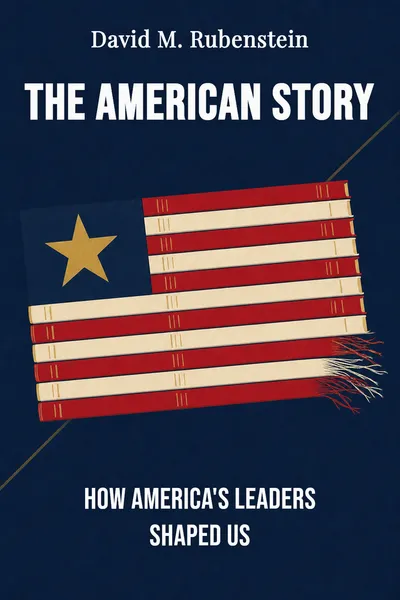
The American Story
How America's leaders shaped us
Description
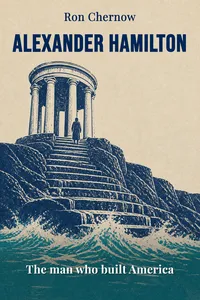
For years, in a private dining room in the Library of Congress, David M. Rubenstein sat across a table from the historians who had spent their lives inside a single American life. Ron Chernow on Washington and Hamilton. Doris Kearns Goodwin on Lincoln and the Roosevelts. David McCullough on John Adams. Robert Caro on Lyndon Johnson. The setup was almost absurdly simple: a man who had made a fortune in private equity, and who happened to read history voraciously, asking questions and getting out of the way. The conversations became a series, then a book, The American Story.
Rubenstein is not a historian, and the book never pretends otherwise. That is, in a way, the point. He calls himself a patriotic philanthropist — the man who bought a copy of the Magna Carta so it would stay on American soil, who funded repairs to the Washington Monument after an earthquake cracked it. He comes to the table as an unusually well-read citizen, curious about how the country was actually built and by whom. What he assembles is less a survey than a room full of experts, each turned loose on the figure they know best.
So the book is a collection of voices, but it circles a single preoccupation: leadership. What made these particular people, in these particular moments, able to bend the course of a nation — and what did it cost them, and what did they get wrong. Read together, the interviews start to argue with each other, which is where the collection becomes something more than a highlight reel of great Americans.
The question we’re asking : How does a nation's story change depending on who is telling it, and what do its leaders reveal when the best biographers describe them?What we’ll see : A private-equity billionaire's conversations with America's foremost historians, and the portrait of leadership and contradiction that emerges when the storytellers take the floor.
Table of contents
01 Chapter 1 — The night the questions started
The origin of the book is almost mundane. Rubenstein was invited to interview a historian in front of a live audience, found he enjoyed it, and kept going. What began as a favor turned into a running series at the Library of Congress and elsewhere, and the format never got more complicated than a chair, a microphone, and a reader who had done the homework. He asks the questions a smart friend would ask, not the questions a fellow scholar would. Why did this person matter? What don't we understand about them? What would surprise us?
That amateur's stance is the book's engine. Rubenstein is candid that he came to serious American history late, after building The Carlyle Group and after deciding that a life of only making money was a thin one. He talks about buying founding documents and lending them out, about funding monuments, about a sense that the country's story belongs to everyone and that too few of us actually know it. The interviews are his attempt to fix that, out loud, in public.

02 Chapter 2 — Founders who did not agree with each other
The founding chapters are where the book quietly complicates the schoolroom version. Rubenstein's historians do not describe a band of like-minded patriots executing a shared plan. They describe rivals who distrusted one another, argued bitterly about what the country should be, and improvised the whole thing under enormous pressure. Washington emerges, in Chernow's telling, as a man whose greatest achievements were acts of restraint — surrendering command after the war, refusing a third term — in a moment when nobody would have stopped him from grabbing more.
Hamilton and Jefferson are drawn as the founding argument that never ended: a strong central government and a financial system on one side, agrarian suspicion of concentrated power on the other. The book lets both sides keep their dignity. Jefferson wrote the words about equality that the country has been trying to live up to ever since; he also enslaved the people who served him, a contradiction the historians refuse to smooth over. Rubenstein presses on exactly these tensions, and the answers are not comfortable.
03 Chapter 3 — The presidents historians keep circling back to
Move past the founding and the book becomes a gallery of the presidents that biographers cannot stop writing about, and it is telling which ones those are. Lincoln dominates. Goodwin describes a politician of extraordinary emotional intelligence, a man who put his rivals in his cabinet and managed them through a war that could have ended the country, holding the whole thing together through patience and an almost unnatural absence of vindictiveness. The portrait is less about oratory than about temperament under unbearable strain.
The Roosevelts anchor the twentieth-century chapters. Theodore comes across as force and appetite; Franklin, through his biographers, as the man who steered the country through the Depression and most of a world war from a wheelchair the public was never allowed to see. The book is frank about the gap between the projected strength and the concealed vulnerability, and about how much of leadership turns out to be the management of appearances alongside the management of crises.
04 Chapter 4 — The people who tell us who we were
Step back from the individual portraits and the book's real subject comes into view, and it is not any single president. It is the storyteller. Rubenstein's project rests on a quiet claim: that a nation does not simply have a history, it has historians, and that the version of the past a country lives inside is shaped by who is trusted to narrate it. The same founding can be a tale of liberty or a tale of compromise with slavery, depending on which questions the biographer chose to ask.
This is why the format matters as much as the content. By putting Chernow, Goodwin, McCullough, and Caro in the chair rather than lecturing himself, Rubenstein is making a point about authority. History, in this book, is not handed down from a single official source. It is argued into being by people who spent years in the archives and came out with a point of view. The reader is invited to notice that these are interpretations, made by human beings with sympathies and blind spots, not neutral transmissions of fact.
05 Conclusion
The book ends more or less where it began: a curious reader at a table, letting people who know more than he does do the talking. That modesty is the through-line. Rubenstein never claims to have solved the puzzle of American leadership, and the historians he gathers do not agree on what made their subjects great, or whether greatness is even the right frame. What emerges instead is a portrait of a country built by flawed, ambitious, often contradictory people who acted before they could know how things would turn out.
Related books