Stigma
Managing a spoiled identity
Description
In 1963, a Canadian-born sociologist named Erving Goffman published a short book with a blunt title: Stigma. He was in his early forties, teaching at Berkeley, and already known for a strange kind of fieldwork — studying not remote tribes but the small, hidden rituals of ordinary social life, the way people manage the impression they give off in a waiting room or a dinner party. This time he turned that attention to people who carry a mark: a facial scar, a criminal record, a stammer, a religion, a job history they would rather hide. What happens, he asked, when the thing you are makes other people treat you as less than fully human?
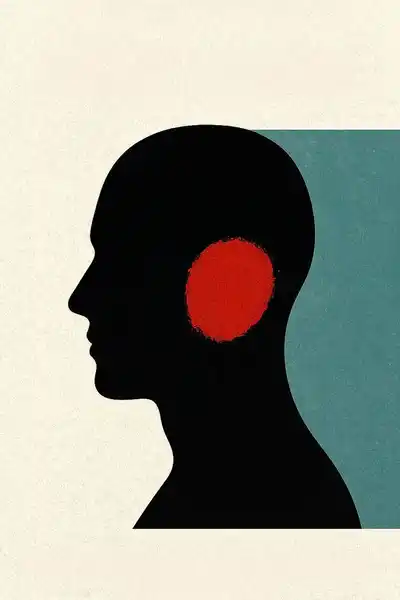
The word itself is old. The Greeks used it for the marks branded or cut into the bodies of slaves and traitors, a visible sign that the bearer was to be avoided. Goffman kept the word but moved the mark inside the social encounter. A stigma, for him, is not really a property of a person at all. It is a relationship — a gap between what someone appears to be and what a given audience expects them to be. The same trait can be a stigma in one room and nothing at all in the next. Which means the mark lives less on the body than in the meeting between two people.
That move sounds abstract until you notice how much daily effort it describes. The person with the mark spends enormous energy deciding who to tell, when, how much, and at what cost. They rehearse. They calculate. They watch the faces of the people they call normal for the flicker that says they have been found out. Goffman's book is a catalogue of that labor — cool, unsentimental, occasionally funny — and it changed how we talk about difference. It is one of the most quietly influential things sociology has produced.
The question we’re asking : What does a person actually do, minute by minute, to manage an identity that others treat as spoiled?What we’ll see : How Goffman reframes the mark as a relationship, the daily machinery of concealment, and what it costs to pass as normal.
Table of contents
01Chapter 1 — The discredited and the discreditable
Goffman opens with a distinction that carries most of the book. There are two kinds of stigmatized people, and they live very different lives. The first is the discredited: the person whose mark is already visible or already known. A missing limb, a severe burn, a wheelchair, a face that reads instantly as different. For them the difference is a given in every encounter — the question is not whether people know, but how to manage the tension once they do. The second is the discreditable: the person whose mark is hidden and could stay hidden. A past prison term, an illness in remission, a sexuality kept private, a family secret. For them the difference is not known but knowable — and the whole game becomes controlling information.
This is the hinge of the entire book. The discredited manage tension; the discreditable manage information. The first faces the problem of what Goffman calls impression management in a mixed contact — how to put a strained encounter at ease when everyone can see the mark and no one will name it. The second faces something more strategic: whether to display or conceal, to tell or not tell, to lie or not lie, and to whom, in each situation. Neither position is comfortable, but they are uncomfortable in opposite ways.

02Chapter 2 — A career in three acts
One of Goffman's sharper ideas is that stigma has a career — a path the marked person travels over a lifetime, learning what they are in the eyes of others. It rarely arrives all at once. It arrives in stages, and where you enter the path shapes everything that follows.
Some people are born into it — born into a stigmatized family or with a visible condition, so that the mark and the self grow up together. They learn the standards of the normal world and their own disqualified place in it at the same time, before they have any other self to compare it to. Others are marked later. A person lives for decades as unremarkable, then acquires a mark through illness, accident, arrest, or the sudden exposure of a secret — and has to reorganize an entire settled identity around it. This second path is harder in a particular way: the person already knows, from the inside, exactly how the normal world sees people like the one they have now become. They have held the prejudice themselves.
03Chapter 3 — The work of passing
For the discreditable — the person whose mark can be hidden — the central technique is passing: presenting yourself as a normal, letting an audience assume you are what you are not. Goffman treats passing not as a moral failing but as a widespread and often rational social skill, and he maps its varieties with something close to admiration for the difficulty involved. Passing is rarely total. It runs on a scale, from the person who conceals from strangers but not intimates, to the person who conceals from almost everyone, to the person for whom a single slip would collapse an entire constructed life.
The labor is relentless. It means learning which situations are dangerous and steering around them. It means managing the details that could give you away — the gap in a résumé, the pill that must not be seen, the topic that must be changed. Goffman describes the constant small surgery of information control: dividing the world into those who know and those who do not, and keeping the two apart, because the danger is not any single person but the moment when someone who knows meets someone who does not. He also notes a related maneuver he calls covering — where the mark is already known, but the person works to keep it from looming, to reduce its intrusion on the interaction. Passing hides the mark; covering shrinks it.
04Chapter 4 — The normal and the stigmatized are the same person
The step Goffman takes at the end is the one that makes the book last. Having spent it describing the marked, he turns and says that stigma is not a matter of two kinds of people — the normal and the stigmatized — but a single relationship that everyone stands inside, on both sides, at different moments. Normal and stigmatized are not persons. They are perspectives, roles generated in social encounters, and almost no one occupies one of them permanently.
The reason is that the standards are impossible to fully meet. Goffman sketches the unmarked ideal of his time and place — in America, roughly a young, married, white, urban, employed, tall, athletic man of the right religion and record — and points out that even the man who fits it fits it only for a while, and only from certain angles. Everyone else falls short somewhere. Which means the identity Goffman keeps calling normal is less a group of people than a set of expectations against which everyone is, in some situation, found wanting. We all carry a mark somewhere; we are all discreditable in some room.
05Conclusion
Goffman's book returns, at the end, to where it began — the ancient mark cut into the body — and leaves it transformed. The stigma was never really on the skin. It lived in the meeting between a person and an audience, in the gap between what someone is and what a room expects, and it could appear or vanish depending only on who was watching. What the marked person manages, all day, is not their body but that gap: the information about it, the tension around it, the faces reading it.
Related books