The power of habit
Driving forces in life and work
Description
To change a habit, it is important to identify your current routines and find ways to improve them. Figure out the rewards that you crave and think about how you can obtain them through better routines. Isolate the cues that trigger your habits. These cues can be related to location, time, emotions, others' actions, or a preceding action. Once you have identified the cues, develop a new routine to follow when those cues occur.
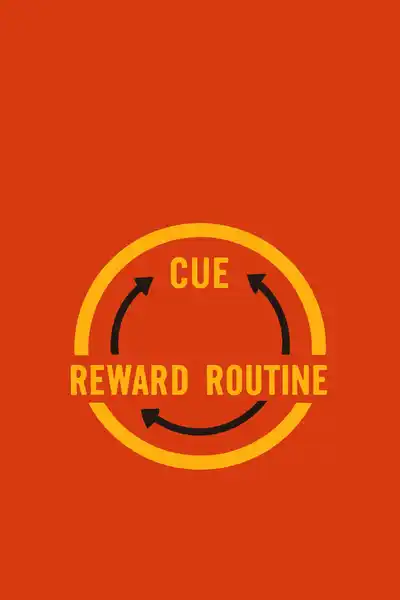
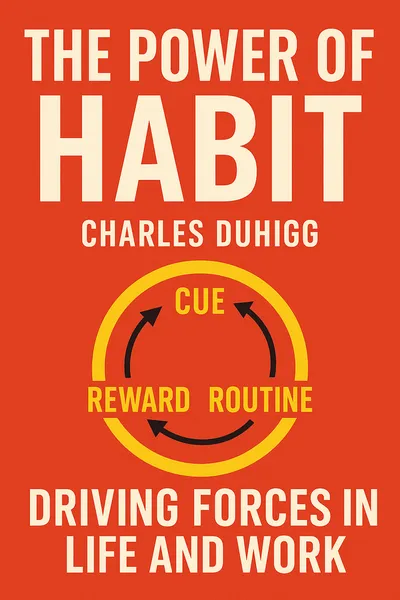
Habits follow a formula: CUE triggers ROUTINE to get REWARD. To reshape a habit, you need to keep the cue and reward the same, but change the routine. Transforming habits takes time and requires experimentation. But once you understand the habit loop of cue, routine, and reward, you gain power over your habits. Remember, change is possible through this framework.
Table of contents
01 How habits form in the lives of individuals
It has been estimated that more than 40 percent of the actions we perform every day are the result of habits rather than deliberate decisions. Understanding how habits form and work is therefore important.vHabits operate via a "Habit Loop" – you see a cue which triggers a routine to obtain a reward you crave. To build new habits or change existing ones, keep the cue and reward the same but swap out old routines for new improved ones.vA habit is when you make a deliberate decision to do something and then stop thinking about it as you repeat the behavior automatically. Researchers at MIT studying habits since the 1990s found the basal ganglia section of the brain is involved in habit formation. The basal ganglia, roughly the size of a golf ball, is one of the evolutionarily oldest inner layers while creative thinking happens in outer layers.
Scientists say habits emerge to conserve mental effort. The brain tries to make any routine a habit to ramp down more often. This saves energy and room in the skull, easing childbirth. It also frees us from constantly thinking about basic behaviors like walking so we can invent new things. However, if the brain powers down at the wrong time we might miss dangers. So the basal ganglia determines when to let habits take over, specifically when a behavior starts or ends.
The Habit Loop that enables all habits has three parts: 1) A cue signals the brain to go on autopilot rather than deliberate, either external like the time or location or internal like your emotional state or a trigger action; 2) The routine is the automatic pattern of behavior done when the habit is cued; 3) The reward is what you get from the routine which helps your brain determine if the loop is worth remembering.
Although habits constrain free will, the brain prefers efficiency so forms them automatically. Understanding the Habit Loop allows optimizing cues, routines and rewards to intentionally change habits.vPeople with basal ganglia damage from injury/disease become mentally paralyzed, having trouble with basic activities like opening doors or deciding what to eat, losing the hundreds of daily habits we rely on. Habits unconsciously influence behavior which can be dangerous if formed haphazardly rather than deliberately.

02 How habits form within organizations
You can't just order people to change their habits and really expect that to happen overnight. Instead, if you're trying to change an organization for the better, figure out what the "keystone habit" is and start a chain reaction. Keystone habits are the habits that matter the most and when they change, they start a chain reaction that can end up changing everything.
For example, when Paul O'Neill was made CEO of Alcoa in October 1987, he stunned analysts by announcing the company would focus on worker safety going forward. An investor who was present said he called his largest clients after the presentation and told them to sell their Alcoa stock immediately because he believed the new CEO would ruin the company. However, within a year Alcoa’s profits hit a record high and by the time O’Neill retired in 2000, the company's annual income had grown 500 percent and its market value increased by $27 billion—making it one of the best performing Dow Jones stocks.
O’Neill accomplished this by correctly identifying worker safety as Alcoa's keystone habit. By becoming a safer place to work, the company saw several natural effects: unions and management aligned behind safety goals, Alcoa brought in experts to educate workers and install efficient processes which modernized operations, a new communication system was put in place to report injuries that also enabled faster reactions to market changes, and as everyone examined routines to prevent accidents, costs declined while quality, productivity and profits rose.
This illustrates three key ways keystone habits encourage organizational change: they produce small initial wins that generate momentum for bigger changes later on by establishing successful patterns that become ingrained routines, they spur further positive changes like enhanced systems and structures that help people thrive, and they instill cultural values that persist even under stress.
03 How habits form in societies
Habits are the invisible architecture of daily life, profoundly influencing both our personal and professional spheres. They streamline our existence, allowing us to perform tasks with reduced cognitive strain. This is the brain's ingenious method of conserving energy, and it's the reward we reap from establishing beneficial habits.
Many high achievers credit their success to a repertoire of habits that encompass self-discipline, a commitment to ongoing education, and adept social interactions. These habits are not merely about preserving the status quo; they are about pushing boundaries, embracing setbacks, and relentlessly pursuing betterment.
The transformative influence of habits extends beyond individual triumphs; it has been a driving force behind significant societal shifts throughout history. Consider the civil rights movement, which was profoundly shaped by the habits of individuals and collectives. The act of Rosa Parks refusing to surrender her seat on a segregated bus in Montgomery, Alabama, sparked a monumental series of events. Her subsequent arrest galvanized her acquaintances and the wider African-American community to initiate a bus boycott. This collective endeavor was fueled by a blend of strong personal connections and broader societal links, culminating in a formidable impetus for societal transformation.
The accomplishments of the civil rights movement can be traced back to the adoption of new habits that cultivated a sense of identity and belonging within the African-American populace. These habits spread rapidly and sustained themselves, showcasing the immense potential of habits as catalysts for change once they are harnessed and directed. The emergence of Martin Luther King Jr. as a charismatic figurehead further cemented the movement's objectives and resonance.
Grasping the mechanics of habits is essential for anyone aspiring to modify them. To change a habit, one must dissect its anatomy: the cues, routines, rewards, and the cravings that lie beneath. By identifying the triggers and experimenting with various rewards, one can uncover the true craving that is being fulfilled. Recognizing the cues—be it a location, time, emotional state, the company of certain people, or an action that precedes the habit—enables the restructuring of the habit loop.
Related books