Ordeal of Civility
The cost of being civil
Description
In 1974, a sociologist at Hunter College named John Murray Cuddihy published a strange, combative book called The Ordeal of Civility. Its subtitle promised Freud, Marx, Lévi-Strauss, and "the Jewish struggle with modernity," and its argument was as audacious as that list suggests. Cuddihy took three of the founding minds of the modern social sciences and read them not as neutral discoverers of universal truths but as men caught inside a specific, uncomfortable predicament: the entry of emancipated Jews into a Western European bourgeois world governed by manners they had never been raised to obey.
The claim landed hard because it refused to stay in one lane. Cuddihy was not writing intellectual history in the usual sense, nor a work of Jewish studies, nor a straightforward sociology of modernization. He was doing all three at once, and using each to unsettle the others. The great theories of alienation, repression, and the raw versus the cooked, he argued, carried a hidden autobiographical charge — they were, in part, ways of talking back to a Gentile social code that demanded self-restraint, decorum, and the quiet management of everything intense or embarrassing.
The book was praised, attacked, and never quite absorbed into the disciplines it provoked. Half a century on, its central intuition still bites, because it points at something we rarely name out loud: the way "good manners" can function as a gate, and the way whole traditions of thought can be read as arguments with the gatekeeper.
The question we’re asking : What does Cuddihy mean when he says modern social theory was shaped by a struggle over civility, and why did that struggle fall so heavily on emancipated European Jews?What we’ll see : How one book turned the founders of modern thought into figures wrestling with a code of manners that was never neutral.
Table of contents
01Chapter 1 — The book that read Marx, Freud and Lévi-Strauss as one story
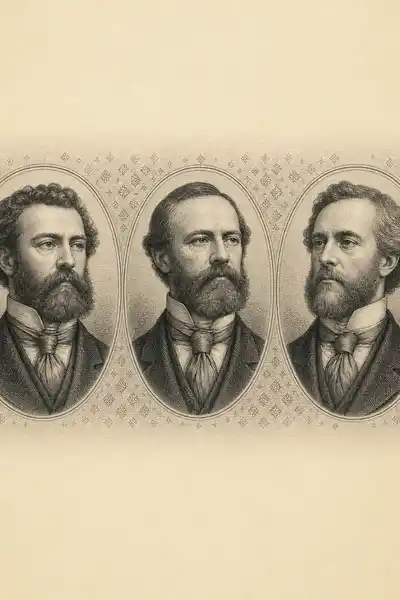
Cuddihy's starting move is a piece of intellectual mischief. He takes three thinkers who are usually kept in separate rooms — Karl Marx and his theory of class and alienation, Sigmund Freud and his account of repression and the unconscious, Claude Lévi-Strauss and his structural anthropology of kinship and myth — and insists they belong to one story. What unites them, in his reading, is not doctrine but situation. All three came out of emancipated European Jewish families, families that had recently left the enclosed world of the ghetto or the shtetl and stepped into a bourgeois society that judged people less by piety or learning than by their command of a subtle, unspoken etiquette.
That etiquette is what Cuddihy means by civility. It is not politeness in the trivial sense of saying please and thank you. It is a whole system of self-management: keeping the body composed, the emotions muffled, the appetites offstage, the family quarrels private, the intensity turned down. The Protestant-bourgeois world of nineteenth-century Western Europe treated this composure as second nature, as simply what a decent person did. For newcomers who had not been socialized into it, it appeared instead as a demand — arbitrary, exacting, and never fully explained.

02Chapter 2 — The Protestant etiquette everyone else had to pass
To make the case, Cuddihy leans on an older sociological insight: that modern Western manners have a Protestant genealogy. The historian and sociologist Norbert Elias had traced, in his study of the civilizing process, how European elites over centuries learned to internalize restraint — to feel shame at the body's noises, to eat with instruments, to convert external coercion into inner self-control. Cuddihy takes that long process and gives it a religious accent. The composure that bourgeois society treated as universal good breeding was, he argues, a secularized Protestant ideal: the disciplined, self-monitoring, emotionally continent self.
The trouble is that a code with a specific religious and class origin was presented to newcomers as neutral, as simply the way civilized people behave. That framing is the trap. If manners are universal, then anyone who fails to master them is not culturally different but personally deficient — coarse, loud, pushy, unable to control himself. The emancipated Jew entering this world was offered full membership on one condition: pass the etiquette exam. And the exam was rigged, because it tested for a temperament that a whole tradition had trained him not to have.
03Chapter 3 — The intellectual as professional troublemaker
Once the mechanism is in place, Cuddihy can read the theories themselves as moves in the game. Freud is his richest case. Psychoanalysis, in this account, is the science that refuses to let the composed bourgeois self stand as final. It insists that beneath the polite exterior there is always something unruly straining to get out — that the drawing room is built over a basement of drives. Freud's own famous discomfort with anything vulgar, his careful respectability, sits alongside a theory that dignifies precisely what respectability wants hidden. He makes the repressed the truth of the matter, and the composure a symptom.
Marx receives a parallel treatment. His scorn for bourgeois hypocrisy, his eagerness to strip away the genteel surface and expose the brute economic relations underneath, works as a refusal to be impressed by manners. Where the etiquette says appearances matter, Marx says appearances are ideology. Cuddihy is not reducing these systems to grievance; he is arguing that the animating impulse — the will to unmask, to look behind the curtain of respectability — has a common social root that the theories themselves never acknowledge.
04Chapter 4 — When manners become the door to the modern world
Step back from the specific thinkers and Cuddihy's real target comes into view: the pretense that civility is neutral. Every society that opens its doors to newcomers sets terms of entry, and manners are among the most powerful because they are the least visible. A law you can read and contest. A code of composure is enforced by embarrassment, by the raised eyebrow, by the sense of not quite belonging — and it presents itself not as a demand at all but as simply how things are done. That is what makes it so effective as a filter and so hard to argue with.
The deeper point is that becoming modern, in the Western sense, has always carried a hidden clause. Modernity offers universalism — citizenship, rights, careers open to talent — but it also asks people to privatize whatever does not fit the public style. Keep your intensity, your religion, your family's particular warmth and quarrel, but keep them at home, offstage, out of the drawing room. Emancipation was real, and it was also a bargain: you may enter, provided you agree to become less conspicuously yourself in public. Cuddihy's Jewish thinkers dramatize this bargain because their tradition was so richly expressive that the cost of the trade was unmistakable.
05Conclusion
The Ordeal of Civility set out to do something few books attempt: to catch the founders of modern social thought in a human situation and show how that situation seeped into their ideas. Freud unmasking the polite self, Marx stripping the genteel surface off economics, Lévi-Strauss relativizing the Parisian salon against the kitchens of the world — Cuddihy reads them all as figures working through the same demand, the demand to become civil on terms set by someone else. The theory is not reduced to biography, but it is anchored in it.
Related books