Mind Wide Open
Brain science reveals who we are
Description
Around 2003, the science writer Steven Johnson decided to stop reading about the brain and start reading his own. He submitted himself to a battery of tests — a neurofeedback session that let him watch his brainwaves on a screen, a functional MRI that photographed his thoughts as they happened, a fear-conditioning experiment, even a lie-detector rig. He was not looking for a diagnosis. He wanted to know what it felt like to encounter himself as a physical object, a three-pound organ of electricity and chemistry, and whether that encounter would change how he lived inside his own head.
The book that came out of it, Mind Wide Open, arrived at a peculiar moment. Brain imaging had just become good enough to produce vivid, colorful pictures of the mind at work, and popular culture was busy turning every human quirk into a matter of dopamine or the amygdala. Johnson's bet was different from the usual pop-science pitch. He suspected that knowing the machinery — not in the abstract, but in your own case — could become a genuine tool for self-knowledge, the way learning to read once expanded what people could think.
What comes back from that experiment is stranger and warmer than a diagram. Johnson treats the brain less as a computer than as a crowded room of specialized systems, some ancient, some barely on speaking terms with each other, all somehow producing the single voice we call "I." The pleasure of the book is watching a curious writer sit inside the lab and narrate the collision between how it feels to be him and what the instruments say is happening.
The question we’re asking : Can watching your own brain at work actually tell you who you are?What we’ll see : A writer turning himself into a lab subject, the hidden chemistry behind ordinary moods, and what it does to a person to read their own machinery.
Table of contents
01Chapter 1 — The author wired himself up
Johnson's method is the whole charm of the book: he refuses to write about the brain from a safe distance. Where most science writers explain a study, he books the appointment. He straps electrodes to his own scalp, climbs into the imaging tube, sits through the conditioning trials, and reports back on what it feels like from the inside. The result reads less like a textbook and more like a travel diary from a country everyone lives in but no one has visited.
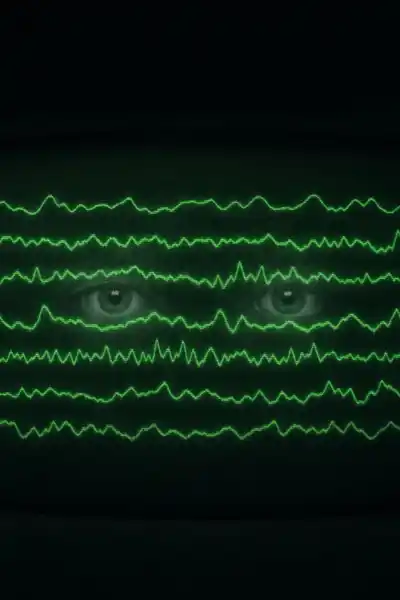
The first stop is neurofeedback, a technique that displays your own brainwaves on a monitor in near real time. Johnson watches a bar rise and fall as his attention drifts and gathers, and discovers he can nudge it — not by trying harder, exactly, but by finding the odd mental posture that quiets the noise. It is his first taste of the book's central sensation: catching a glimpse of a process that had always run behind the curtain, and realizing the curtain was there all along.

02Chapter 2 — The chemistry we call a mood
The most useful section of the book takes the vague weather of everyday feeling and shows the machinery underneath. Johnson keeps returning to a handful of chemicals — dopamine, serotonin, adrenaline, oxytocin — not to reduce his inner life to a stew of molecules, but to give himself words for states he had only ever felt as fog. When he describes the specific buzz of anticipation before a reward, he can now attach it to a dopamine system that cares more about the wanting than the having, and the naming genuinely changes the experience.
Attention gets a chapter of its own, because it turns out to be less a single spotlight than a negotiation. Johnson describes the strange calm of deep focus and the jangling pull of interruption, and traces both to real circuitry rather than to willpower or its absence. Writing before the smartphone had fully colonized daily life, he was already noticing how modern environments hijack these ancient systems, feeding the reward circuit little hits that leave the deeper attention starved.
03Chapter 3 — The many brains under one skull
The deeper argument of Mind Wide Open is that there is no single command center issuing orders. The brain is a coalition of modules that evolved at different times for different purposes, layered on top of one another like a city built over its own ruins. The reptilian machinery for fear and appetite still runs beneath the mammalian machinery for bonding, which in turn sits under the recent, glittering equipment for language and planning. The self is what happens when all of them talk at once.
Johnson leans on the researchers who mapped this crowd — Antonio Damasio on how emotion is woven into reason rather than opposed to it, Joseph LeDoux on the two roads of fear, Paul Ekman on the involuntary flickers that cross a face before the conscious mind approves them. He hands these names over the way a well-read friend would, as characters in a story about how the pieces fit, not as authorities to be deferred to. What emerges is a picture of a mind that is far more improvised than it feels from the inside.
04Chapter 4 — What it means to read your own machine
Step back from the electrodes and the scanner and the question underneath Johnson's whole project comes into view: what does it do to a person to understand the mechanism producing them? For most of history, the mind was the one thing that had to be taken on its own terms — introspection was the only instrument, and it reported on itself in the language of feeling, motive, and soul. Brain science offered, for the first time, a second language, spoken in the vocabulary of circuits and chemicals.
Johnson's answer is that fluency in that second language does not diminish the first. He never suggests that knowing about serotonin makes sadness less sad, or that mapping the amygdala makes fear less frightening. What it does is add a layer of description that runs alongside the felt one. A mood becomes both a mood and a readout. Anxiety becomes both a dread and a mechanism you can name. The self is not replaced by the machine; it is annotated by it, and the annotation buys a little distance.
05Conclusion
Johnson climbs out of the scanner more or less the same person who climbed in, which is the point. The tests did not reveal a hidden true self buried in the tissue, and he never claims they did. What they gave him was a second set of words for the life he was already living — a way to feel a jolt of fear as a mechanism, a flash of craving as a reward circuit, a lapse of focus as a system under siege. The instruments did not decode him. They taught him to read.
Related books