Mind of Napoleon
Napoleon in his own words
Description
On the island of Saint Helena, in the last years before his death in 1821, Napoleon Bonaparte spent his afternoons talking. Exiled by the British to a damp rock in the South Atlantic, stripped of an empire that had once reached from Madrid to Moscow, he dictated memoirs, argued with his few companions, and reworked the story of his own life out loud. Those words joined a paper trail that was already staggering: tens of thousands of letters, proclamations to his troops, decrees, table talk taken down by aides. Few figures in history left so vast a record of what they actually said.
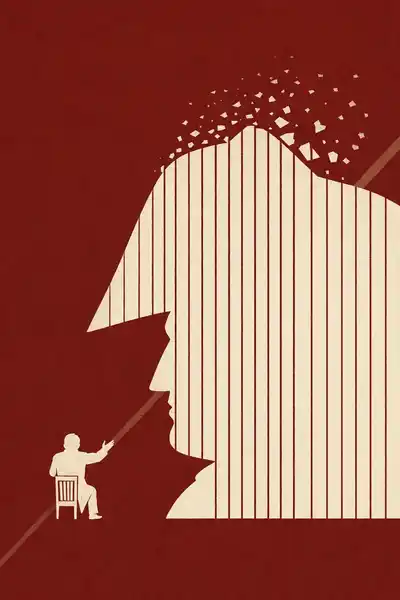
J. Christopher Herold, an American historian, went into that ocean of text and pulled out the man's own voice. His book, first published in 1955, is not a biography in the usual sense. It is an anthology — Napoleon's own words, drawn from letters, speeches, and recorded conversation, sorted by theme rather than chronology. War, power, religion, women, ambition, death: each gets its cluster of sentences, straight from the source, with Herold standing quietly to the side.
The effect is closer to eavesdropping than to reading history. We get Napoleon on strategy and on God, on flattery and on fear, sometimes brilliant, sometimes cold, occasionally caught contradicting himself across two decades. What emerges is a portrait built entirely out of self-expression — which raises the sharper question of whether a mind that talked this much can ever be pinned down by its own talking.
The question we’re asking : What does Napoleon look like when the only witness allowed to speak is Napoleon himself?What we’ll see : How Herold's assembled fragments turn a legend into a talking, arguing, self-mythologizing mind — and what that method reveals and hides.
Table of contents
01 Chapter 1 — A man assembled from his own sentences
Herold's method is deceptively simple. Rather than narrate Napoleon's life, he lets Napoleon do the talking, arranging the quotations under headings — the art of war, the conduct of government, religion, love, the nature of man. The reader moves not through years but through a mind's preoccupations. It is the difference between watching someone's life unfold and sitting across a table while they tell you what they think about everything.
The source material is enormous, and Herold is candid about the problem it creates. Napoleon wrote and dictated at furious speed throughout his career, then spent his final exile revising the record in his favor. The Saint Helena conversations, taken down by companions like Las Cases and Gourgaud, are a man consciously building his own monument. The battlefield letters are something else — hurried, practical, unguarded. Herold sets these registers side by side without smoothing them into a single tone.

02 Chapter 2 — War as arithmetic, politics as theater
On war, the assembled Napoleon is at his most lucid and least sentimental. War, in his own phrasing, is a matter of calculation — of masses, of moments, of concentrating superior force at the decisive point. He speaks of the morale of troops as a quantity to be managed, famously reckoning the moral to the physical as three to one. There is little glory in these remarks and a great deal of engineering. Battles are problems, and he plainly enjoyed solving them.
Yet the same voice knows that armies are moved by feeling as much as by logistics. His proclamations to the troops, quoted at length, are pure theater: appeals to honor, to France, to the soldiers' own vanity and hunger for reward. He understood that men would march farther for a phrase than for a wage. The gap between the cold letters to his marshals and the warm proclamations to his ranks shows a mind operating on two frequencies at once — one for calculation, one for persuasion.
03 Chapter 3 — On God, glory, and the uses of belief
Napoleon's remarks on religion are among the most quoted in Herold's collection, and among the most revealing. He treats faith less as a personal conviction than as an instrument of order. Religion, in his own words, is what keeps the poor from murdering the rich — a social mechanism that prevents the many from tearing apart the few. He speaks of it the way he speaks of medals and titles: as something useful, to be managed by the state rather than believed by the ruler.
This is the logic behind the Concordat of 1801, his agreement with the Pope that re-established the Catholic Church in France after the Revolution had tried to abolish it. He restored the altars not out of piety but out of policy, reasoning that a settled peasantry needed its priests. In the assembled remarks he is remarkably open about this. He wanted a religion under his control, one that would preach obedience and leave sovereignty to him.
04 Chapter 4 — The self-portrait a mind cannot help drawing
A book made entirely of a man's own words promises intimacy, and Herold's collection delivers it — but it is worth asking what kind of intimacy this actually is. We hear Napoleon constantly, on every subject, and yet the more he speaks the more we sense a performance in progress. The words are genuine; the self they present is edited. This is the paradox at the center of the whole enterprise, and Herold, by refusing to intervene, makes us feel it directly.
Napoleon was perhaps the most self-conscious talker in modern history, aware at every moment that he was addressing not only his listener but the future. Much of what he said, especially in exile, was said for the record he knew was being kept. To read him in his own words is therefore to read a man who is always, on some level, composing his legend. The primary source turns out to be an interested witness.
05 Conclusion
Herold's achievement is to hand us Napoleon without a chaperone. Instead of a historian's verdict, we get the sentences themselves — the arithmetic of battle, the theater of power, the frank uses of God and glory, the endless, watchful talk of a man addressing posterity even from a rock in the Atlantic. Organized by theme rather than by year, the fragments let us catch a mind in motion, contradicting itself, calculating, mythologizing. It is a form of biography that trusts the reader to do the weighing.
Related books