Microcosm
Stories small enough to swallow
Description
In 2002, the British historian Norman Davies, already known for a thousand-page history of Poland and an even longer history of Europe, published a book about a single city. Not London, not Paris, not one of the capitals whose names carry their own gravity. The book was called Microcosm, and its subject was Wrocław — a city in western Poland that most readers outside central Europe could not place on a map, and whose name they could not reliably pronounce. Davies wrote it with a co-author, Roger Moorhouse, and together they did something quietly radical: they took a place that had been German, Bohemian, Austrian, Prussian, and Polish by turns, and told its whole life as one continuous story.
The trick was in the title. A microcosm is a small world that contains a larger one — a drop that holds the sea. Davies's wager was that the entire tangled history of central Europe, its shifting borders and expelled populations and rewritten street signs, could be read off the biography of one town. The city the Germans called Breslau and the Poles call Wrocław had changed hands and languages so often that its story refused to belong to any single nation. That refusal was exactly the point.
Most history is written from the top and from the outside — from capitals, treaties, and the nations that won. Davies turned the telescope around and pointed it at the ground. What happens to the past when we shrink the frame until it fits inside one set of walls, one river, one market square that changed its name a dozen times?
The question we’re asking : What do we gain when the whole sweep of European history is told through the life of a single, often-overlooked city?What we’ll see : How Davies rebuilt a place that four empires and two nations each claimed as their own, and why the small frame tells a truer story than the map.
Table of contents
01Chapter 1 — A book named after a single city
Davies did not stumble onto Wrocław by accident. He had spent a career on Poland, a country whose borders on a modern map bear almost no resemblance to where they sat a century ago. After 1945, Poland was physically shifted west: it lost vast territory in the east to the Soviet Union and was compensated with German land in the west, including Silesia and its capital. The city that had been Breslau, the largest German metropolis east of Berlin, woke up on the far side of a new frontier and became Wrocław almost overnight. Its German inhabitants were expelled. Poles from the lost eastern city of Lwów, themselves displaced, were moved in.
That single hinge — one city, two peoples, a border dragged across the middle of the twentieth century — is the kind of thing that usually gets a paragraph in a national history and then vanishes. Davies made it a whole book. He chose Wrocław precisely because it was hard to claim. A city that had been so thoroughly German for so long, then so thoroughly Polish, embarrassed the neat stories both nations liked to tell about themselves. Neither could say it had always been theirs.

02Chapter 2 — How a place gets written from the inside
Writing a city instead of a nation forces a different kind of history. There is no single people whose fortunes you can follow, no crown to pass from head to head. What there is, instead, is continuity of place. The river stays. The market square stays, more or less. The cathedral is rebuilt on the same stones. Davies used that physical persistence as his spine, and hung the human drama on it — Bohemian kings, Habsburg administrators, Prussian garrisons, Nazi officials, Communist planners, each arriving to govern the same streets under a new name.
This let him do something conventional histories struggle with: show change without pretending it was progress toward anything. The city did not become more itself over time. It became German, then more German, then violently un-German. Its population was not the same people evolving; at the great ruptures it was largely replaced. Davies refused to smooth this over into a comforting tale of one community enduring through the centuries. The endurance belonged to the place, not to any group of people living in it.
03Chapter 3 — The layers nobody drew a border for
The hardest part of Wrocław's story is 1945, and Davies does not flinch from it. The German civilians who had lived there for generations were driven out in one of the largest forced population transfers in European history. This was not an isolated cruelty; it was policy, agreed among the victorious powers, and carried out across the whole region. Millions of Germans were expelled from lands their families had inhabited for centuries. The Poles who replaced them in Wrocław were themselves refugees, uprooted from cities in the east that Poland had just lost. Everyone in the new city was, in some sense, from somewhere else.
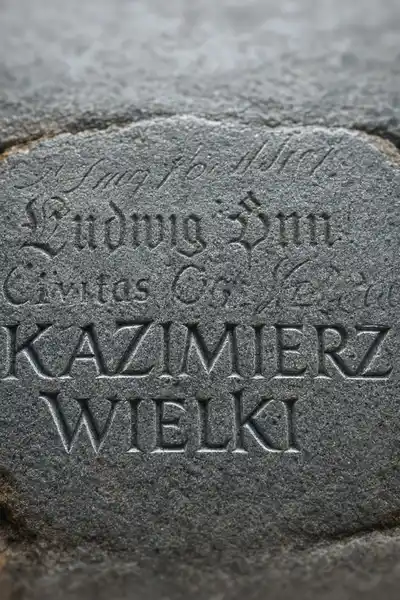
What Davies captures is the strange task those newcomers faced. They arrived in a foreign-looking town — German architecture, German inscriptions, German graves — and were asked to treat it as their ancestral home. The Communist authorities helped by rewriting the story wholesale, insisting Wrocław had always been essentially Polish, a lost limb finally reattached. German traces were scrubbed or reinterpreted. History became propaganda in the service of legitimizing a border that had been imposed from outside.
04Chapter 4 — When the small story becomes the true one
Step back from Wrocław and the method reveals its point. History written from the top — from capitals and treaties and the winning nation's schoolbooks — is history built to reassure. It gives each country a clean line from origin to present, a people who were always there, a territory that was always theirs. It is coherent precisely because it leaves out everything that does not fit. Davies's whole career was a quarrel with that kind of coherence, and Microcosm is the argument in its most compressed form.
A city cannot lie the way a nation can. It has too many receipts. The German university, the Bohemian church, the Austrian bureaucracy, the Prussian barracks, the Communist housing block — they all stand on the same ground, and no amount of official storytelling makes them disappear. To narrate a place honestly, you have to admit all its owners, which means admitting that ownership was never as settled as anyone claimed. The small frame does not simplify the past. It exposes how much the large frame had to hide.
05Conclusion
The city on the Oder is still there, still called Wrocław, its market square rebuilt, its German bones visible to anyone who looks. Davies left it not as a Polish city or a German city but as itself — a place that outlasted everyone who tried to own it, and kept a record of them all in its walls. The nations came and went; the town stayed and remembered.
Related books