Maximus the Confessor
Christ, will, and creation
Description
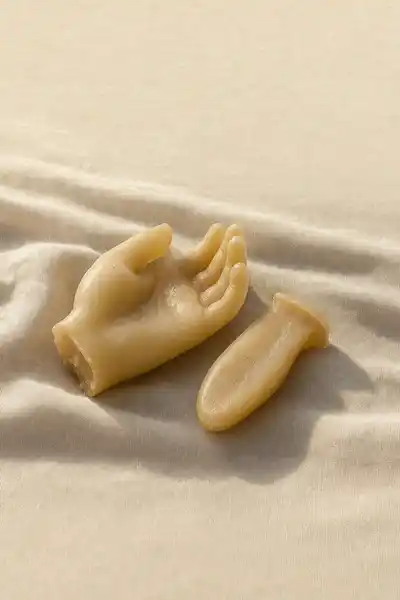
In the year 655, an old monk stood before an imperial court in Constantinople, accused of treason against the emperor. He was in his mid-seventies, he had no army and no diocese, he was not even a bishop — just a former civil servant who had become a monk and then spent decades writing dense, difficult theology. His crime was a refusal. He would not put his signature to an imperial formula about the will of Christ. For that refusal he was tried, exiled, and eventually mutilated: his tongue cut out, his right hand severed, so he could neither speak nor write the thing he believed.
His name was Maximus, later called the Confessor — the one who confessed the faith under torture rather than deny it. What strikes anyone who comes to his writings is how little the fight was about politics and how much it was about a single, almost invisible question: did Jesus have a human will of his own, or only a divine one? To the imperial administration this looked like a technicality worth trading away for peace. To Maximus it was everything — the hinge on which the entire relationship between God and the world turned.
Maximus is not an easy companion. He writes in long, coiling sentences, layering Greek philosophy over scripture over the liturgy of the church. But underneath the difficulty there is one sustained vision, and it is genuinely strange and beautiful. It holds together Christ, the human capacity to choose, and the fate of the entire created cosmos in a single thought. The demand he makes is that we take all three seriously at once.
The question we’re asking : Why would a monk let his tongue and hand be cut off over the question of whether Christ had a human will?What we’ll see : How one theologian in the seventh-century Christian East bound together the person of Christ, the mystery of choosing, and the destiny of everything that exists.
Table of contents
01Chapter 1 — A monk who would not sign
Maximus was born around 580, most likely in Constantinople, into a world that assumed the emperor and the church spoke with one voice. He began his career inside the imperial administration, reportedly as a secretary to the emperor Heraclius, before leaving the palace for the monastic life. That trajectory matters: he was not a wild ascetic from the desert but a trained, cultured man who had seen how power worked and chose to step out of it. The learning stayed with him. His theology is saturated with the philosophical vocabulary of late antiquity, put entirely to the service of prayer.
The controversy that would consume his last years began as an attempt at compromise. The eastern empire was fracturing, and imperial theologians hoped to reunite quarreling Christian factions with a careful formula: Christ had two natures, divine and human, but only one activity, one will. It sounded like a bridge. Maximus saw it as a demolition. If Christ had no human will, he argued, then the humanity Christ took on was incomplete — a costume rather than a real human life — and whatever was not fully assumed could not be fully healed.

02Chapter 2 — The Word who holds the world together
To understand why the will mattered so much, we have to start where Maximus started: with the figure at the center of everything, the divine Word made flesh. For Maximus, Christ is not simply a rescuer who arrives late to fix a broken situation. Christ is the pattern on which the whole of reality was drawn in the first place. Before there was a fall to repair, there was an intention, and that intention was the union of the created and the uncreated in one person.
He inherited a rich Greek word for this: logos. It means word, but also reason, principle, the inner purpose of a thing. Maximus takes the idea that every created thing has its own logos — a kind of divine intention that makes it what it is and gives it its place — and gathers all those countless little logoi into the one Logos, the Word through whom, the scriptures say, all things were made. Creation, in this vision, is not a scatter of unrelated objects. It is a vast composition, and every note has its meaning in relation to a single theme.
03Chapter 3 — Two wills in one person
This is the heart of the matter, and it is worth slowing down for. Maximus distinguished between what a will is and how a will gets used. A will, in his analysis, belongs to a nature: to be human is to have a human capacity to desire, to want the good, to move toward what sustains life. It is part of the equipment of being a person. So if Christ is truly human, he must have a human will — not as an extra, but as a condition of being human at all. To deny it is to deny the humanity.
The obvious objection is the one the imperial theologians pressed: two wills means two agents, a divine person and a human person tugging in different directions inside one body. Maximus answered by separating the natural capacity to will from the personal act of choosing. There are two natural wills in Christ, human and divine, but one person doing the willing. The human will is not a rival will; it is fully Christ's own, and it consistently, freely aligns itself with the divine — most sharply in the garden of Gethsemane, where Jesus prays that the cup might pass, then says not my will but yours. For Maximus that scene is not embarrassment to be explained away. It is the whole doctrine in a single sentence: a real human will, really recoiling from death, really choosing to consent.
04Chapter 4 — Creation as a returning circle
Step back from the arguments about wills and natures, and a larger shape appears. Maximus is not finally interested in Christ as an isolated case. He is interested in what Christ reveals about the destiny of everything that exists. His whole theology moves in a great circle: all things come out from God through the Word, carrying their divine intentions like seeds, and all things are meant to return to God — freely, through the same Word, gathered up into the union that Christ embodies.
This is why the human will could never be a technicality for him. Human beings occupy a strange hinge position in his cosmos. We stand between the material and the spiritual, the created and the uncreated, and our vocation is to be the point where the whole of creation is drawn together and offered back to its source. Maximus describes the human person as a kind of workshop and mediator, whose calling is to overcome the divisions running through reality and reconcile them in a single movement of love toward God. When our willing is healed, it is not just we who are saved; through us the material world finds its way home.
05Conclusion
The old monk who would not sign died silenced on the empire's far edge, and for a moment it must have looked like the state had won. It had not. The question he refused to trade away — whether Christ possessed a real human will — was decided in his favor at the Third Council of Constantinople in 681, less than two decades after his death, and his thought became one of the load-bearing walls of Eastern Christian theology. The tongue and hand they took from him had already written enough.
Related books