Living Without Why
Acting without a final purpose
Description
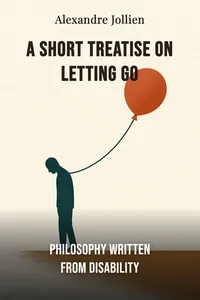
Alexandre Jollien has spent most of his life explaining himself. Born in 1975 with cerebral palsy, he spent his first seventeen years in a specialized institution in Switzerland, surrounded by people who measured him against what he could and couldn't do. He went on to study philosophy, to write bestselling books, to live for three years in a Zen monastery in Seoul. And through all of it, one word kept tailing him — the word why. Why this body, why this difficulty, why this life rather than another. In Living Without Why, he turns that word over and over, and then, slowly, sets it down.
The title isn't his invention. It comes from the thirteenth-century mystic Meister Eckhart, who wrote that the just person acts without a why, the way a rose blooms because it blooms, with no concern for whether anyone is watching. Jollien pairs that line with years of Zen practice, where the same idea arrives stripped of theology: do the thing, drink the tea, sweep the floor, and stop asking what it's for. Two traditions, centuries and continents apart, pointing at the same quiet door.
What makes the book more than a spiritual reading list is that Jollien doesn't pretend the door opens easily. He writes as someone who still catches himself bargaining, performing, justifying. The question is whether a human being — this restless, self-auditing animal — can really act without constantly weighing the act against its payoff. And if so, what that would feel like from the inside, on an ordinary Tuesday, with a body that doesn't cooperate.
The question we’re asking : Can we act without an ulterior motive — without secretly measuring every gesture against what it earns us?What we’ll see : How Jollien, reading Eckhart alongside years of Zen practice, builds a quiet case for doing things for no reason at all.
Table of contents
01Chapter 1 — The man who asked why too often
Jollien's early life was an education in justification. In the institution where he grew up, every movement had to be explained, corrected, improved toward some future state of normalcy. The implicit promise was always that effort would pay off later — that the hard work of therapy and discipline was an investment in a self that would one day arrive. He learned to live tilted forward, leaning into a future that would redeem the present. The present itself, meanwhile, got quietly spent.
That habit followed him out of the institution and into his success. The books sold, the audiences filled, and still the internal accountant kept its ledger open. Was this gesture generous or was it performed? Did he meditate because he wanted peace or because he wanted to be the kind of man who meditates? Jollien is unsparing about this. He notices that even his humility could become a currency, a way of buying approval. The why had migrated inward and set up shop.

02Chapter 2 — The rose that blooms because it blooms
The sentence belongs to Meister Eckhart, the Dominican preacher who scandalized the Church of his day by pushing mysticism to its limit. Eckhart wrote that the just person acts without a why — that the one who truly loves does not love in order to gain heaven or avoid hell, but loves the way the rose blooms, without a reason, without an eye on the result. Ask the rose why it flowers and it has no answer. It flowers because it flowers. Jollien takes this line as a kind of north star.
What strikes him in Eckhart is that this isn't laziness or indifference. The rose is intensely alive; it holds nothing back. Acting without a why doesn't mean doing less — it means doing fully, without the parasitic second thought that asks what the doing will bring. The gesture and its meaning stop being separate. You are not helping in order to be good; the helping is the goodness, complete in the moment it happens, needing no voucher from the future.
03Chapter 3 — The scaffolding we never take down
The hardest part of living without why, Jollien insists, is that the justifying mind doesn't experience itself as a prison. It experiences itself as responsibility, as prudence, as being a serious person. We build scaffolding around every act — reasons, goals, plans, measures of success — and the scaffolding feels like the building itself. We forget it was only ever meant to be temporary. We live inside the scaffolding and call it a home.
He traces how this plays out in small ways. We can't enjoy a walk without turning it into exercise, can't read without turning it into self-improvement, can't rest without feeling we've earned it first. Every pleasure gets routed through an audit. Jollien recognizes himself in all of it, and that recognition is important: the book is not written from above, by someone who has solved this, but from inside the struggle, by someone who keeps relapsing and keeps noticing.
04Chapter 4 — When the calculation finally stops
Step back from the body and the biography, and Living Without Why reads as a quiet objection to one of modernity's deepest reflexes: the demand that every action justify itself. We live inside systems — economic, professional, even personal — that ask us to account for our time, to optimize, to show returns. The language of investment has crept into places it has no business being. We speak of investing in friendships, in rest, in our own children, as if love were a portfolio. The why is no longer just a personal tic; it's the ambient logic of the age.
Jollien's wager is that this logic, for all its usefulness, quietly impoverishes us. A life spent justifying itself never quite gets around to being lived. The return we chase keeps receding, and the present keeps getting mortgaged against a future that arrives already spent. What he proposes is not an escape from effort or responsibility — he is, after all, a man who had to fight for every physical gesture — but a loosening of the grip, a willingness to act sometimes for no reason an accountant would accept.
05Conclusion
The book ends more or less where the boy in the institution began: with a body that doesn't cooperate and a mind trained to explain it. Jollien hasn't escaped the why. He still catches himself performing, still hears the accountant open its ledger on an ordinary morning. What has changed is that he no longer mistakes the voice for the truth. The rose does not argue with itself about blooming, and now and then, for a few unguarded minutes, neither does he. The homecoming he describes isn't a destination reached but a door he has learned to find again.
Related books