Lincoln and the Fight for Peace
Lincoln's vision for peace
Description
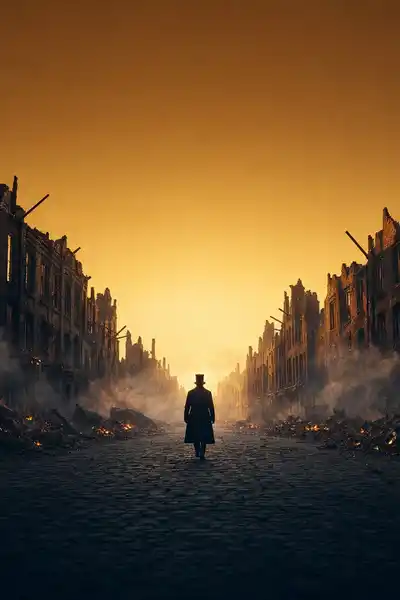
On April 4, 1865, Abraham Lincoln walked through the fallen Confederate capital of Richmond with almost no guard, his son Tad beside him, while formerly enslaved men crowded around and tried to kneel at his feet. He told them not to kneel to him, only to God. Union soldiers had taken the city the day before; Robert E. Lee's army was days from surrender. The president who had waged the bloodiest war in American history had come, at the very end, to see the ruins for himself — and what he said in those ruins was not about triumph.
John Avlon's book "Lincoln and the Fight for Peace" fixes on this narrow window, the last stretch of Lincoln's life, when the question shifted from how to win the war to how to end it. Avlon, a journalist and former political speechwriter, argues that Lincoln had thought hard about the aftermath — how a nation that had spent four years killing itself could be stitched back together without a generation of reprisals. The plan was already taking shape. Then, on the night of April 14, it was cut off.
What makes the book worth reading is that it treats the peace as a design problem Lincoln was actively solving, not a footnote to the war. Avlon draws a line from Lincoln's phrasing — "malice toward none" — to the way modern conflicts get settled or botched, and asks what was lost when the man who meant those words was killed before he could act on them.
The question we’re asking : What did Lincoln actually intend for the defeated South, and what happened to that intention once he was gone?What we’ll see : How a wartime president thought about mercy, why he chose it over vengeance, and what the loss of that vision cost a reunited nation.
Table of contents
01 Chapter 1 — The general who wept at Richmond
Avlon opens close to the ground, in the last weeks, because that is where Lincoln's thinking about peace stopped being abstract. By the spring of 1865 the outcome was no longer in doubt. Sherman had cut through Georgia and the Carolinas, Grant had Lee pinned outside Petersburg, and the Confederacy was collapsing from the inside. The military question was nearly answered. The harder question — what to do with the people who had lost — was wide open, and Lincoln knew that the answer would shape the country for a century.
The Richmond visit is Avlon's emblem for the whole argument. Here was the commander-in-chief walking unarmed through the capital of the rebellion, greeted not by conquered enemies but by the newly freed, and choosing restraint at the exact moment when a leader might indulge in spectacle. Lincoln did not want a victory parade through the South. He wanted the shooting to stop and the country to function again, and he understood that how the war ended would matter as much as the fact that it did.

02 Chapter 2 — A firm peace, without malice
The clearest statement of what Lincoln wanted came in his second inaugural address, delivered on March 4, 1865, a little over a month before his death. Avlon treats the speech as the intellectual core of the book. It is short, and it refuses the easy consolations. Lincoln does not claim God was on the Union's side; he suggests the war was a judgment on the whole country, North and South alike, for the sin of slavery. Then comes the closing that Avlon returns to again and again: "with malice toward none, with charity for all."
This was not soft sentiment. Avlon insists that Lincoln's magnanimity was strategic — a calculation about how to make a peace that would actually hold. Punish the South too harshly, and you plant the seeds of resentment and future violence. Humiliate a defeated people, and you guarantee they will nurse the grievance for generations. Lincoln had read enough history to know that the way a war is concluded often determines whether the next one is coming. Mercy, in his hands, was a tool of national security as much as a moral gesture.
03 Chapter 3 — Five days, and then a gunshot
Lee surrendered on April 9. Five days later, on the evening of April 14, Lincoln went to Ford's Theatre to see a comedy, needing an ordinary night after four years without one. John Wilkes Booth, an actor and Confederate sympathizer who believed he was avenging the South, shot him in the back of the head. Lincoln died the next morning. Avlon lingers on the timing because it is almost unbearable: the man had won the war and sketched the peace, and was killed in the brief gap between the two.
The assassination did more than end a life; Avlon argues it removed the one figure with the authority and the intention to hold the magnanimous line. Lincoln had beaten the Confederacy and had the standing to be generous without looking weak. No one who followed had that combination. The peace he imagined depended on a specific person being alive to fight for it, and on April 15 that person was gone.
04 Chapter 4 — The victor who refuses the easy revenge
Stepping back, Avlon's real subject is a problem that outlasts 1865: winning a war and winning the peace are two different acts, and the skills that produce the first can wreck the second. The victor holds all the leverage at the moment of surrender, which is exactly the moment when the urge to use it is strongest and most self-defeating. Lincoln's late statesmanship is Avlon's case study in resisting that urge on purpose, with a clear-eyed sense of what it buys.
The book quietly places Lincoln in a longer conversation about how conflicts end. Avlon points to the generous American settlements after the Second World War — the rebuilding of defeated Germany and Japan into stable allies — as the model Lincoln was groping toward, and contrasts it with the punitive peace after the First World War that helped light the fuse for the next. The pattern he draws is consistent: humiliation breeds the next war, integration ends the cycle. Lincoln, without the vocabulary of modern statecraft, had arrived at the same insight from inside a civil war.
05 Conclusion
The image Avlon returns to is the one he opened with: Lincoln in the ruins of Richmond, telling freed men not to kneel, more interested in the country's next chapter than in his own triumph. Ten days later he was dead, and the peace he had been building passed into hands that kept its softness and abandoned its purpose. The war's great questions — could the Union hold, would slavery end — had been answered. The question of whether the reunion could be made whole was left open, and the country spent the next hundred years failing to close it.
Related books