Karl Marx's Theory of History
How class struggle shaped history
Description
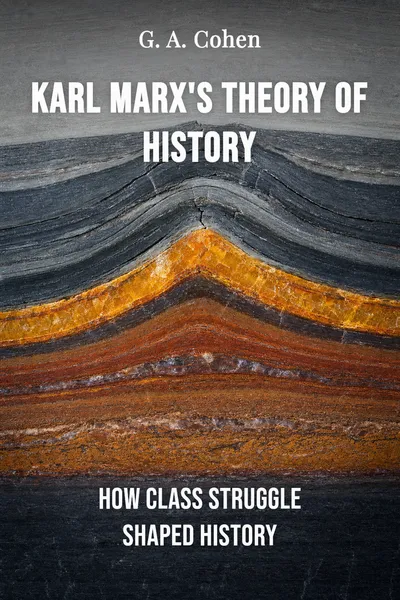
In 1978, a philosopher at University College London named Gerald Cohen published a book with a deceptively plain title: Karl Marx's Theory of History: A Defence. Cohen had grown up in a communist household in Montreal, trained in the tight analytic tradition of Oxford, and then done something the two worlds rarely combined. He took Marx — usually read as a thundering prophet or a sprawling economist — and treated him the way you'd treat any serious thinker: as someone making specific claims that are either true or false, and that deserve to be stated clearly enough to be tested.
The result reset how a whole generation read Marx. Where others found dialectical fog, Cohen insisted there was a hard, argued thesis underneath — one about why societies change, in what order, and what does the pushing. He called the method analytical Marxism, and the label stuck to a small group of scholars who agreed on one thing: if Marx was right, you should be able to say exactly what he was right about, without hiding behind jargon.
Marx's own phrase was that people make their own history, but not under conditions of their own choosing. Cohen's book is a long, careful attempt to say what those conditions are, and how they move. It is less a celebration than a reconstruction — pulling a coherent engine of history out of scattered passages, and then asking, soberly, whether the engine actually runs.
The question we’re asking : What exactly did Marx claim drives history from one kind of society to the next — and does the claim hold up when stated with real precision?What we’ll see : How Cohen rebuilt Marx's materialism into a testable argument, and where that argument strains under its own weight.
Table of contents
01Chapter 1 — The claim that material life comes first
The heart of Marx's theory, as Cohen reads it, is a short and startling assertion: the way people produce the things they need to live shapes everything else about their society. Their laws, their politics, their religion, even the ideas they take to be timeless truths — all of it rests on a base, and that base is economic. Marx called this historical materialism. The word materialism here is not about greed or consumerism. It means that material life, the actual business of feeding and housing and clothing ourselves, comes first in the order of explanation.
Cohen's contribution was to take two of Marx's key terms and hold them apart until they stopped blurring together. The first is the forces of production: the tools, machines, techniques, and human skill that a society uses to make things — its productive power, in short. The second is the relations of production: the way people are hooked to each other and to those forces, who owns what, who works for whom, who commands and who obeys. A steam engine is a force. The fact that a factory owner owns it and a worker doesn't is a relation.

02Chapter 2 — How productive powers pull history forward
If the base explains the rest, the next question is what explains the base — what makes it move at all. Cohen's answer, drawn from Marx, is deceptively simple. Human beings are rational and somewhat inventive, they face scarcity, and so over the long run they tend to improve their productive powers. Knowledge accumulates; nobody willingly forgets a better technique. This gives history a direction. The forces of production have a persistent tendency to grow.
The economic relations, then, are selected for their fit with that growth. A given set of relations — say, feudal ties between lord and serf — takes hold and lasts as long as it houses and encourages the development of the forces. When those relations start to fetter further growth, when they hold back techniques that could otherwise flourish, they come under pressure and are eventually replaced by relations that suit the new level of power. History moves through a sequence of economic structures, each rising when it best develops production and falling when it no longer does.
03Chapter 3 — Feudalism, capitalism, and the class that follows
The theory earns its keep at the transitions, and the sharpest example is the passage from feudalism to capitalism. Under feudalism, land was worked by peasants bound to lords, tied down by custom, obligation, and local authority. That arrangement fit a world of limited technique. But as commerce spread, as towns and trade and new methods of production grew, those bonds became a fetter. Capitalism offered a different set of relations: free laborers who owned nothing but their capacity to work, and owners who commanded the means of production and hired that labor for a wage.
This is where class enters, and where Cohen keeps class in careful proportion. Marx is famous for the line that all history is the history of class struggle, and the struggle is real — between lord and serf, between capitalist and worker. But in Cohen's reconstruction the classes are not the deepest layer. Which classes exist, and which one is on the rise, is set by the economic structure, which is in turn set by the level of productive power. Class conflict is the mechanism through which the deeper changes work themselves out, the human drama that carries the underlying logic. People fight; but what they can fight over is framed by where production has arrived.
04Chapter 4 — The theory as a wager on history
Step back from the machinery and a larger question comes into view, and it is the one Cohen most wanted to force. What kind of claim is Marx's theory of history? It is easy to read Marx as a moralist promising justice, or a prophet announcing an inevitable dawn. Cohen's whole procedure refuses both. He treats historical materialism as a would-be science: an empirical hypothesis about how societies change, one that stands or falls on evidence and argument rather than on hope. That reframing is bracing, and it cuts against much of what both admirers and enemies of Marx assume.
The cost of the reframing is that it exposes the theory to defeat. If the driver of history is the tendency of productive powers to grow, and if economic structures survive only so long as they serve that growth, then the twentieth century poses hard questions. Capitalism did not obligingly fetter the forces and hand over to the proletariat. Revolutions came, when they came, in poor agrarian countries rather than advanced industrial ones — nearly the reverse of what the theory seemed to predict. A defense worth the name has to sit with that.
05Conclusion
Cohen's book ends less like a manifesto than like a careful audit. He had pulled from Marx a genuine theory — productive forces tending to grow, economic relations rising and falling by how well they serve that growth, class struggle carrying the change through — and he had stated it precisely enough to be judged. The materialism comes first, the classes follow from it, and the whole sequence points, in Marx's telling, toward a society beyond class. Whether history obliges is another matter, and Cohen was too honest to pretend it plainly had.
Related books