
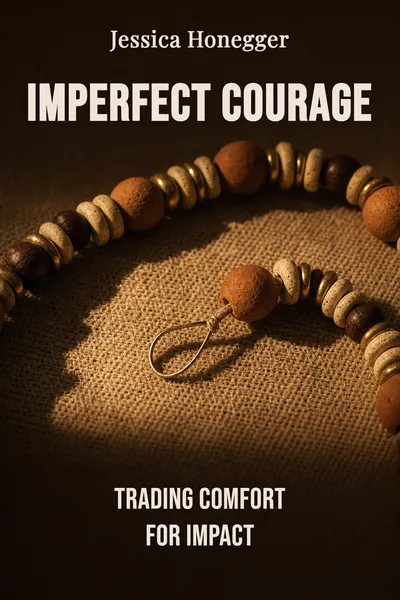
Imperfect Courage
Trading comfort for impact
Description
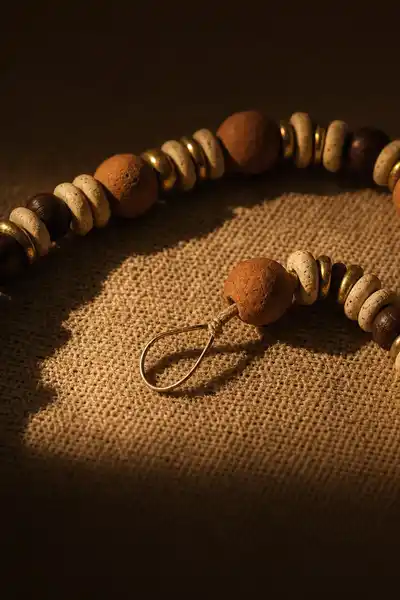
In 2010, Jessica Honegger and her husband were trying to adopt a child from Rwanda, and they were short thousands of dollars they didn't have. Rather than wait, she started selling handmade jewelry out of her Austin home — pieces made by artisans she'd met abroad, sold at a trunk show to friends to close the gap on the adoption fees. It was meant to be a one-off. A quick fix for a personal problem, run out of her living room with a folding table and a card reader.
That trunk show became Noonday Collection, a fair-trade company that now works with artisan businesses across more than a dozen countries and channels income to thousands of makers in vulnerable communities. What began as a scramble to fund one family's adoption turned into a marketplace built to give dignified work to people the global economy usually leaves out. Honegger didn't set out to build any of it. She set out to solve one thing, badly, before she felt ready — and kept going.
Imperfect Courage is the book she wrote about that decade, and it isn't really a business memoir. It's an argument about a particular kind of nerve: the willingness to act while still afraid, to move before the plan is clean, to trade the safety of staying put for something with more risk and more meaning. Honegger uses her own missteps as the evidence, and she keeps turning the question back on the reader.
The question we’re asking : What does it actually take to leave the comfort zone and build something that matters — while still scared?What we’ll see : How a home fundraiser became a global fair-trade company, and what Honegger learned about courage, fear, and the people on the other end of the work.
Table of contents
01Chapter 1 — The adoption fundraiser that became a company
Honegger grew up around social work and mission trips, so the pull toward vulnerable communities wasn't new. What was new, in 2010, was the money problem. She and her husband Joe had decided to adopt from Rwanda, and international adoption is expensive — the kind of expensive that arrives all at once and doesn't care about your savings account. They needed roughly $20,000 they didn't have, and the usual advice, wait and save, felt like watching a door close slowly.
So she improvised. On earlier travels she'd met artisans making beautiful things — jewelry, textiles — who had no reliable way to reach buyers. She bought inventory, invited friends over, and hosted a trunk show, framing it plainly: buy this, help us bring our son home. People came. They bought. The gap started closing, and something else happened that she hadn't planned for — the artisans got paid, real income for real work, and she could see the double effect of a single sale.

02Chapter 2 — Scared and brave at the same time
The phrase that gives the book its title is Honegger's rejection of a myth she sees everywhere: that courage means the absence of fear. In her telling, that's backwards. The people who wait to feel ready, who wait for the fear to lift before they move, mostly wait forever. What she calls imperfect courage is the decision to act while still shaking — to send the email, host the show, make the ask, launch the thing before you've earned the confidence you think the moment requires.
She's honest about how bad it felt. She writes about the fear of being seen as pushy, the fear of failing publicly in front of friends, the impostor feeling of running a company she wasn't qualified to run. She made real mistakes — hiring wrong, scaling too fast, mismanaging cash, burning out. The book doesn't sand these down into charming anecdotes. They're presented as the ordinary texture of building something, the price of moving before you have it all figured out.
03Chapter 3 — The artisan on the other end
It would be easy to read Imperfect Courage as a self-actualization story — woman leaves comfort zone, finds herself. Honegger works hard to keep it from collapsing into that. The whole point of the enterprise, and the book, is the person on the other end of the transaction: the artisan in Uganda or India or Guatemala whose handmade goods now reach a market, and whose income now covers school fees, food, and a measure of dignity that charity rarely delivers.
This is where fair trade matters to her, not as a marketing label but as a commitment. Noonday's premise is that people in vulnerable communities don't need to be rescued — they need reliable buyers. They already have the skill and the products. What they lack is access to a market that pays fairly and shows up consistently. The company's job is to be that market, at a scale big enough to matter, which is what pulled Honegger's personal fundraiser into a serious operation with real obligations.
04Chapter 4 — When impact needs the comfortable to move first
Step back from Noonday and the adoption story, and the book is making a larger wager about where good comes from in the world. Honegger's implicit claim is that most of it waits on ordinary people acting before they feel ready — not on experts, not on the extraordinarily gifted, but on the person with a card table who decides to go anyway. If courage were a personality trait you either had or didn't, the world's problems would be stuck waiting on a small brave minority. Her whole argument is that it isn't a trait. It's a practice, available to anyone willing to be uncomfortable.
That reframing is the quiet radicalism of the book. It takes the burden off finding your calling and puts it on taking the next imperfect step. Honegger built a global company without knowing she was building one, which means the entry fee wasn't vision or qualification — it was the willingness to start badly and keep adjusting. She's essentially arguing that impact is more democratic than we think, gated less by talent than by our reluctance to feel foolish.
05Conclusion
The card table in an Austin living room is still the honest image of what this book is about. Honegger needed to bring her son home and couldn't wait to feel ready, so she sold jewelry to her friends and, almost by accident, built a company that now moves income to thousands of artisans she'd never have met if she'd stayed comfortable. The adoption fundraiser and the global marketplace are the same story, told at two scales — a person acting while scared, and the reach that action turned out to have.