How to Be Animal
The animal we refuse to be
Description
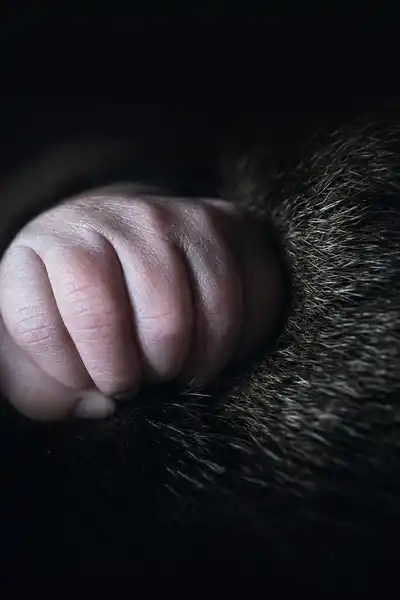
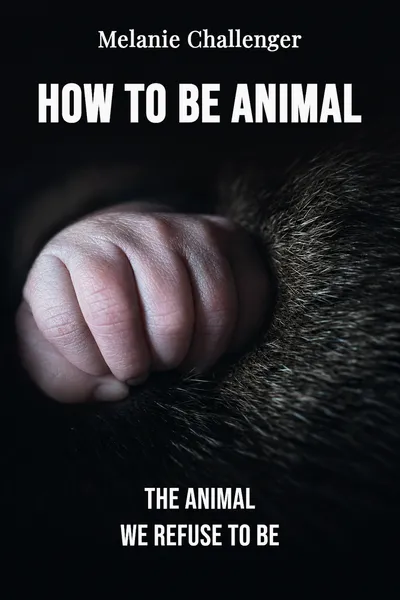
A newborn arrives soaked, blind, and screaming, latching on by reflex the way any mammal does. We know, if we stop to think about it, that we are made of the same stuff as the badger and the crow — the same warm blood, the same nervous flinch, the same appetite and fear and eventual rot. And yet almost nothing in how we organize our lives admits it. We build cathedrals to the idea that we are something else. We speak of human dignity as if it floated above the flesh. Melanie Challenger, a writer who has spent years among naturalists and philosophers, opens her book on exactly this crack between what we are and what we insist we are.
Her claim in How to Be Animal is disarmingly simple and strangely hard to hold onto: we are an animal that does not believe it is an animal. Not merely forgetful of the fact — actively invested in denying it. Challenger traces this not as a moral failing to be scolded away but as a deep habit of mind, one that grew alongside human self-awareness and got amplified by every big idea we ever built, from souls to progress to the promise of leaving our bodies behind. The denial feels like common sense. That is what makes it worth pulling apart.
What follows is neither a lecture on nature nor a guilt trip about the planet, though both hover nearby. It's an attempt to understand why a creature so obviously biological spends so much energy pretending otherwise — and what that pretending quietly does to how we treat other species, our own bodies, and the future we're busy imagining for ourselves.
The question we’re asking : Why does the one animal capable of knowing it's an animal spend so much effort refusing to be one?What we’ll see : How the refusal took hold, what it quietly costs, and where our latest dreams of escape are leading it.
Table of contents
01 Chapter 1 — The animal that says it isn't one
Start with the word itself. To call someone an animal is an insult — brutish, dirty, out of control. To call them human is a compliment, shorthand for kindness and reason. That everyday split is not trivial for Challenger; it's the surface of something enormous. We have arranged our entire moral vocabulary so that being human sits above being animal, as though the two were opposites rather than the second being a member of the first. Biology says we are apes with unusually busy brains. Our language says we are a category apart. Both cannot be right.
Challenger is careful here, because the denial isn't stupidity. We really are unusual. No other creature writes symphonies, mourns strangers, or argues about whether it has a soul. The trouble starts when we take that difference of degree and inflate it into a difference of kind — a line drawn so firmly that the badger and the newborn end up on opposite sides of it. We notice what makes us special and then quietly forget everything that makes us the same: hunger, warmth, the way a body knows fear before the mind names it.

02 Chapter 2 — How the wall got built
The refusal didn't spring up overnight. Challenger tracks it across the long transformations that made us — and the first great turn is agriculture. For most of our history, humans lived among other creatures as one predator among many, dependent, exposed, close to the ground. Farming changed the relationship. We began to pen animals, breed them, count them as property. The wolf became livestock; the wild became a thing to fence off and manage. Once we were keepers rather than kin, the story of ourselves as masters rather than members had room to grow.
On top of that practical shift came the ideas. Challenger moves through the religions and philosophies that hardened the divide into doctrine. The notion of a human soul set apart from the beasts. The idea, sharpened in the seventeenth century and often pinned on Descartes, that animals were essentially machines — bodies without an inner life, incapable of real suffering. Reason became the trait that supposedly redeemed us from mere flesh. Each of these did the same quiet work: it moved the line, and it moved us to the good side of it.
03 Chapter 3 — What the exception costs
A belief this deep doesn't stay abstract. Challenger's sharper argument is that treating ourselves as the one exception to nature has practical consequences, and they are not gentle ones. Start with other species. If animals are machines, or lesser things placed here for our use, then almost anything follows — the factory farm, the vanishing habitat, the sixth extinction we are currently authoring. The distance we put between ourselves and other creatures is exactly the distance that lets us harm them without feeling it.
But the cost turns inward too, and this is where the book grows unexpectedly tender. If being animal is shameful, then our own bodies become a problem to be managed and disowned. Illness, aging, and death read as failures rather than as the ordinary condition of anything alive. Challenger notes how much of modern life is spent fighting the flesh — controlling it, editing it, wishing it away — as if the mortal, breathing part of us were an embarrassment we're waiting to outgrow.
04 Chapter 4 — When the machine offers a way out
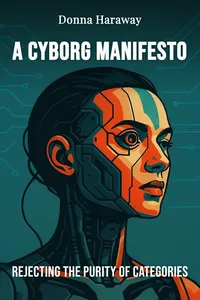
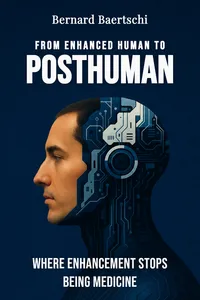
Here the book turns toward the future, and the argument sharpens rather than softens. The dream of transcending our animal nature has found its most confident modern form in technology — in artificial intelligence, in the fantasy of uploading a mind to a machine, in the transhumanist hope of merging flesh with silicon and shedding the body altogether. Challenger reads these not as breaks with the old refusal but as its purest expression. The wish that once wore a soul now wears a circuit board.
What unites the medieval promise of heaven and the Silicon Valley promise of the cloud is a single conviction: that the real us is something other than the perishable, appetite-driven, dying creature we actually are. Mind treated as pure information, portable and clean, is the animal denied one more time — just with better engineering. Challenger is not anti-technology, and she doesn't pretend the machines aren't remarkable. Her worry is subtler. If we build our future on the belief that we were never really animals to begin with, we build it on a delusion, and delusions have a way of designing badly.
05 Conclusion
We come back to the newborn, soaked and screaming, doing the one thing every mammal does. Challenger's book is, in the end, a long argument that this image is not something we grow out of but something we spend our lives trying to forget. The separation we feel from the rest of nature is real as a feeling and false as a fact — a wish so old and so reinforced that it passes for the obvious truth about ourselves.
Related books