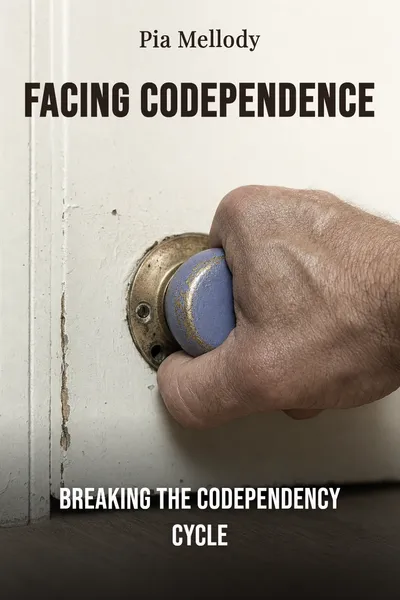
Facing Codependence
Breaking the codependency cycle
Description
In the late 1980s, Pia Mellody was working as a nurse and clinician at The Meadows, an addiction treatment center in the Arizona desert, when she noticed something the recovery literature of the time barely had a word for. The people getting sober were often married to, or raised by, or in some way tangled up with someone whose own struggle looked different but ran just as deep. These partners and children weren't addicted to a substance. They were addicted, if you can call it that, to another person — to managing them, fixing them, reading their moods, disappearing into their needs. The word floating around the field was codependence, and it was mostly used as a vague label for the wife of the alcoholic. Mellody took it somewhere far more precise.
Her 1989 book, Facing Codependence, did two things that reset the conversation. It moved codependence out of the addiction annex and treated it as a condition in its own right, with identifiable symptoms and a traceable origin. And it argued, plainly, that the origin was childhood — not bad luck or weak character, but the ordinary and often invisible ways a family can fail to let a child develop into a whole self. Codependence, in her telling, isn't something you catch from an addicted spouse. It's something you were shaped into long before you met them.
That shift matters because it changes what recovery even means. If codependence is a moral failing, you white-knuckle it. If it's a developmental injury, you go back and finish the growing up that got interrupted. Mellody's book is essentially a map of that interrupted development, and a set of tools for resuming it in adulthood.
The question we’re asking : If codependence is a childhood injury rather than a character flaw, what exactly was injured — and how do we finish growing?What we’ll see : How Mellody names the symptoms, traces them back to their source, and turns recovery into a matter of reclaiming a self that was never fully allowed to form.
Table of contents
01 Chapter 1 — Five symptoms in search of a name
Before Mellody, codependence was a mood word — a way of gesturing at someone who was too involved in another person's problems. Her first move was to make it clinical. She identified five core symptoms, and she insisted they were symptoms, not personality quirks, which meant they could be described, measured, and eventually healed rather than simply endured.
The first is difficulty experiencing appropriate levels of self-esteem. The codependent person swings between feeling worthless and feeling superior, because their sense of worth comes from outside — from being needed, from being right, from another person's approval. What's missing is what Mellody calls self-esteem from the inside: a steady valuing of oneself that doesn't rise and fall with the room. The second is difficulty setting functional boundaries — knowing where you end and another person begins. Some people have walls, letting nothing in; others have no boundaries at all, absorbing everyone's feelings and demands as their own.

02 Chapter 2 — The child who was never allowed to be one
The engine of the whole book is a claim about where the five symptoms come from. Mellody's answer is childhood, specifically what she calls a less-than-nurturing or abusive family system. And she uses the word abuse in a wider sense than most people are comfortable with — not only the obvious violence, but the quieter failures that leave no bruises and are often invisible even to the parents doing them.
She argues that a child is born with five natural characteristics: valuable, vulnerable, imperfect, dependent, and immature — meaning appropriately childlike for their age. A nurturing family honors each of these, teaching the child that they matter, that it's safe to feel, that mistakes are human, that needing help is normal, and that being a kid is exactly right. When those characteristics are shamed or attacked instead, the child adapts. They armor up. The five natural traits curdle into the five symptoms of the adult codependent, one for one, which is why Mellody can trace an adult's boundary trouble or need-blindness back to a specific place where a specific trait got punished.
03 Chapter 3 — The five faces of a wound
From those origins, Mellody maps how the damage shows up in adult life, and this is where readers tend to recognize themselves with a jolt. Someone who was never allowed appropriate self-esteem becomes either grandiose or shame-based, sometimes flipping between the two within a single conversation. The person who looks arrogant and the person who looks like a doormat are often the same person, using the same broken internal instrument.
The boundary failures produce the classic codependent dance. With no boundaries, you take responsibility for other people's feelings and let their moods run your day; with walls, you shut down intimacy entirely to stay safe. Neither can produce a real relationship, because both are ways of not actually being present as a separate person. Mellody's word for the goal is intact boundaries — flexible, chosen, able to let the right things in and keep the wrong things out.
04 Chapter 4 — Anger, boundaries, and the work of coming back
The reframe at the center of Facing Codependence is quietly radical: it moves the whole problem out of the language of morality and into the language of development. A character flaw is something you are. A developmental injury is something that happened to you — and things that happened can, at least in part, be repaired. That single move is what turns the book from a diagnosis into a practice. You're not trying to become a better person; you're trying to finish becoming a person.
This is why anger gets such careful treatment. In most self-improvement writing, anger is the thing to manage down. Mellody treats it as fuel. The codependent adult, trained as a child to swallow every reaction, has usually buried a lifetime of legitimate anger, and that buried anger leaks out as depression, resentment, or control. Feeling it — not acting it out, but actually feeling it and letting it inform where a boundary belongs — is part of how the self comes back online. Anger, used well, is the energy that says: this far, and no further.
05 Conclusion
Pia Mellody built this framework not from theory but from years of watching people at The Meadows discover that getting the addict sober didn't heal the family around them. The codependence stayed, because it had its own separate history — one that began long before the drinking, in the ordinary rooms of childhood where a child first learned that their worth, their feelings, and their needs belonged to someone else. Facing Codependence gave that history a shape and a vocabulary, which is often the first thing a wound needs before it can close.
Related books