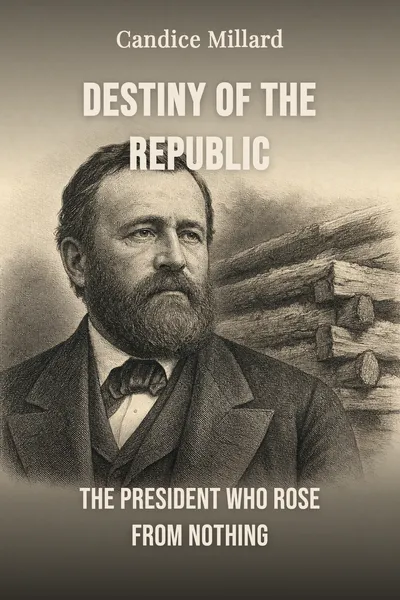
Destiny of the Republic
The president who rose from nothing
Description
In the summer of 1881, James A. Garfield had been president of the United States for barely four months. He was a big, warm, restless man — a former college professor who could write Latin with one hand and Greek with the other, or so the story went — and he had reached the White House almost against his own wishes. On July 2, walking through a Washington railroad station on his way to a summer holiday, he was shot in the back by a delusional office-seeker named Charles Guiteau. The wound should not have killed him. What killed him, over eleven excruciating weeks, was the medicine.
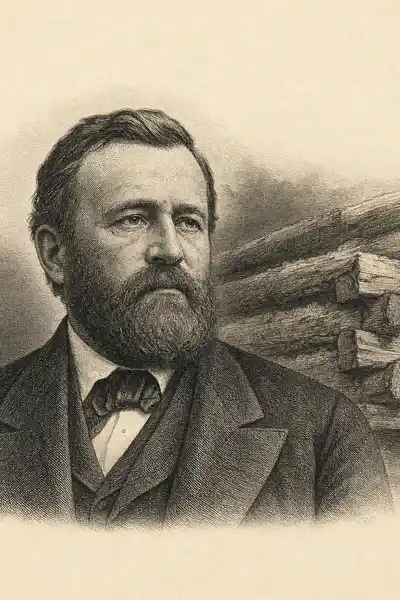
Candice Millard's Destiny of the Republic tells that story, but it opens somewhere much smaller. Garfield was born in a log cabin in the Ohio wilderness in 1831, the last child of a widowed mother scraping a living from cleared land. No American president had started lower. He worked as a canal boy, a carpenter, a janitor who swept floors to pay his tuition, and rose — through sheer appetite for learning — to college president, Civil War general, and congressman, all before he turned forty. His arrival at the presidency was less a campaign than an accident of history he never engineered.
Millard braids two histories that rarely sit in the same book: a rags-to-power biography and a medical thriller. Around Garfield she gathers a strange cast — a paranoid assassin convinced God wanted the job done, a celebrated inventor racing to build a device that might find the bullet, and a domineering surgeon whose certainty was as dangerous as any weapon. Together they turn a single gunshot into a national ordeal, watched by a country that had only just begun to believe in this improbable man.
The question we’re asking : How did a man born with nothing reach the presidency, and why did surviving a bullet prove harder than surviving poverty?What we’ll see : A life built from almost nothing, an accidental nomination, and the slow, avoidable death that made a nation reckon with the man it had underestimated.
Table of contents
01 Chapter 1 — From a log cabin to Congress
Garfield's beginnings were about as bare as American life allowed. His father died when he was not yet two, leaving Eliza Garfield to hold a frontier farm together in the Ohio backwoods. The family was poor in a way that left marks — no money, patched clothes, long stretches of hunger. As a boy James dreamed of the sea and hired himself out to a canal boat, hauling cargo along the towpath, falling in more than once before nearly drowning taught him he was no sailor. He came home sick, and something turned. What he wanted was not water but knowledge.
Millard is drawn to the pure velocity of what followed. Garfield took whatever schooling he could reach, then worked his way through it — carpentry, teaching, a janitor's broom at the Western Reserve Eclectic Institute, where he swept classrooms in exchange for lessons. He was a natural student, hungry and quick, and within a few years he was no longer sweeping the floors but running the place as its principal. He devoured the classics, argued theology, and taught. It was less a career than a chase, each rung reached and immediately abandoned for the next.

02 Chapter 2 — The convention that never meant to nominate him
The Republican convention of 1880 in Chicago was a battlefield, and Garfield came to it as a peacemaker, not a candidate. The party had split into warring machines. On one side stood the Stalwarts, led by the imperious New York senator Roscoe Conkling, who ran patronage like a private empire and wanted Ulysses S. Grant back for an unprecedented third term. On the other side stood the reformers, weary of a spoils system that handed government jobs to loyal foot soldiers regardless of ability. Between them, deadlock.
Garfield's job was to nominate another man — John Sherman of Ohio — and he did it with a speech so stirring that delegates began, absurdly, to wonder aloud about the speaker himself. Ballot after ballot, the convention refused to break. Grant could not win; the reform candidates could not win. And then, slowly, a handful of votes drifted to a man who had not been running at all. Garfield protested from the floor that he was not a candidate and would not accept. The delegates ignored him.
03 Chapter 3 — A bullet, and the doctors who finished the job
Charles Guiteau was, by Millard's careful account, a man unraveling. He had failed at law, at religion, at marriage, at every livelihood he tried, and he had convinced himself that a speech he barely delivered had won Garfield the presidency. When no ambassadorship arrived, his grievance curdled into a conviction that God wanted the president removed so the Stalwarts could rule. He bought an ivory-handled revolver because he thought it would look impressive in a museum someday, and he stalked Garfield for weeks before firing two shots at the Baltimore and Potomac station.
One bullet grazed the president's arm. The other lodged deep in his back, missing his spine and vital organs. Garfield was gravely hurt but not doomed — a modern surgeon would expect him to live. What sealed his fate was the confidence of the men who treated him, above all Doctor Willard Bliss, who took charge and never let go. Ignoring the antiseptic methods Joseph Lister had already championed in Britain, Bliss and others probed the wound repeatedly with unwashed fingers and instruments, hunting a bullet that was nowhere near where they thought.
04 Chapter 4 — What the country lost when it lost him
Garfield's death did what his brief presidency never got the chance to. The office-seeker who shot him had made the spoils system suddenly, horribly literal: here was a man who believed a government job was owed to him, and who killed a president when it was refused. The country drew the connection immediately. The patronage machine that men like Conkling had defended for decades now looked not merely corrupt but lethal, and the reform Garfield had quietly favored became, in the wake of his murder, something close to a moral necessity.
In 1883, Congress passed the Pendleton Civil Service Reform Act, creating a merit-based system for federal hiring and beginning the long dismantling of the spoils system. Chester Arthur, the Stalwart vice president everyone had feared would be Conkling's puppet, signed it into law and governed with a surprising independence, as if the manner of Garfield's death had reformed him too. The improbable poor boy had, without a single major act of his own presidency, changed how the government would be staffed for generations.
05 Conclusion
James Garfield spent his life climbing out of a log cabin, and he reached a summit he had never asked for only to be brought down by a stranger's delusion and a surgeon's pride. Millard's account holds those two arcs in tension — the astonishing rise and the maddening fall — and refuses to let either one become simple. The bullet that lodged in his back need not have been fatal. What made it fatal was human certainty, in a paranoid gunman and in a doctor who could not imagine he was wrong.
Related books