Creativity and the Brain
Where creativity lives in the brain
Description
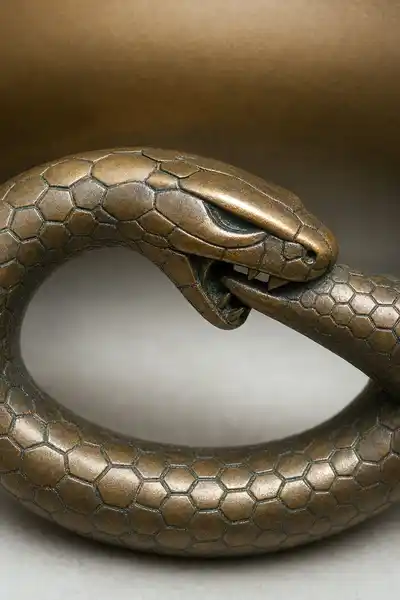
For most of recorded history, the moment a good idea arrives has been described in the language of visitation. The Greeks had the Muses. The Romans had the genius, a guardian spirit that dropped in with the inspiration and left again once the poem was done. Well into the twentieth century, artists and scientists alike talked about the flash, the bolt, the thing that came from somewhere else — Archimedes in the bath, Kekulé dreaming the ring of benzene as a snake biting its own tail. Creativity was the one human capacity everyone agreed was precious and nobody could locate. It was the ghost in the machine, and we were content to leave it a ghost.
Mario Tokoro, a Japanese computer scientist and researcher who spent decades at the intersection of engineering and cognition, found that answer unsatisfying. In his book Creativity and the Brain, he takes the position that the ghost has an address. The reason we never found it, he argues, wasn't that creativity lived outside the brain — it was that we lacked the instruments to watch the brain closely enough, and the theories to make sense of what we'd see. Both, in the last few decades, have started to arrive.
That shift matters beyond the laboratory. We live in an era where creativity is treated as the scarce resource — the thing that separates one worker from the next, one company from its competitors, one national economy from the pack. Everyone wants more of it, in themselves and in the people they hire and raise. Which makes the old mystery an increasingly uncomfortable place to leave the answer.
The question we’re asking : If creativity isn't a visitation from elsewhere, where in the brain does it actually happen — and can we watch it?What we’ll see : How a capacity we once explained with muses became something a scanner can catch in the act, and what that changes.
Table of contents
01 Chapter 1 — The word that used to mean magic
Tokoro opens by taking the mystery seriously rather than dismissing it. There was a good reason creativity resisted explanation for so long: it doesn't behave like the tidy mental operations we understood first. Arithmetic, memory recall, following a recipe — these are step-by-step processes, and we could model them long before we could image them. Creativity is not step-by-step. It produces something that wasn't in the inputs, an output that feels like it arrived rather than got built. That felt-quality of arrival is exactly what made people reach for language about spirits and bolts from the blue.
He is careful about definitions, because the word gets stretched to cover everything from a child's drawing to general relativity. The working definition he leans on is the one most researchers converge toward: creativity is the production of something both new and useful — or at least new and valued — within some context. Novelty alone isn't enough; random noise is novel. Value alone isn't enough; a good copy is valuable but not creative. It's the combination, and the combination is what makes the thing hard to reduce to a formula.

02 Chapter 2 — What the scanners started to show
The tools arrived in stages, and Tokoro walks through why each mattered. The electroencephalogram, reading electrical activity off the scalp, gave researchers timing — it could tell you when something in the brain fired, down to the millisecond, though it was vague about where. Functional magnetic resonance imaging, which became widely available in the 1990s, gave the opposite: precise location, by tracking blood flow to the brain regions doing the work, at the cost of being slow. Together they let researchers ask, for the first time, a question that had been unaskable — what is the brain physically doing in the seconds around a genuinely new idea?
The early results were humbling and clarifying at once. There was no creativity organ, no single spot that lit up when inspiration struck. That negative finding was itself important: it killed the tidy hope that we'd find a Muse-gland and be done. Instead, what showed up was pattern — distributed activity spread across regions that don't sit next to each other, coming online together in ways that ordinary focused thinking didn't produce.
03 Chapter 3 — The two networks and their strange handshake
The heart of the science Tokoro describes is a relationship between two large-scale brain networks that were, for a long time, thought to be rivals. The first is the default mode network, the set of regions that hums along when the mind is unfocused — daydreaming, mind-wandering, remembering, imagining. It was named 'default' because it's what the brain falls into when it isn't aimed at any task. The second is the executive control network, which comes online when you concentrate, evaluate, and hold a goal in mind. For years these two looked mutually exclusive: when one was busy, the other went quiet.
Creativity, it turns out, seems to depend on both — and on their unusual willingness to work together. The default mode network is the engine of raw generation, throwing up loose, unexpected combinations from stored experience, the associations that focused thinking would normally suppress as irrelevant. That is where the strange raw material comes from. But raw material isn't yet a good idea. Most of what the wandering mind produces is junk, and something has to sort it.
04 Chapter 4 — The thing we keep trying to manufacture
Once a capacity moves from mystery to mechanism, human beings do a very predictable thing: they try to manufacture it. This is where Tokoro's account opens onto something larger than neuroscience. For as long as creativity was a gift of the gods, you couldn't cultivate it deliberately — you could only hope. The moment it becomes a describable process of network cooperation, cultivation becomes a live, and commercial, proposition. That is the promise embedded in the whole modern conversation about creativity, and it explains why a book about brain networks lands in the middle of a very worldly anxiety.
The anxiety is competitive. Tokoro is writing in a context where creativity is openly framed as the differentiator — the quality that marks out the exceptional individual, the innovative firm, the leading national economy in a globalized market. When the routine work can be automated or outsourced, what remains valuable is the ability to produce the new and useful, which is precisely the capacity the scanners have started to map. Understanding it is no longer idle science; it's understood, rightly or not, as a stake in who thrives.
05 Conclusion
The Muses were a good guess for people with no way to look inside a working brain. They named a real experience — the sense that ideas arrive rather than get assembled — and gave it a face. What Tokoro traces is the slow replacement of that face with a mechanism: not a single creative center, but a coordination between the mind that wanders and the mind that judges, caught in the act by instruments that didn't exist when the myths were written. Where creativity lives, on this account, is not a place but a relationship.
Related books