

Cravings
All she really wants to eat
Description
Chrissy Teigen built a career on being photographed. She landed the cover of the Sports Illustrated Swimsuit Issue in 2010, married John Legend, and by the mid-2010s had turned a sharp, unfiltered Twitter presence into a second job as a television personality. She was, by any measure, a person who got paid to look composed. And yet the thing she kept returning to — on set, on planes, between takes — was not the next shoot or the next red carpet. It was what she was going to eat next.
In 2016 she put that obsession between two covers. Cravings landed as a cookbook, but it read like something else: part diary, part love letter to the food she actually eats when nobody is styling the plate. There were no aspirational green juices, no chapter on entertaining beautifully. There was drunken noodles at two in the morning, her mother's Thai cooking, and a recipe she cheerfully admitted involved a can of cream-of-something soup. The book sold in the hundreds of thousands and spawned a sequel, but its real trick was tonal.
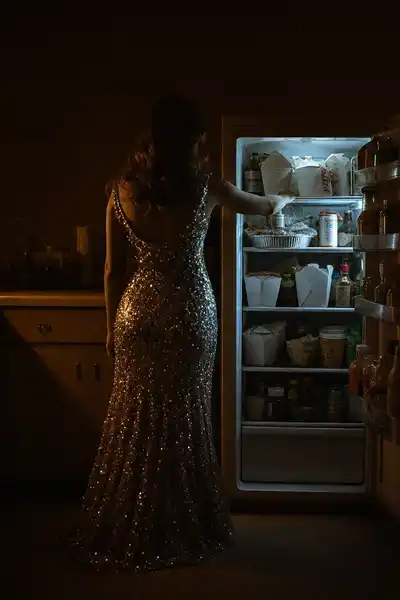
What makes the book worth opening is not that a famous woman wrote recipes. Plenty do. It is that Cravings refuses the performance the rest of her job demands. The woman who is supposed to want kale wants pot pie. The gap between the public image and the private plate is the whole engine of the thing — and it turns a stack of recipes into a small, funny argument about what appetite is actually for.
The question we’re asking : What happens when someone whose job is to look composed writes down what she actually wants to eat instead?What we’ll see : The person behind the polish, the kitchen that shaped her taste, the food she refuses to apologize for, and why honesty about appetite reads as its own kind of statement.
Table of contents
01Chapter 1 — A model who really just wanted to eat
The premise of Cravings arrives in the first pages and never really leaves: here is a woman whose living depends on her appearance, and what she thinks about all day is dinner. Teigen doesn't dress this up as a paradox to be resolved. She presents it as a plain fact about herself. She'll be on a photo shoot in Zanzibar, or making a studio audience laugh, and the running commentary in her head is about the meal on the other side of it. The book treats that appetite not as a guilty secret but as the most reliable thing about her.
This is a genuinely odd stance for the genre. Celebrity cookbooks tend to sell a lifestyle — the implication being that if you cook like this, you might live like that. Teigen inverts it. She isn't offering access to a glamorous life through food; she's admitting that the glamorous life is the job, and the food is where she goes to be a normal person who gets hungry at inconvenient hours. The recipes are the place the performance stops.

02Chapter 2 — The Thai kitchen that raised her
A large part of the book's flavor comes from a single source: Pepper Teigen, Chrissy's mother, who cooked Thai food throughout her daughter's childhood and shows up throughout Cravings as both character and coauthor of the palate. Teigen was raised partly in Thailand and the Pacific Northwest, and the food she craves most is not American comfort food alone but the fish-sauce-and-lime register her mother worked in daily. The book keeps returning to it.
So there are dishes that lean hard into that heritage — larb, the tart minced-meat salad; drunken noodles; sauces built on the salt-sweet-sour-heat balance that Thai cooking runs on. Teigen doesn't present these as exotic or as a lesson in an unfamiliar cuisine. She presents them as home cooking, the food that was simply on the table, which is a different and warmer framing than the usual introduce-the-reader-to approach. Fish sauce isn't a discovery here. It's a given.
03Chapter 3 — Comfort food with no apology
The other half of Cravings is unapologetically indulgent, and this is where it declares itself most clearly. There's a chapter's worth of the food nutrition culture spends its energy warning you off: cheesy, buttery, fried, rich. Teigen doesn't reach for the softening moves the genre usually offers. No lightened-up version, no swap the cream for cauliflower, no earnest note about balance. If the thing is good because it's rich, she says so and leaves it there.
She goes further, embracing the stuff food snobbery quietly forbids. Boxed ingredients, canned soup, the shortcuts a serious cookbook is supposed to be above. In a landscape where cooking authority is often signaled by making everything from scratch, Teigen treats a convenience product as a legitimate tool if it gets her to the flavor she wants. It's a small rebellion, but a real one: the admission that craving doesn't care whether the roux was made properly.
04Chapter 4 — Why the messiest cookbook is the honest one
Step back from the recipes and Cravings is really about a gap — the one between the self a public person is paid to project and the self that gets hungry at midnight. Teigen's job, across modeling and television, is to be a curated image. The book is the place she sets that down. And the interesting thing is that she doesn't resolve the gap or moralize about it. She simply lets the private appetite occupy the page, and in doing so makes a quiet claim: the craving is more her than the cover shot.
This is why the book's messiness is a feature. A polished cookbook would have flattered the reader's aspirations. Cravings does the opposite by admitting to the un-aspirational — the canned soup, the food eaten standing up, the dishes attached to feeling low. Every one of those admissions is a small refusal of the performance her other work requires. The honesty isn't incidental to the recipes; it's the reason they read as trustworthy. A person telling you what they actually eat is more useful than a person telling you what they want you to think they eat.
05Conclusion
The woman on the magazine cover and the woman standing over the stove eating straight from the pan are the same person — Cravings just decides to spend its pages with the second one. Whether she's on a shoot in Zanzibar or making a studio audience laugh, what she keeps coming back to is dinner, and breakfast, and yes, lunch too. The book takes that fixation and treats it as the truest thing about her, the appetite that outlasts every other role.