Stranger Things
Nostalgia as a production strategy
Description
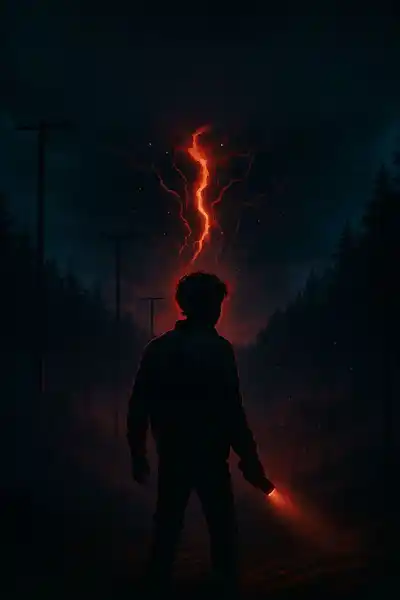
In July 2016, Netflix released a show that almost nobody had been waiting for. Stranger Things arrived with no comic-book franchise behind it, no A-list cast, and two directors — Matt and Ross Duffer, then in their early thirties — whom the industry had mostly passed over. What it had instead was a title card in a fat red serif font, a synthesizer score that sounded lifted straight off a 1983 cassette, and a small Indiana town lit like the childhood of anyone who grew up renting movies on a Friday night. Within weeks it was the thing everyone was talking about, and Netflix had a franchise that would run for the better part of a decade.
The strange part is that almost everything in it had been seen before. The missing kid, the government lab, the bikes racing down suburban streets, the monster that arrives from somewhere the adults refuse to believe in — each piece was borrowed, openly, from films made thirty years earlier. Spielberg, Stephen King, John Carpenter, the whole shelf of Reagan-era genre cinema is present in the frame, not hidden but displayed. The show wasn't hiding its sources. It was built out of them, and it wanted us to notice.
That openness is what makes the show worth looking at closely. Plenty of stories borrow; this one turned borrowing into its entire method, and then rode that method to one of the most valuable properties Netflix has ever owned. Somewhere between homage and product, a specific commercial calculation is at work.
The question we’re asking : How does a show built almost entirely out of other films' memories become an original hit — and what does that tell us about how nostalgia gets sold?What we’ll see : How Stranger Things turned the act of remembering into its raw material, and where that leads once the feeling itself becomes something to package.
Table of contents
01Chapter 1 — The Duffers built a machine out of other people's memories
Matt and Ross Duffer grew up in North Carolina in the 1990s, which means the films they absorbed were already a decade old when they found them — E.T., The Goonies, Stand By Me, A Nightmare on Elm Street, discovered on tape rather than in a theater. They came to that era the way most people their age did: secondhand, at home, on a screen in the living room. When they pitched Stranger Things around 2015, they had already made a modest horror film, Hidden, and had written for the Wachowskis' show Sense8. The pitch reportedly bounced around some fifteen to twenty networks before Netflix bought it. Nobody quite knew what to do with a show that wore its influences this plainly.
What the Duffers proposed was not a parody and not a straight throwback. It was an assembly. A boy named Will disappears; his friends search on their bikes; a girl with a shaved head and telekinetic powers escapes a secret facility; a monster crosses over from a parallel dimension the characters name the Upside Down. Each element carries a fingerprint. The lab evokes government-conspiracy thrillers; the kids on bikes are pure Spielberg; the creature owes its logic to Carpenter and to King's small-town dread. The show doesn't disguise any of it — it lays the parts out where we can name them.

02Chapter 2 — A small town assembled from a shelf of VHS tapes
Look closely at how Hawkins is put together and the method becomes precise rather than loose. The Duffers didn't gesture vaguely at the eighties; they reconstructed a very particular slice of it — the suburban, spielbergian eighties of children on bicycles under a wide sky, filtered through the horror shelf King and Carpenter stocked. This is not the eighties of the actual decade, with its recessions and its politics and its ordinary boredom. It's the eighties as preserved on rental tapes, a memory of movies rather than a memory of life.
That distinction matters, because it explains why the show works on people who never lived through the period. A viewer born in 2005 has no memory of 1983, but they have almost certainly absorbed its cinematic grammar — the amber light, the synth cue, the kid who knows something the grown-ups won't hear. Stranger Things speaks that grammar fluently. It offers the pleasure of recognition to people who have nothing to recognize except other stories. The nostalgia is portable; it travels without requiring the original experience, and that portability is precisely what made the show exportable to a global audience at once.
03Chapter 3 — The reference is the product, not the decoration
In most productions, references are seasoning. A director tips a hat to a favorite film, a shot echoes a classic, and the reference rewards the attentive viewer without carrying the work — miss it and the story still stands. Stranger Things inverted that arrangement. Here the references are not seasoning; they are the meal. Strip out the borrowed grammar and there is a competent creature-thriller left, but the thing that made it a phenomenon — the feeling that you had come home to something — lives entirely in the accumulated echoes.
This is a real strategic bet, and it paid extraordinarily well. Netflix does not release granular figures, but the show became one of its most-watched properties, and independent measurement firms placed later seasons among the most-streamed titles of their release years. It generated a merchandise line, a themed pop-up economy, and a run on the products it featured — the most famous being Eggo waffles, whose maker Kellogg's leaned into the association, and the 1985 Kate Bush song 'Running Up That Hill,' which the show sent back to the top of the charts in 2022, nearly forty years after its release. A reference, deployed at scale, turns back into a commodity, and a decades-old song becomes a new revenue stream.
04Chapter 4 — Longing, packaged and sold back to us
Step back from Hawkins and Stranger Things looks less like a single show than like the clearest demonstration of a logic that now runs through much of the entertainment business. The industry has discovered that the feeling of remembering is easier to manufacture, and safer to finance, than the thing being remembered. A new idea might fail; it has no advance audience and no proof it will land. A carefully rebuilt memory arrives pre-loved, with viewers already primed to feel something before the first scene ends. The emotion is done before the writing starts.
The word for what the show sells is nostalgia, but it's worth being exact about the mechanism. Nostalgia used to require a past you had actually lived. What Stranger Things demonstrated is that the past can be supplied — that a person can feel homesick for a decade they never saw, provided the images have been circulating long enough to feel collectively owned. Once longing no longer needs a real memory to attach to, it becomes a raw material, minable and renewable, and the studio that controls the images controls the supply. The feeling is no longer personal; it's inventory.
05Conclusion
Eight years after that first red title card, Stranger Things has become exactly what its method predicted: a franchise, with merchandise, spin-offs, a stage play, and a final season stretched to feature-film length. The little show that borrowed everything grew into one of the most valuable things Netflix owns, and it did so without ever abandoning the assembly line that made it — each season reloading the same fond machinery, each return greeted as a homecoming.
Related books